Hollywood as Soft Power in the Cold War: How Rocky and Rambo Told Us Who the Enemy Was
Hollywood didn’t just entertain during the Cold War, it shaped how audiences saw the enemy. Through films like Rocky IV and Rambo: First Blood Part II, cinema became a powerful tool of soft power, reinforcing ideological narratives.

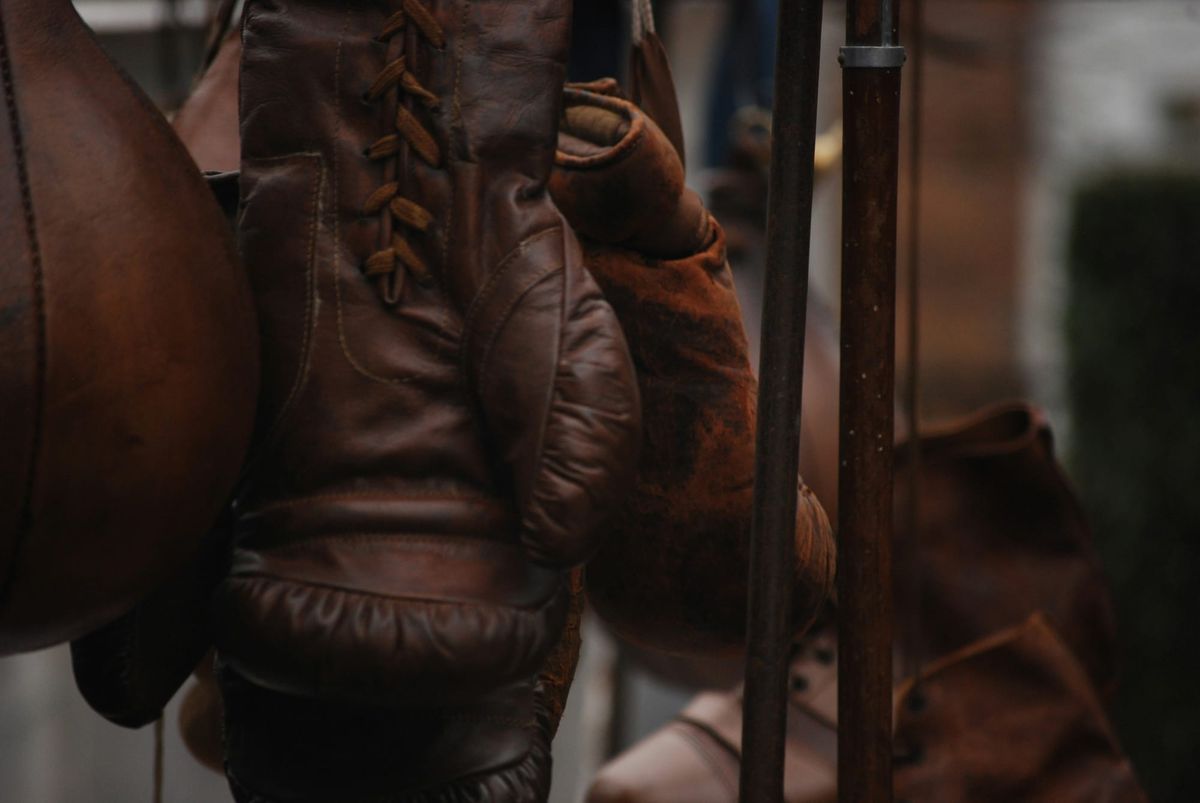
We all saw or at least heard of Rocky Balboa and John Rambo, two characters played by Sylvester Stallone in the 1980s. These two franchises defined the 1980s as an era of great sports and action films that showed that discipline, sportsmanship, bravery and determination are respectful traits that are sometimes more important than winning. But Rambo and Rocky are more than that. In fact, they have a deeper meaning that we are going to explore together, so stay with me until the end.
Hollywood tends to simplify the world, often showing us black-and-white scenarios lacking deeper context
In the 1980s, movies weren’t just entertainment. The topics and stories they told helped shape political perception during the Cold War. Hollywood tends to simplify the world, often showing us black-and-white scenarios lacking deeper context. With that in mind, moral binarity is often used, where one side is shown to be good and the other bad.
Moral Binarity and Rocky IV
The most famous example of moral binarity can be seen in Rocky IV (1985), where the titular character is described as a good hero who uses his environment to train. On the other side is the main villain of the story, a Russian fighter Ivan Drago who is portrayed as a “machine” created by the state using high technology and steroids. This depiction promotes the American value of individual strength and authenticity against the “cold” Soviet system.
Rocky IV and other movies with related themes can create an emotional connection between viewers and protagonists through the narrative where good, in many cases, Americans win against evil: foreigners, aliens, robots, or others. When the bond created with a fictional character like Rocky is strong enough, viewers may reinforce stereotypes that all Russian people are bad, just like Rocky IV portrayed them through Ivan Drago. I wrote about 1980s “obsession” with the future where I touched on the theme of black-and-white worldview and moral binary in movies.
Hollywood as Soft Power
So, what does Hollywood try to tell us? It directly sends the message of who we should perceive as bad, which at the time was part of Cold War ideology. It served as a powerful form of cultural influence, and it showed that popular culture can, very successfully, be used as a political tool. In this instance, Rocky IV showed how much portrayal of the villain can influence how audiences perceive the real world.
Hence, the question of who benefits from such movies leads us to the concept known as soft power. The term was coined in the late 1980s by American political scientist Joseph Nye. Soft power can be described as power that stems from culture, political values, and foreign policies of a country. Nye describes it as “the ability of a country to influence others and achieve its goals through attraction and persuasion, rather than coercion or payment”.
The American movie industry’s tendencies to portray villains as the “other” were part of the ideology of the 1980s
Creating Global Perception Through Rambo
In this context, Hollywood functions as a tool to help build United States’ reputation that the country tends to showcase to its citizens and other countries. Therefore, the American movie industry’s tendencies to portray villains as the “other” were part of the ideology of the 1980s. It partly served to reinforce political legitimacy. Another example of soft power can be seen in Rambo movies.
John Rambo is another movie character that serves as an example of soft power. The United States slowly spread its influence through the Rambo franchise in several ways. Rambo redefined American soldier’s image from a soldier defeated in Vietnam to an unbeatable hero. Through so-called remasculinization (a term popularized by Susan Jeffords) U.S. managed to restore the lost trust in its military. Rambo: First Blood Part II (1985) and Rambo III (1988) aligned with Ronald Reagan’s foreign policy in depicting the fight against communism as a moral crusade. Because of this strong influence, Rambo became known as a “lone wolf” who used force to resolve the conflicts. But because this fight was shown as a fight for good, it strengthened the U.S. image as a “world’s policeman” who intervened where others couldn’t.
Looking Ahead
Hollywood’s storytelling in the 1980s did more than entertain, it shaped how audiences understood the world. By reducing complex political realities to simple moral binaries, films like Rocky IV and Rambo made it easier to identify heroes and enemies, but harder to question those narratives. Through this viewpoint, cinema became a useful tool of soft power, reinforcing ideological messages while appearing as mere entertainment. While writing this essay, a thought occurred to me: if films once influenced how we saw the Cold War, how much do modern media still shape the way we define the world?
On Thursday we will write about preserving traditions and history in a world consumed by social media and technology through the example of The Devil Wears Prada 2.
This article explores themes related to Cold War, Rocky, Rambo, soft power, 1980's, Hollywood and Ronald Reagan.
Sources:
Dautbašić, Lejla. “US Soft Power through Hollywood during Cold War: Rocky IV”. MAP Education and Humanities, 2(1), 2022. https://doi.org/10.53880/2744-2373.2022.2.1.1 Web.
Kellner, Douglas. “Film, Politics, and Ideology: Reflections on Hollywood Film in the Age of Reagan.” The Velvet Light Trap, no. 27, Spring 1991
Nye, Joseph S., Jr. “Soft Power and Public Diplomacy Revisited”. The Hague Journal of Diplomacy 14.1-2, 2019 https://doi.org/10.1163/1871191X-14101013 Web.
Rocky IV, 1985
Rambo: First Blood Part II, 1985
Rambo III, 1988