Tactical Evolution: How Croatia Adapted to Ottoman Warfare
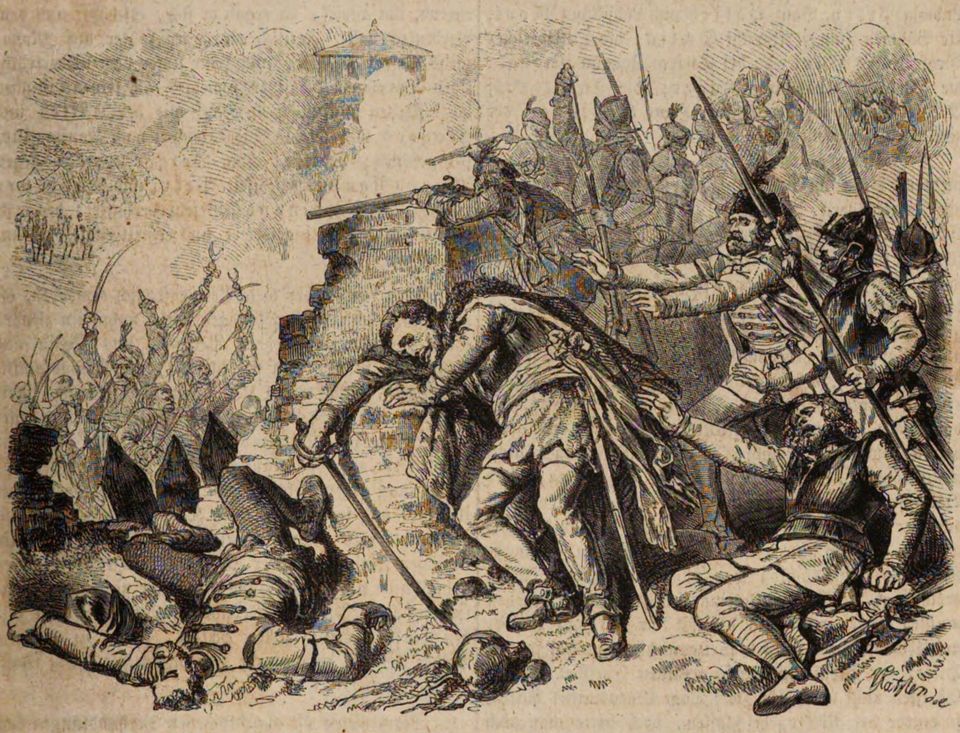

Can Military Adaptation Change a Country's Destiny?
Did you know that in 1532 Austria, the Viennese army, most likely, mistakenly attacked its own allies, the Croats, believing them to be Ottomans? The reason was not only their appearance, but complete military adaptation.
In the 16th century, Croatia was not just the geographical edge of Europe; it was one of its strongest barriers, known as Antemurale Christianitatis which translates as the Bulwark of Christendom. But that title was paid for with centuries of guerrilla warfare and a traumatic everyday reality. The title itself was granted by Pope Leo X in a letter addressed to the Croatian ban and bishop Petar Berislavić, recognizing the crucial role of Croats in defending Europe from Ottoman expansion.
Although similar terminology had appeared informally in diplomatic correspondence before, the letter of Leo X in 1519 remains the recorded moment when this epithet was formally acknowledged, one that would become a lasting part of Croatian national identity. At the same time, similar recognitions were given to Hungary and Poland, but for Croatia, the term carried particular weight, as its territory was often described as the “remnants of the remnants” (Reliquiae Reliquiarum) of a once renowned kingdom.
Ottoman Raids: A Daily Reality of Fear and “Small War”
As historians Stanić and Grgin emphasize, Ottoman incursions were not limited to grand campaigns led by sultans. They were a harsh everyday reality, a form of “small war,” what we would today call guerrilla warfare. Akıncı cavalry units penetrated deep into Croatian territory, burning villages and capturing populations.
This “scorched earth” strategy, also discussed by Ágoston, was not only meant to intimidate, but to economically exhaust the enemy. These constant incursions, combined with deforestation for Venetian galley construction and intensive grazing, gradually transformed once green regions of Dalmatia into the barren karst landscape we recognize today.
Read next: How did Infantry Take Over Medieval Battlefields and Push Cavalry into the Background?
Adaptation: Becoming “Like the Enemy”
To understand the scale of Croatian resistance, we must first understand the opponent. Boričić outlines the structure of the Ottoman army, from elite Janissaries to cavalry Sipahis. In the 16th century, the Ottomans were a military superpower with highly developed logistics. How, then, could a small and fragmented Croatian force resist such a system?
The answer was adaptation. In order to survive, the Croats had to accept the rules of their enemy. Ágoston, in his work on military transformation, highlights how the frontier became a space of both cultural and military exchange. Croatian soldiers, especially Uskoks and light cavalry units, adopted many of the tactics of their opponents.
In terms of equipment, they shifted toward lighter armor and sabres, abandoning heavier swords. This change allowed for greater mobility. Perhaps most notably, they adopted a style of attack characteristic of Ottoman warfare. The Ottoman charge was fast, aggressive, and based on sudden charges combined with rapid withdrawals. In contrast, Western European armies still relied on heavy armor and static formations. This style of fighting often caused panic among those accustomed to slow, frontal warfare. Alongside these assaults, Croatian forces also relied heavily on ambush tactics, particularly effective in narrow passes and forested terrain.
Read next: The History Behind Medieval Warfare
It was precisely this similarity in tactics and appearance that sometimes led European allies to mistake Croats for Ottoman forces. In many ways, Croatian troops became a mirror image of their enemy; equally fast, dangerous, and relentless.
Conclusion: The Price of Survival
Croatia’s role as the “Bulwark of Christendom” was not merely a political phrase. It was survival on the front line of imperial conflict. Through a process that Stanić and Ágoston describe as military transformation, the Croatian soldier evolved from a medieval knight into a modern frontier warrior, one who, through adaptation, helped halt Ottoman expansion toward the heart of Europe.
This conclusion can be loosely connected to Charles Darwin’s work On the Origin of Species (1859), which argues that organisms better adapted to their environment have a greater chance of survival. In a similar way, the Croatian case shows how adaptation to Ottoman methods of warfare allowed Croatian forces to endure centuries of pressure and preserve European heritage.
This historical example reminds us that adaptation is essential, because, those who adapt survive and prevail, while the rest fall behind.
SOURCES:
Ágoston, Gábor. "Empires and Warfare in East-Central Europe, 1550–1750: The Ottoman–Habsburg Rivalry and Military Transformation." The Cambridge History of War: Volume 3, War in the Early Modern World, ed. Kaspar von Greyerz et al., Cambridge University Press, 2020, p. 110-133.
Ágoston, Gábor. "Ottoman and Habsburg Military Affairs in the Age of Süleyman the Magnificent." Academia, www.academia.edu/38682935/Ottoman_and_Habsburg_Military_Affairs_in_the_age_of_S%C3%BCleyman_the_Magnificent
Boričić, Magdalena. "Struktura osmanske vojske tijekom 16. stoljeća." Povijesni prilozi, sv. 41, no. 62, 2022
Grgin, Borislav. "The Ottoman influences on Croatia in the second half of the fifteenth century." Povijesni prilozi, vol. 21, no. 23, 2002
Juran, Kristijan. "Doseljavanje Morlaka u opustjela sela šibenske Zagore u 16. stoljeću." Povijesni prilozi, vol. 33, no. 46, 2014
Stanić, Damir. "Neka obilježja iz povijesti hrvatskog pograničja u 16. stoljeću." Pro tempore, no. 5, 2008
Vilović, Ivan. "Deforestacija u mletačkoj dalmaciji: mit, povijest i primjer otoka Korčule." Ekonomska i ekohistorija, vol. 14, no. 1, 2018
antemurale. Hrvatska enciklopedija, mrežno izdanje. Leksikografski zavod Miroslav Krleža, 2013. – 2026. https://www.enciklopedija.hr/clanak/antemurale (Croatian Encyclopedia, Online Edition)
reliquiae reliquiarum. Hrvatska enciklopedija, mrežno izdanje. Leksikografski zavod Miroslav Krleža, 2013. – 2026. https://www.enciklopedija.hr/clanak/reliquiae-reliquiarum (Croatian Encyclopedia, Online Edition)
akindžije. Hrvatska enciklopedija, mrežno izdanje. Leksikografski zavod Miroslav Krleža, 2013. – 2026. https://www.enciklopedija.hr/clanak/akindzije (Croatian Encyclopedia, Online Edition)