The Spanish Flu in Literature and Oral History: How a Pandemic Was Remembered and Forgotten
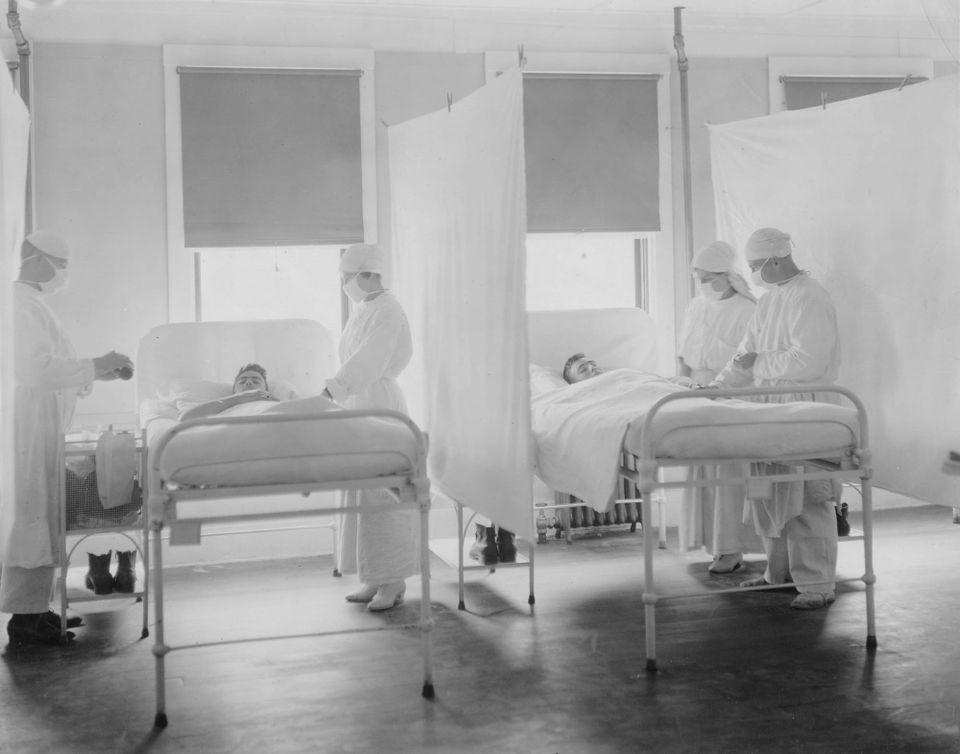
Unlike today, where interest in the 1918’s Spanish Flu does not abate, in 1918 and 1919, when the Spanish Flu pandemic ravaged the world, it seems that people collectively suppressed the memory of it. That is, the memory of the Great Influenza remained on personal level. Therefore, there was a lack of cultural remembrance of the Great Pandemic of 1918. For that reason, some well-known examples of literary works that tell the story of this pandemic, as well as oral tradition, will be presented here.
At the time, scientific papers, medical reviews, or articles about the Flu were sporadic. Even newspapers gave only occasional or censored news on the pandemic to preserve war morale and avoid spreading panic. Thus, we could argue that culture, if media and science left only a small mark, left traces of influenza in its works. However, that was only partly the case with literature. Hence, there are few known literary works that shed light on what was happening on a personal level with people who survived the disease. We are aware of only those few works that preserved the memory of this devastating pandemic.
The second source we will examine here is sometimes overlooked in blog culture and occasionally questioned in science for its accuracy, yet it is deeply personal in its nature – oral history. It gives us an intimate perspective, often quite different from that of the press or government.
With this in mind, one question guides this exploration: How was the Spanish Flu remembered and how was it forgotten?
Why was the Spanish Flu forgotten shortly after it had happened?
Alfred W. Crosby was an American historian who explored the 1918 pandemic of Spanish Flu in his book America’s Forgotten Pandemic. In his study, he described something called the “mentality of forgetting” which refers to the collective amnesia or the social suppression of painful memories. Anthropologists define this kind of oblivion as a “structural amnesia.” It means that society remembers past events only if those events are relevant in the present. In this context, the recollection (excluding the academic one) of the Spanish Flu happened during the Covid-19 pandemic, because we needed something that would explain our current situation and experience at the time. As fast as the Covid-19 pandemic was over, so was the wide interest in the Spanish Flu.
The reasons for collective amnesia were numerous. Crosby suggests these reasons: the pandemic occurred during World War I, i.e. at the end of 1918, almost at the same time the war ended. It was a year of high political tensions, migrations, and the formation of new borders. The pandemic occurred almost overnight; it was so rapid and intertwined with other infectious diseases such as typhus, tuberculosis, STDs, and the omnipresent reality of death.
Another reason lies in the pandemic’s nature. Pandemics and epidemics don’t have clear enemies to blame; they are natural disasters, unlike war, which has two sides fighting and where each side calls the opposite side the enemy. As said, that is not the case with diseases. Thus, there were no heroes and no victory in the case of the 1918 influenza. Consequently, medicine, despite its progress, failed in fighting the disease, and it was seen by many as a humiliation.
The last reason for the social suppression of the pandemic might be seen in the fact that there were few cultural or literary works that explored this respiratory disease. As for art, Edvard Munch’s collection of self-portraits that represent his experience of illness is memorable. As for literature, there are a couple of works that center on the influenza. In the following chapters, the most notable ones will be presented, beginning with American literature, which gave us perhaps the most vivid fictional account of the pandemic's personal toll.
Read: Why Wasn’t the Russian Flu Remembered?
American literature
Katherine Anne Porter was an American essayist, short story writer, novelist, poet, and journalist who wrote for the Denver newspapers Rocky Mountain News. She set down her reflections on the Great Influenza in her novella Pale Horse, Pale Rider 20 years later. The fact that she wrote down her experience of the flu in the 1930s fits the phenomenon that Crosby described as the “mentality of forgetting.”
“It seems to be a plague, something out of the Middle Ages. Did you ever see so many funerals, ever?”
Other prose that reflects on the same topic as Porter’s were published later as well. Those literary works include They Came Like Swallows (1937), Look Homeward, Angel (1929), The Doctor's Son (1935), Memories of a Catholic Girlhood (1957) and The Big Rock Candy Mountain (1943). We can notice, looking at the years of publishing, that they were written long after the 1918 pandemic ended. In the works mentioned, the trauma of the influenza is represented either directly as a central topic – as in Porter's novella and They Came Like Swallows – or indirectly, almost as a footnote.
Porter gives a vivid picture of the influenza experience – the weakness of body and mind and the long recovery. She depicts the overall helplessness in treating the illness. Adam, a character in the novel, says: “The men are dying like flies out there, anyway. This funny new disease. Simply knocks you into a cocked bat,” and Miranda continues: “It seems to be a plague, something out of the Middle Ages. Did you ever see so many funerals, ever?” This part of the dialogue between Adam and Miranda suggests the scope of the illness and a bit of absurdity reframed as irony. It appears the characters of the novel aren’t aware of the seriousness of the situation, trying to make sense of it.
Given the time the novel was written (modernism in literature), the stream of consciousness fits almost perfectly in depicting the influenza’s effects on the mind. It gives expression to the feeling of fogginess that consumed the mind. The reader, as if lost in the mind of a sick individual, gets trapped in a body drained by illness. A similar effect is found in the writing of a British author who became well known for the stream of consciousness writing style.
“... it becomes strange indeed that illness has not taken its place with love, battle, and jealousy among the prime themes of literature.”
British memory of the Spanish Flu
In Virginia Woolf’s novel Mrs. Dalloway, the disease is a side plot line. The main character, Clarissa Dalloway, has heart problems that manifested after she recovered from the influenza, which is reduced to a footnote in the novel. The second main character, Septimus Warren Smith, a war veteran, suffers from severe PTSD. Seen here, the disease is reduced almost to a single sentence. Even Woolf herself asks:
“Considering how common illness is, how tremendous the spiritual change that it brings, how astonishing, when the lights of health go down, ... it becomes strange indeed that illness has not taken its place with love, battle, and jealousy among the prime themes of literature.” She wrote an entire essay (On Being Ill) on that topic, underlining the impact disease can have on an individual and how literature should leave space for it. Nevertheless, written literature captures only part of the picture, so we should turn to the sometimes questioned historical source: oral history.
Influenza in Oral History
Oral history, when speaking of historical sources, might be the least reliable. The reason for this is that oral history is told by a person, and a person’s memory can be subjective and flawed. Nevertheless, it is still valuable due to its perspective and its intimate and personal nature; it gives us a deeper layer of society beyond politics and mass media as well. Having that in mind, some of the stories will be presented here.
The account of an Irish immigrant who immigrated to the USA described the influenza as an irregular flu, different from the seasonal one. He compared it to the Black Plague, as people who died of the plague had turned black (had black marks on their skin), similar to those who died from the Spanish Flu, who also turned black. Another remark on the flu also comes from citizens of the USA. They mostly remember the symptoms (fever, loss of appetite…) and measures (wearing masks, closing schools…) they had and had to take. Some of the interviewees were children at the time of the pandemic; to them, it could have been hard not to be able to see their relatives, as one person recalled. One individual recalled losing several family members and being devastated by it.
Furthermore, the story of one British soldier says that the flu spread rapidly in military camps and that soldiers were dying very quickly. Nonetheless, what is interesting about this story is that the person who told it to his family did so just before he died in the late 1980s. This veteran of the First World War kept the story of the influenza his entire life and managed to find the strength to tell it almost on his deathbed.
Moreover, some stories were told long after the survivors died, shared with the world by their grandchildren in the 21st century. For instance, interviews were conducted in Istria, Croatia, in 2010. The survivors, according to their grandchildren, had similar experiences of the illness to those described earlier. The family members of survivors died rather quickly, in a matter of days; one recalled that her relative was dead three days after he got symptoms.
One Istrian account tells the story of a family where the mother and older daughter died of the influenza, while the younger daughter survived. That particular family lived in a village (which was a village at that time) where mortality was very high, contrary to nearby villages. Interestingly, many of the people interviewed stated that the flu was intertwined with the widespread famine that ravaged the south of the Istrian peninsula. While the USA examples showed they had food but didn’t feel hunger, the Croatian example showed the opposite.
Notably, interviews conducted in the USA were recorded in the 1970s and 1980s, apart from the first one recorded in the 1930s. Unlike the latter, interviews conducted in Croatia were recorded in 2010, mostly from the relatives of the deceased. We see here that the influenza was very much remembered on a personal level and that it was handed down, even though it was forgotten collectively. It is noticeable that those accounts were made decades later, which is in accordance with Crosby’s theory.
Last Thoughts
To sum up, it is clear that the Spanish Flu occupied very little space in mainstream literature, as has been presented in this work. However, if we look past literature, we notice that oral history had many more stories to tell. In accordance with the collective forgetfulness that occurred shortly after the flu disappeared, most written pieces and oral accounts were only produced decades later. This supports Crosby’s theory of a personal, rather than collective, memory of the pandemic.
Ultimately, the 1918 Spanish Flu presents a unique paradox: a global catastrophe of immense proportions that was met with "structural amnesia" in the public sphere. While society may have suppressed the trauma to move forward after World War I, the memory was never truly lost; it was merely privatized within families and individual consciousness. As we have seen through examples from both the USA and Croatia, it often takes a new crisis to make us reach back into these personal archives. The "mentality of forgetting" may hide the past, but it cannot fully erase the traces left by those who lived through it.
Did the Spanish Flu leave a trace in your family's memory? And why do you think some disasters are remembered while others are forgotten?
Sources:
Porter, K. A., Pale Horse, Pale Rider, 1939
Woolf, V., Mrs. Dalloway, 1925
Woolf, V., On Being Ill, 1926
W. Crosby, Alfred, America’s Forgotten Pandemic, 1989
Spinney, L., Blijedi jahač. Kako je španjolska gripa 1918. promijenila svijet, Zagreb: vbz, 2019 (original title: Pale Rider: The Spanish Flu of 1918 and How It Changed the World)
Milovan Delić, I., Urbana anatomija pandemije. Španjolska gripa 1918-1919. u Puli, Zagreb, Pula: Srednja Europa, Sveučilište Jurja Dobrile u Puli, 2025
McGowan, A., “Art, poetry and … zombies? The surprising cultural contributions of the 1918 influenza pandemic. The influence of the 1918 flu pandemic is an undercurrent that runs through many works of the period,” The World, May 18, 2020 https://theworld.org/stories/2020/05/18/art-poetry-and-zombies-surprising-cultural-contributions-1918-influenza-pandemic
Connerton, P., "Seven types of forgetting", Memory Studies, Volume 1, Issue 1 https://doi.org/10.1177/1750698007083889
Das, S., “Revisiting The Past: Interrogating The Unexplored History Of The 1918 Pandemic,” Journal of Language and Linguistic Studies, 17(2), 1306-1315; 2021
McCollom, Jennifer. "Shadows of the Plague: American Memories of the 1918 Influenza Pandemic in Oral Histories." (Summer 2020) Southern Illinois University Carbondale
J. Moriarty, K., “The 1918 influenza pandemic: a survivor’s tale,” British Medical Journal, Vol. 332, 15 April 2006