Harry Potter: Political Allegories, Social Hierarchies and the Meaning of Power
What lies beneath the magic of Harry Potter? From blood purity and social inequality to political power, marginalised groups, Hermione’s feminism and the strength of a mother’s love, the wizarding world reflects some very human problems.


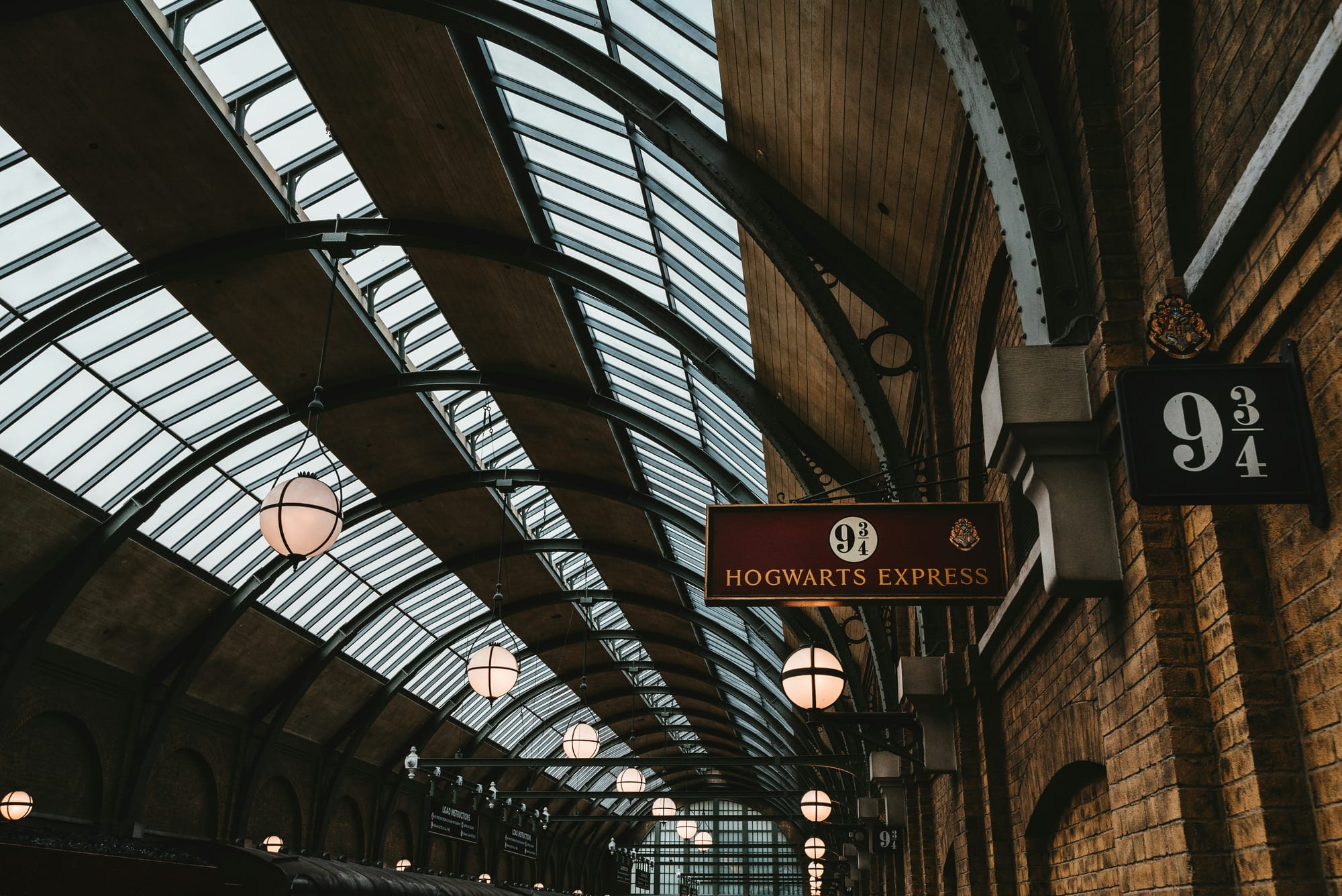
Two days ago marked Back to Hogwarts Day in the magical world. And it’s not only Harry Potter, Ron Weasley and Hermione Granger who start a new school year; the first week of September also marks the beginning of a new academic year in much of the real world. Even though the Harry Potter series belongs to a world of fantasy, wizards, witches and beasts, this fantastic world hides societies organised around principles of privilege, power and heritage. Alongside the magical society, you will get to explore the relationship between wizards and marginalised groups, Hermione Granger’s role in the series, and the meaning of a mother’s love.
Social Hierarchies Within the Magical World
The wizarding world is not equal for everyone; instead, hierarchies exist in every corner, which can raise the same questions about equality that we ask in the real world. The prime example of this is the idea of pure blood. Wizards are categorised as pure-bloods, half-bloods, and Muggle-born wizards, the latter of whom are often referred to by the derogatory term Mudblood by pure-blood wizards such as Draco Malfoy and his allies.
This division can remind us of past ideologies that attempted to determine human worth according to an individual’s heritage. In that regard, Voldemort’s ideology is not simply a struggle between good and evil, but is also built around the idea that some people have the right to rule others based on their birthright. However, the hypocrisy writes itself because Voldemort is not a pure-blood wizard. His story therefore reveals contradictions within his own ideology, while blood purity becomes part of a political construct that can serve to maintain control, order and power.
The societal hierarchy can also be seen through class differences represented by two families, the Malfoys and the Weasleys. The Malfoy family symbolises wealth, political connections and social influence, while the Weasley family, although also pure-blooded, demonstrates that birthright is often not enough to guarantee privilege. Hence, money, access to institutions and social connections can also determine an individual’s place in society.
Political Allegories in the Harry Potter Series
Similar criticism can be aimed at the institution of the Ministry of Magic. The Ministry is not simply portrayed as an evil institution, but rather as a bureaucratic system that too often tries to protect its own reputation, authority and the existing order. One of the best examples is the Ministry’s denial of Voldemort’s return. Instead of accepting the news of the Dark wizard’s return and considering possible solutions, the Ministry opts for dismissal and denial.
The newspaper Daily Prophet also plays a significant role in the whole ordeal because the press, in the magical world as much as in the real world, can be used to manipulate information and public opinion. Therefore, J.K. Rowling shows how closely government and media can become interconnected, and how much damage this can cause. The problem is not simply that individuals lie, but how far a system may be willing to go to ensure that its chosen version of the truth is accepted.
Marginalised Groups in the Wizarding World
One of the most complex topics in the books is the relationship between wizards and house-elves. Through the beloved elf Dobby, we can see how deeply slavery is normalised within wizarding society. The elves’ servitude to wizards is presented as part of tradition, so when Hermione creates the Society for the Promotion of Elfish Welfare, or S.P.E.W., she encounters mockery from almost everyone, including Ron and Harry. This situation demonstrates just how normalised injustice can become when people no longer recognise it as injustice.
A similar pattern can be observed in the portrayal of Remus Lupin, who is a werewolf. Because of his condition, he is stigmatised and forced to hide his status. Therefore, Remus can be interpreted as a metaphor for the way society treats marginalised groups and individuals living with stigmatised illnesses. Such treatment can often arise from fear, lack of knowledge and prejudice.
Giants and half-giants such as Hagrid are not excluded from this pattern of marginalisation either; in fact, just like werewolves, they are often excluded from society. The Harry Potter world, much like the real world, tends to determine someone’s worth based on their heritage or physical differences, which brings me back to the first point of the essay: the ideology of pure blood.
Feminism Through Hermione Granger
The role of women in the books and films is shown to be one of the most important aspects of the story. Hermione Granger can be seen as a feminist figure, most notably because her existence is not reduced to that of a damsel in distress. Her role gradually transcends the traditional depiction of a female character who merely supports the protagonist. Hermione is an active participant in the story, and it is often she who finds the solutions that drive the plot forward. In many cases, Harry and Ron would not succeed without Hermione’s knowledge, capability and ability to think several steps ahead.
Her greatest strengths are her intellect, logical thinking and diligence, but also her courage - she was sorted into Gryffindor House, after all. Therefore, she largely challenges common clichés of female characters; she is not a passive character in the story, but instead makes important and, at times, difficult decisions, such as organising and starting Dumbledore’s Army or erasing her parents’ memories to protect them from the Death Eaters. She later restores their memories in the book.
Hermione also avoids the stereotype of becoming simply a romantic interest for the main character. Instead, her relationship with Harry is a platonic friendship built on deep mutual respect, intellectual equality and profound loyalty.
A Mother’s Love as the Strongest Spell
The final theme that I will explore in the magical world is a mother’s love. It all starts with Lily Potter sacrificing her life to protect her only child, Harry. Her sacrifice becomes the first and perhaps the most important protection Harry receives, as Voldemort is unable to understand the power of love and self-sacrifice.
At the same time, Molly Weasley is a symbol of motherhood throughout the series. She is not only protective of her own children, but also treats Harry as part of her family, giving him the sense of belonging that he never experienced while growing up with the Dursleys. Her love is also connected with courage, which becomes especially clear during the Battle of Hogwarts when she faces Bellatrix Lestrange to protect her daughter Ginny. Molly therefore represents a form of power that comes from emotional connection and the willingness to protect those she loves.
Narcissa Malfoy represents a different and more complicated form of motherhood. Unlike Lily and Molly, she is closely connected to the world of pure-blood ideology and Voldemort’s movement. However, when Draco’s life is threatened, she is willing to deceive Voldemort in order to find out whether her son is still alive, showing that her maternal loyalty can become stronger than her loyalty to the ideology surrounding her family. This does not necessarily make Narcissa a good person, nor does it erase her connection to the prejudices of the Malfoy family. Instead, it makes her character more complex. Her actions suggest that love for her child can exist even within a deeply flawed moral world. In this way, Lily, Molly and Narcissa represent three different expressions of motherhood, but all three place the safety of their children above their own interests.
In contrast to women’s love for their children stands Voldemort and his obsession with immortality and power, which is grounded in his desire for dominance. At the same time, one of the strongest forms of protection against this kind of power is love and the willingness to sacrifice oneself for others, just as Harry is willing to sacrifice himself to save his loved ones in the final book and film.
With this, the Harry Potter series tells a story of two different types of power: one that wants to control and possess people, and another that stems from connection, loyalty and the willingness to sacrifice.
Conclusion
The world of Harry Potter may be filled with magic, but the societies within it are shaped by very human problems: privilege, inequality, prejudice, political power and the desire to control others. The idea of pure blood shows how heritage can be used to create divisions between people, while the differences between the Malfoys and the Weasleys remind us that social status is also shaped by wealth, connections and access to power.
At the same time, the Ministry of Magic and the Daily Prophet demonstrate how institutions and media can influence what people believe, especially when protecting authority becomes more important than acknowledging the truth. The treatment of house-elves, werewolves, giants and half-giants further shows how easily injustice can become normal when it is presented as tradition or when fear and prejudice replace understanding.
Yet, the series does not only explore systems of power; it also offers an alternative to them. Hermione represents knowledge, courage and the willingness to challenge injustice, while the stories of Lily, Molly and Narcissa show different forms of maternal love and sacrifice. In contrast to Voldemort’s desire to possess power and overcome death, Harry ultimately demonstrates that some of the strongest forms of power come from connection, loyalty and the willingness to sacrifice oneself for others.
Perhaps this is what makes Harry Potter more than a fantasy story about a boy who discovers that he is a wizard. Beneath the magic, it asks questions that remain relevant beyond the wizarding world: Who gets to have power? Who is excluded from society, and why? What happens when institutions refuse to acknowledge the truth? And can love, solidarity and courage challenge systems built on fear and inequality?
The answers may not be magical, but the questions certainly are not limited to Hogwarts.
If you liked this article, subscribe to our newsletter and join the magic!
This article explores topics related to Harry Potter books, Hermione Granger, Ron Weasley, blood purity, social inequality, political power, marginalised groups, feminism, wizarding world
Sources:
Rowling, J. K. Harry Potter and the Philosopher’s Stone. Bloomsbury, 1997
Rowling, J. K. Harry Potter and the Chamber of Secrets. Bloomsbury, 1998
Rowling, J. K. Harry Potter and the Prisoner of Azkaban. Bloomsbury, 1999
Rowling, J. K. Harry Potter and the Goblet of Fire. Bloomsbury, 2000
Rowling, J. K. Harry Potter and the Order of the Phoenix. Bloomsbury, 2003
Rowling, J. K. Harry Potter and the Half-Blood Prince. Bloomsbury, 2005
Rowling, J. K. Harry Potter and the Deathly Hallows. Bloomsbury, 2007