When Did the Middle Ages Begin?
When did the Middle Ages actually begin and when did they end? The answer depends on where you look. From 476 to 1492 and beyond, medieval chronology has never been as straightforward as it seems.

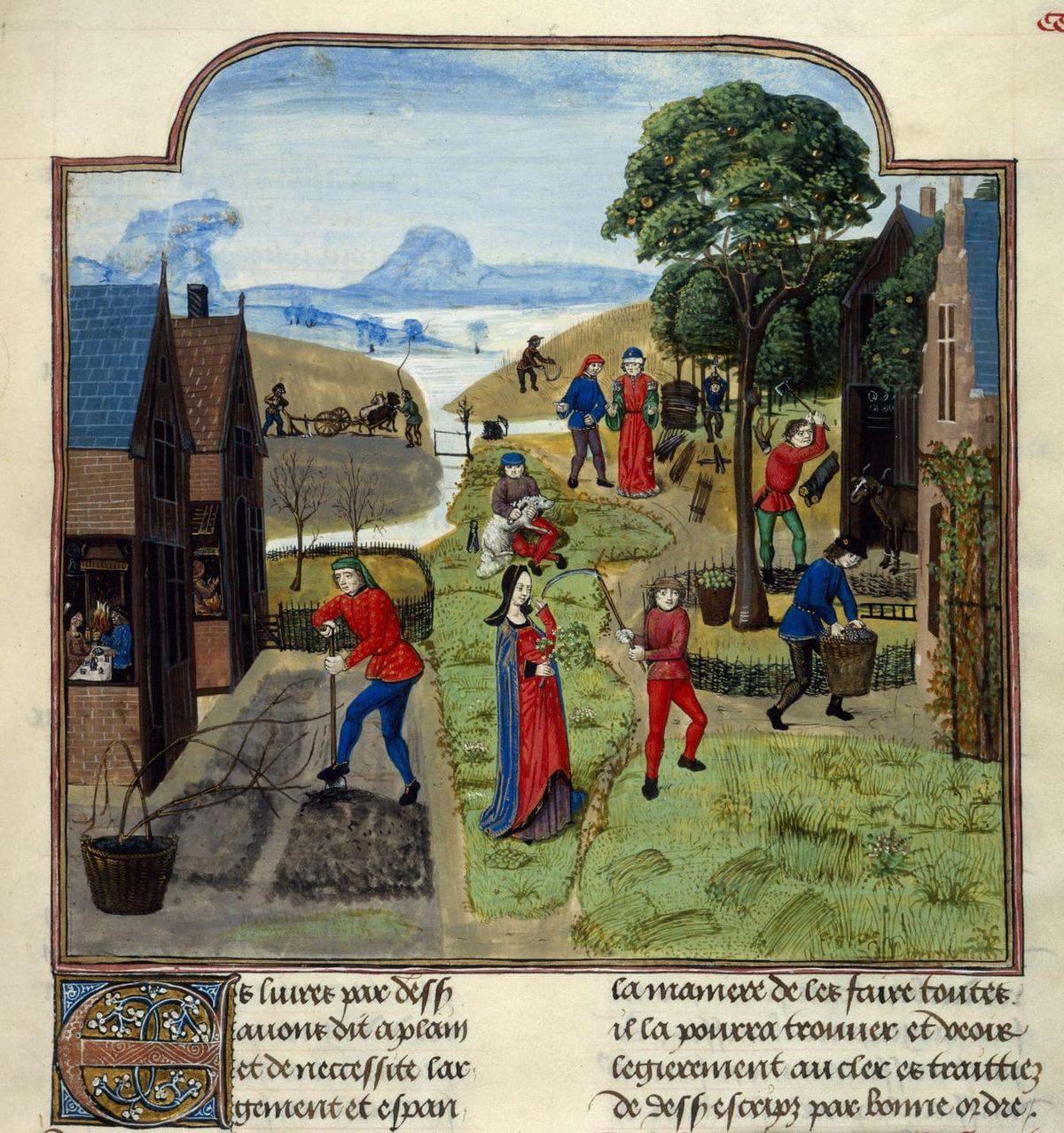
The Problem of Periodisation and Why Medieval Chronology Changes from One Historiography to Another
The idea of the Middle Ages emerged in the historiography of Renaissance humanists, most notably in the work of the Italian historian Flavio Biondo. He used the term in his work Historiarum ab inclinatione Romanorum decades, published in 1453. Over time, other scholars used similar terms (such as medium aevum, media aetas, media tempestas) to describe the period between antiquity and the Renaissance. Since then, the terminology used to describe the period has evolved over several centuries. Just as its name wasn’t certain, neither was its dating.
Note: Throughout this article, the terms Middle Ages and medieval period refer specifically to European history and to the periodisation traditionally used in European historiography. Other regions of the world have their own historical periodisations and do not necessarily share the European concept of the Middle Ages.
Historical periodisation is a methodological process in which historical periods are divided into segments that have specific characteristics. For instance, the beginning of the Middle Ages has traditionally been associated with the fall of the Western Roman Empire. However, is it that simple to frame so large a period such as the medieval time into chronological frames?
In this process, historians and humanists couldn’t agree on dates which should mark the beginnings or the endings of the Middle Ages. They proposed several events as possible turning points such as:
· the Roman Emperor Diocletian’s rule from 284 to 305,
· the reign of Constantine I (306–337) and the subsequent Christianisation of the Roman Empire,
· the beginning of the Migration Period in 370,
· the death of the Roman Emperor Theodosius I in 395 and the split of the Roman Empire into two.
· the most beloved date, 476, when the Western Roman Empire fell.
· the death of the Byzantine emperor Justinian the Great in 565,
· the coronation of Charlemagne on Christmas Day 800 in Rome, or his death in 814.
Henri Pirenne went beyond the mentioned events; he stated that the event that marked the beginning of medieval times was the cessation of trade in the Mediterranean by the Arabs in the 7th century. Later archaeological research has challenged Pirenne's claim that Arab expansion brought Mediterranean trade to a halt. Evidence points instead to the continuation of commercial activity in several parts of the Mediterranean, although its scale, routes and participants changed.
The end of the Middle Ages suffers from the same problem. Some historians have proposed the ending to be:
· the invention of the printing press in the 1440s by Gutenberg,
· the fall of Constantinople in 1453 by the Ottomans.
· the discovery of the Americas by Columbus in 1492,
· Magellan’s journey around the globe between 1519 and 1522.
· Martin Luther’s 95 Theses in 1517.
· the Thirty Years' War (1618–1648).
Nevertheless, 476 and 1492 remain among the most commonly used conventional boundaries in traditional narratives of European history. But is this chronology the same in all of Europe?
Did Medieval Europe Have One Chronology?
Many regions have their own chronologies established by their national historiographies. That is because historical processes don’t happen linearly and are not the same for all regions, hence the differences in chronologies. Even the subperiods differ; thus, the early Middle Ages (early medieval period), the High Middle Ages, and the late Middle Ages (late medieval period) mark different dates for their start and end.
On the one hand, we can even see differences between disciplines. This is evident in German medieval chronologies in archaeology and history. The chronology used in German archaeology is as follows:
· The Early Middle Ages start in 450 and end in the 8th century;
· The Carolingian/Ottonian period starts in the 9th century and finishes in the 10th century;
· The High Middle Ages begin in 1000 and finish in 1250;
· The Late Middle Ages start in 1250 and end in 1500.
For German history, the dates differ a bit:
· The Early Middle Ages start in 476 and end in 1024;
· The High Middle Ages begin in 1024 and finish in 1250;
· The Late Middle Ages start in 1250 and end in 1492.
The Society for Medieval Archaeology, meanwhile, uses a different chronological framework:
· The Early Middle Ages start in the 5th century and last till 1066 (the Norman Conquest of Britain);
· The High Middle Ages begin in 1066 and finish in the mid-14th century (the outbreak of the Black Death);
· The Late Middle Ages start in the mid-14th century and last till the mid-16th century.
If we are to look further north, things change drastically. For example, Scandinavia presents a challenge to a Mediterranean-based European chronology. Unlike the territories of the former Roman Empire, Scandinavia was not moulded by a classical antiquity comparable to that of the Mediterranean region. Instead, Scandinavian societies followed their own archaeological and historical sequences, including a long prehistoric period preceding the Middle Ages. The Viking Age, conventionally dated from 793 to 1066, is often used as a major chronological marker in Scandinavian history.
For another comparison, take a look at the medieval chronology system of Croatian national historiography. Influenced by the national historiographical traditions of the nineteenth century, Croatian historiography developed its own periodisation. Hence, the beginning of the Middle Ages was traditionally equated with the migration of the Slavs/Croats around 600, while the end was marked by the accession of Ferdinand I of Habsburg to the Croatian throne in 1527. As a result of these differences, the term Medieval Period or Middle Ages is hard to describe; some historians and scholars have even argued that the term should not be used at all.
That being said, historical periodisation defines historical boundaries according to a contemporary mindset. This is seen in Voltaire’s and Diderot’s determination of the start year of the Medieval Period. Their choice of Charlemagne's death in 814 can be understood within a broader Enlightenment critique of the Middle Ages, in which literacy, rational inquiry and secular knowledge were often presented as markers of progress. For them, Charlemagne's death symbolised the disappearance of centralised imperial authority and the decline of the intellectual and political achievements associated with his reign. This interpretation reflected a broader Enlightenment tendency to view the medieval period through the opposition between progress and decline, literacy and ignorance, rational inquiry and religious authority.
These examples show that there is no single chronology of the Middle Ages, but rather several chronologies developed within different historical experiences and scholarly traditions. Therefore, these periodisations say much about us and our time, but not so much about the time we are trying to compress into a frame for better understanding.
So, when did the Middle Ages begin in your country?
This article explores topics related to Medieval Period, historical periodisation, German medieval chronologies, Society for Medieval Archaeology, Croatian national historiography, Scandinavian history.
Sources:
Brandt, Miroslav, Srednjovjekovno doba povijesnog razvitka, Zagreb: Školska knjiga, 1995
Goldstein, Ivo; Borislav Grgin, Europa i Sredozemlje u srednjem vijeku, Zagreb: Novi Liber, 2006
Graham-Campbell, James, “Introduction,” in: The Archaeology of the Medieval Europe. Vol 1. Eight to Twelfth Centuries AD, edited by James Graham-Campbell and Magdalene Valor, Denmark: Aarhus University Press, 2013
srednji vijek. Hrvatska enciklopedija, mrežno izdanje. Leksikografski zavod Miroslav Krleža, 2013. – 2026. Pristupljeno 27.8.2026. https://www.enciklopedija.hr/clanak/srednji-vijek
Britannica Editors. "Middle Ages." Encyclopedia Britannica, July 20, 2026. https://www.britannica.com/event/Middle-Ages.
,_f.305_-_BL_Add_MS_19720.jpg)