Disease, Occupation and Neutrality on the Eastern Front: Selected Countries in the First World War
How epidemics, displacement and occupation shaped health and everyday life on the Eastern Front in the First World War – with a focus on Russia, Poland and Romania, and a look at neutrality and disease in the Scandinavian countries.

Stefan Zweig wasn't a soldier on the Eastern Front, having been declared unfit for service, but in 1915 he travelled through the devastated Polish war zone to gather material for Vienna's War Archive, and what he saw there stayed with him long after. When he returned to Austria at the war's end, it was a country he barely recognised, and in his memoir, The World of Yesterday, he described what remained as "a mutilated trunk that bled from every vein."
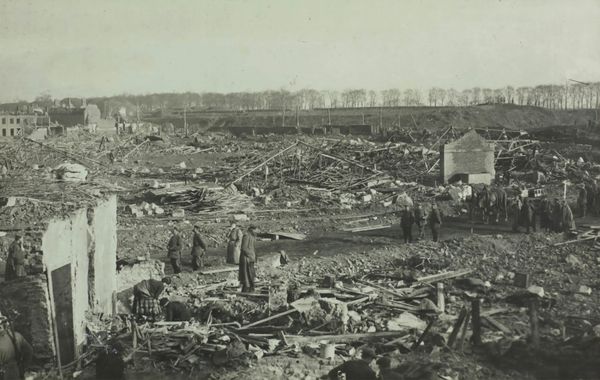
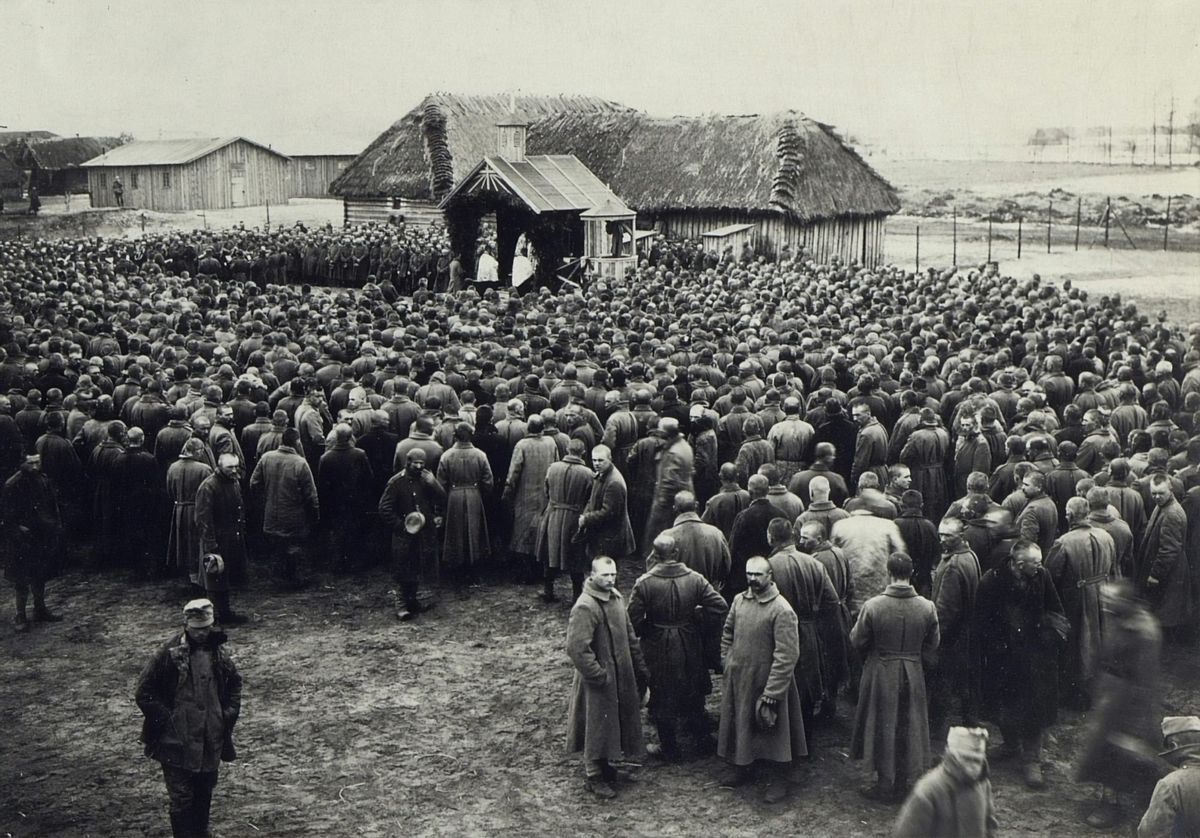
That image could just as easily describe the Eastern Front itself. Stretching from the Baltic to the Black Sea, it was a region where the fighting was only part of the devastation. Supply lines were cut, borders redrawn, and entire populations pushed into flight, while typhus, dysentery and malaria moved through refugees, prisoners of war and civilians left to fend for themselves.
This part of the series looks at how that devastation played out across Russia, Poland and Romania, and how the countries further north, the Baltic states and Scandinavia, each bore the weight of the war in their own way, whether occupied, exposed, or merely watching from a neutral shore.
Furthermore, owing to a lack of data, but perhaps more importantly to an inadequate health system and poor record keeping, we lack a clear picture of the situation in the states in the immediate vicinity of and on the Eastern Front, meaning that mortality and morbidity rates cannot be reconstructed with any precision.
The army of the Central Powers cut the routes along which supplies intended for civilian areas were distributed, leaving the countries along the Eastern Front hungry and weakened. It was here, above all, that a typhus epidemic broke out, and it went on to affect the countries of Eastern Europe.
Read next: World War I Diseases and health conditions: how illness shaped the Great War
Russia: Epidemics, Refugees and the Collapse of Public Health on the Eastern Front
Russia entered the war in 1914 as one of the leading powers of the Entente, and it was precisely along its western border, on the Eastern Front, that some of the war's heaviest fighting and largest troop movements took place. On the Russian border and within Russian territory, epidemics of typhus, smallpox, meningitis and the so‑called “madness onslaught” created a serious health problem. The Siberian camps, unhygienic as they were, recorded a high incidence of dysentery and high mortality from typhus among German and Austro‑Hungarian prisoners of war in 1915. Trains were organised along the front lines for the transport of the wounded and of medical equipment, possibly for the sake of faster and more efficient transport of the latter.
However, disease in Russia was more than just a military issue. Epidemic diseases – above all typhus and cholera – spread quickly across the empire, especially after the military’s scorched‑earth retreat of 1915, which displaced more than six million people and created ideal conditions for lice‑borne and water‑borne infections. Refugee flows along roads, railways and riverbanks carried cholera, typhus and dysentery into villages and towns; groups deported for “suspect loyalty” (notably Jews and Germans) were transported in sealed cattle trains and left for days without adequate food, water or sanitation, with many dying en route. Public healthcare in Russia was patchy before the war – concentrated in capitals and army hospitals, with rural areas largely dependent on local zemstvo (“community medicine”) structures – but the war accelerated modernising tendencies, expanding both state and zemstvo systems for the army and civilians alike. Even so, the system was overwhelmed: malnutrition, inflation and transport chaos meant that tuberculosis, typhoid, dysentery and cholera became everyday threats, and “germ‑based and social pathologies” fed into ethnic riots, strikes and peasant unrest.
Economically, the empire struggled with shortages, runaway inflation and a breakdown of supply chains; peasants increasingly turned to autarky, refusing to sell grain to towns amid political chaos and transport disorder, which deepened urban starvation by 1917. Migration was massive and traumatic: the refugee crisis (nearly five million by early 1917 by some official counts) reshaped demographics, strained local resources and intensified fears of contagion. Everyday life in towns and on the railways was defined by queues for bread, fear of epidemics, and a sense that the state could no longer guarantee basic order – conditions that helped turn military setbacks into revolutionary crisis.
To Russia's west, the situation was in some ways even more precarious, since Poland had no state of its own at the time, and its territory, divided between the Russian, German and Austro‑Hungarian empires, became one of the main battlegrounds of the Eastern Front.
Poland: Typhus, Occupation and Racialised Public Health in Divided Polish Lands
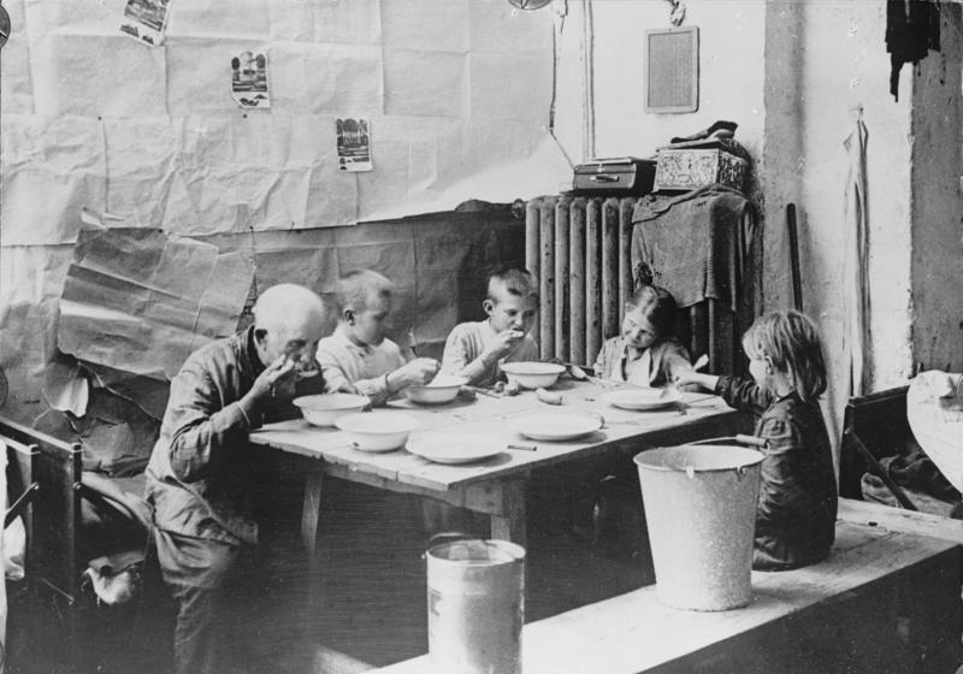
Divided Poland was in a catastrophic situation when it came to healthcare. It did not have enough hospitals or shelters for either the army or civilians, and there was also a chronic shortage of healthcare workers, leaving many people unattended and without proper care. To make matters worse, the country was struck by typhus in 1915, which spread rapidly given how highly contagious the disease was.
The government's solution to the situation was mass disinfection. This, however, wasn't aimed solely at public and private places. Disinfection measures were targeted in nature, directed in particular at Jews, who were regarded as unclean, a view shaped by the eugenicist thinking that circulated widely at the time. In German‑occupied Poland, typhus escalated into a major epidemic in the winter of 1915/1916, especially in Łódź and Warsaw; early large outbreaks also occurred among Russian prisoners of war and among Polish agricultural workers sent to German provinces, where cramped, miserable conditions fostered transmission. Public‑health responses became increasingly racialised: German authorities framed Polish Jews as “lice‑ridden” carriers of typhus, using disease discourse to justify border closures, arrests and deportations of Jewish migrant workers – an intersection of medicine, occupation policy and antisemitism. Beyond typhus, tuberculosis, smallpox, dysentery and venereal diseases were common, with Jewish communities particularly vulnerable due to overcrowding and poor living conditions; international Jewish organisations (such as the JDC) directed special funds to combat these illnesses.
Under the Central Powers’ occupation after 1915, the land was systematically used for food and raw‑material exports and as a source of compulsory labour; between 1915 and 1917, roughly 500,000–600,000 Poles from Russian Poland worked in Germany, while many factories shut down due to lack of raw materials, machine evacuations and war damage, pushing unemployment and poverty higher. Wartime hardships – malnutrition, inflation, forced requisitions, fuel shortages and infectious diseases – eroded living standards and sparked protests, strikes and, at times, anti‑Jewish riots. Migration and displacement were pervasive: hundreds of thousands of Galicians fled the Russian invasion in 1914, and several hundred thousand inhabitants of Russian Poland were forcibly evacuated eastward in 1915, further straining infrastructure and health.
Further south, Romania entered the war in 1916 on the side of the Entente, hoping to gain territory from Austria‑Hungary, but it was swiftly overrun by Central Powers forces and spent most of the war years under occupation, a position that left its health system under much the same strain as Poland's.
Romania: Epidemics under Occupation and the Strain on Hospitals and Supplies
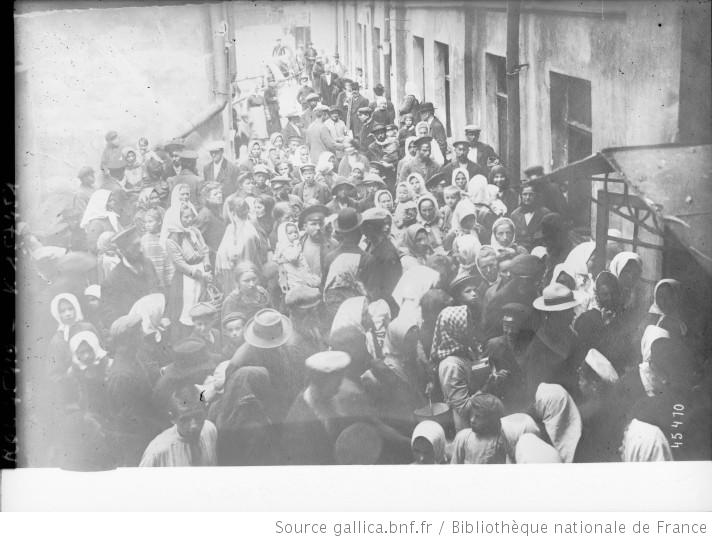
Romania faced the same problem as Poland, lacking sufficient hospital capacity in both staff and accommodation. As most supplies, including medicines such as quinine, went to the army, the number of malaria cases among the civilian population rose noticeably. Hygiene supplies, such as soap, were likewise lacking for the population, which made it impossible to maintain basic bodily and clothing hygiene, and this contributed to the appearance of epidemic typhus and scabies.
Health and disease were central to the Romanian experience. In the post‑war period (1916–1918 and immediately after), infectious diseases dominated morbidity: typhus alone accounted for over 60% of recorded illnesses in 1919, reflecting the virulence and spread of epidemic disease during and after the conflict. The conditions that enabled this – military collapse, population displacement, disrupted health services and occupation – mirror broader East‑Central European patterns, where refugees and demobilised soldiers carried cholera, typhoid and lice‑borne typhus across fluid borders.
Economically, the war devastated the workforce through death and invalidity, while the occupation subordinated Romania’s economy to German‑Austrian needs; a network of light railways was built to move goods to Bucharest and Danubian ports for export, and the finance system was restructured under sanctions. In the unoccupied part (Moldavia), the state struggled to maintain administration and supply lines, with intelligence activity and informal contacts bridging the split between occupied and free zones. Everyday life was marked by scarcity, requisitions, price rises and the constant presence of epidemics, which compounded the trauma of defeat and occupation even as Romania ultimately emerged from the war with a much larger territory.
Further north, the war took a rather different shape. Here it was not so much direct combat as occupation, blockade and the pressures of mass displacement that shaped the health of the region.
The Baltic and Scandinavian Countries: Neutrality, Blockade and Wartime Disease
During the First World War, the Scandinavian countries held a neutral status, while the Baltic countries, under the crown of the Russian Empire, stood on the side of the Entente. Before the war, the Baltic region and Finland had been part of the Russian Empire, with Finland, unlike the Baltic countries, enjoying autonomy. They remained in this form until the February Revolution of 1917, which shook the Russian Empire. During the war years, the Baltic was under German occupation, while Finland, thanks to its geographical position and the fact that it was a neutral country, remained far from the front and untouched by military operations.
Finland underwent modest modernisation, the Baltic ports were urbanised, while most of the surrounding area remained rural. This was the condition in which the Baltic region found itself on the eve of the war. Because of the demands of the war, peasants were encouraged to cultivate the land as extensively as possible so as not to fall into crisis.
While in the Baltic the pressure fell on farming, in Norway the pressure grew on the port towns, which received migrants, since, owing to military operations in the North Sea, ships carrying migrants were frequently forced to remain in Norwegian port towns, where accommodation was needed but in short supply, which created discontent among Norwegians.
This fragile balance was upended once fighting reached the region directly. As the German army advanced through the Baltic, the population fled to safer towns and places, while the German army destroyed everything it came across, burning fields and crops along with entire villages, and in this way laying waste to the economy. Major towns, such as Riga, were abandoned because of the German threat and the poor state of hygiene. It was precisely because of these sanitary difficulties in the towns that mortality from disease increased.
The destruction of towns and farmland only accelerated the movement of people already under way. The advance of the Central Powers led to a large influx of refugees into what was then Livonia. Discontent over inflation and hunger resulted in a wholesale exclusion of foreigners in Norway and in the outbreak of revolution in Finland, where a ban on free movement had been in force since the start of the war; the same situation applied in the Baltic countries. Sweden, for its part, imposed restrictive laws on migrants and controlled its borders. The larger Baltic towns were, for the most part, evacuated, while at the same time war refugees continued arriving in these same towns, and migration routes passed through the Scandinavian seaports, particularly the Norwegian ones; in some towns migrants remained, while in others they merely passed through. Refugees were housed in abandoned homes, particularly Jewish ones, or in camps, where they were exposed to disease, starved and isolated.
Under German occupation, the local Baltic population was subjected to abuse and hostility, Jews in particular; in German eyes, the Baltic peoples were backward, uncivilised and lazy, while the Swedes, for their part, regarded the Russians as primitive and the Germans as familiar, whereas the Norwegians viewed the Germans, along with other foreigners, particularly Jews and Roma, as a threat. The shortage of food in Sweden, together with the fact that food produced in the Baltic was earmarked first for the German army, meant that farming was neglected and fell into decline, and food was lacking for the needs of the population, which led to discontent and a more pronounced xenophobia towards foreigners in the north and north east of Europe.
Uncertainty, the unknown and hardship, as seen here, can sometimes lead to irrational behaviour, such as xenophobia and prejudice. This wasn't unique to this corner of Europe during the First World War; it was far more widespread.
Read more: World War I on the Western Front: Diseases, occupation and Neutral Countries
Conclusion
If the Western Front was defined by stalemate, the Eastern Front was defined by movement, of armies, of refugees, and of disease travelling ahead of both. Russia, Poland and Romania absorbed the worst of it directly, their populations caught between occupying armies, cut supply lines and health systems too thin to cope with what the war demanded of them.
Further north, the picture was less about combat and more about pressure. The Baltic states endured occupation and the particular cruelty it brought with it, while Scandinavia's neutrality offered no real shelter from blockade, refugees and the resentment that both could provoke. What unites every country in this part of the series is the same pattern seen on the Western Front: the war's true reach extended far beyond its battle lines, into granaries, ports and overcrowded refugee camps, and it was often there, rather than on the front itself, that its human cost was felt most sharply.
The next and the last part of the series turns to the Balkan and Italian Front, where war, disease and occupation converged with particular force. Subscribe if you'd like it delivered straight to your inbox.
This article explores themes related to World War I, Eastern Front, diseases, health crisis and migrations.
Sources:
Doina Anca Cretu: Health, Disease, Mortality; Demographic Effects, in: 1914-1918-online. International Encyclopedia of the First World War, ed. by Ute Daniel, Peter Gatrell, Oliver Janz, Heather Jones, Jennifer D. Keene, Alan Kramer, and Bill Nasson, issued by Freie Universität Berlin, Berlin 2020-11-17. DOI: 10.15463/ie1418.11496
Chorba, T., „Trench Conflict with Combatants and Infectious Disease“, Emerging Infectious Diseases • www.cdc.gov/eid • Vol. 24, No. 11, November 2018
Joshua A. Sanborn: Russian Empire, in: 1914-1918-online. International Encyclopedia of the First World War, ed. by Ute Daniel, Peter Gatrell, Oliver Janz, Heather Jones, Jennifer D. Keene, Alan Kramer, and Bill Nasson, issued by Freie Universität Berlin, Berlin 2014-11-30. DOI: 10.15463/ie1418.10499
Siobhan Peeling: Refugees (Russian Empire), in: 1914-1918-online. International Encyclopedia of the First World War, ed. by Ute Daniel, Peter Gatrell, Oliver Janz, Heather Jones, Jennifer D. Keene, Alan Kramer, and Bill Nasson, issued by Freie Universität Berlin, Berlin 2014-10-08. DOI: 10.15463/ie1418.10235
Spinney, L., Blijedi jahač. Kako je španjolska gripa 1918. promijenila svijet, Zagreb: v|b|z, 2019
Đukić, F.; Pavelić, M.; Šaur, S., „Hrvatska u Prvom svjetskom ratu - Bojišta, stradanja, društvo,“ ESSEHIST, 7, 2015
Proctor, T. M., Civilians in a world at war, 1914–1918, New York University Press, New York and London, 2010
Weindling, P., „Between Bacteriology and Virology: The Development of Typhus Vaccines Between the First and Second World Wars“, History and Philosophy of the Life Sciences , 1995, Vol. 17, No. 1, La construction historique des vaccins (1995)
Piotr Szlanta: Poland, in: 1914-1918-online. International Encyclopedia of the First World War, ed. by Ute Daniel, Peter Gatrell, Oliver Janz, Heather Jones, Jennifer D. Keene, Alan Kramer, and Bill Nasson, issued by Freie Universität Berlin, Berlin 2014-10-08. DOI: 10.15463/ie1418.10255
Harald Heppner, Rudolf Gräf: Romania, in: 1914-1918-online. International Encyclopedia of the First World War, ed. by Ute Daniel, Peter Gatrell, Oliver Janz, Heather Jones, Jennifer D. Keene, Alan Kramer, and Bill Nasson, issued by Freie Universität Berlin, Berlin 2018-12-10. DOI: 10.15463/ie1418.10375/1.1
Kvist Geverts, K., „Exile and Migration (Sweden),“ in: 1914-1918-online. International Encyclopedia of the First World War, ed. by U. Daniel, P. Gatrell, O. Janz, H. Jones, J. Keene, A. Kramer, B. Nasson, issued by Freie Universität Berlin, Berlin 2019-07-22., DOI: 10.15463/ie1418.11387
Brazier, E., „Migration (Norway),“ in: 1914-1918-online. International Encyclopedia of the First World War, ed. by U. Daniel, P. Gatrell, O. Janz, H. Jones, J. Keene, A. Kramer, B. Nasson, issued by Freie Universität Berlin, Berlin 2019-11-07. DOI: 10.15463/ie1418.11430
Richter, K., „Baltic States and Finland“, in: 1914-1918-online. International Encyclopedia of the First World War, ed. by Ute Daniel, Peter Gatrell, Oliver Janz, Heather Jones, Jennifer Keene, Alan Kramer, and Bill Nasson, issued by Freie Universität Berlin, Berlin 2014-10-08. DOI: 10.15463/ie1418.10002
Stangl, A., „Was übrig blieb, war ein verstümmelter Rumpf, aus allen Adern blutend.“ Stefan Zweig und seine “Welt von Gestern”, https://ww1.habsburger.net/de/kapitel/was-uebrig-blieb-war-ein-verstuemmelter-rumpf-aus-allen-adern-blutend-stefan-zweig-und-seine
Iaroslav Golubinov: Food and Nutrition (Russian Empire), in: 1914-1918-online. International Encyclopedia of the First World War, ed. by Ute Daniel, Peter Gatrell, Oliver Janz, Heather Jones, Jennifer D. Keene, Alan Kramer, and Bill Nasson, issued by Freie Universität Berlin, Berlin 2018-08-13. DOI: 10.15463/ie1418.11292
Jan Rybak, “Racialization of Disease: The Typhus-Epidemic, Antisemitism and Closed Borders in German-Occupied Poland, 1915–1918,” European History Quarterly, Volume 52, Issue 3, https://doi.org/10.1177/02656914221103467