World War I Diseases and Health Conditions: How Illness Shaped the Great War
Behind the trenches of World War I lurked a quieter killer: disease. Discover how typhus, malnutrition, mental trauma and mass migration shaped the health of soldiers and civilians alike, and how censorship gave the Spanish flu its misleading name.

When we think of the First World War, we picture trenches, battles and generals. What we rarely picture is the far quieter enemy that killed just as many people: disease.
The First World War, also known as the Great War, was an armed conflict whose battles took place on European soil and in the colonies from 1914 to 1918. The trigger, or immediate cause, of the conflict was the assassination of Archduke Franz Ferdinand on 28 June 1914 in Sarajevo.
The two opposing sides, the Central Powers (Triple Alliance) and the Entente Powers, had already formed into groups in the second half of the 19th century. Each state, driven by its own interests, entered the war expecting a short conflict, yet it lasted four years.
From the very beginning, in the summer of 1914, European fronts began to open, the so called Western, Eastern and Balkan fronts, while the Italian front opened when Italy entered the war in May 1915. The conflict very quickly took on the form of trench warfare, which was to have a major impact on the health of soldiers.
Through the movement and mobilisation of troops, diseases spread unhindered across states. Likewise, infectious diseases spread through the transport of prisoners and war refugees, and in the final year of the war through returning soldiers, which placed a further burden on towns and hospitals; for instance, typhus and lice were present in the Austro-Hungarian army and very quickly spread to the Serbian civilian population.
Wars bring famine, and consequently a weakening of the body, which results in disease. According to historian Cretu, infectious diseases claimed more lives than military operations. Among soldiers and civilians, the diseases present included dysentery, cholera, typhus, malaria, tuberculosis, measles and venereal diseases, as well as rickets, oedema and scurvy; all of these were, in turn, the result of unhygienic conditions, a body weakened by malnutrition, a lack of medical and food supplies and other resources, and pervasive deprivation.
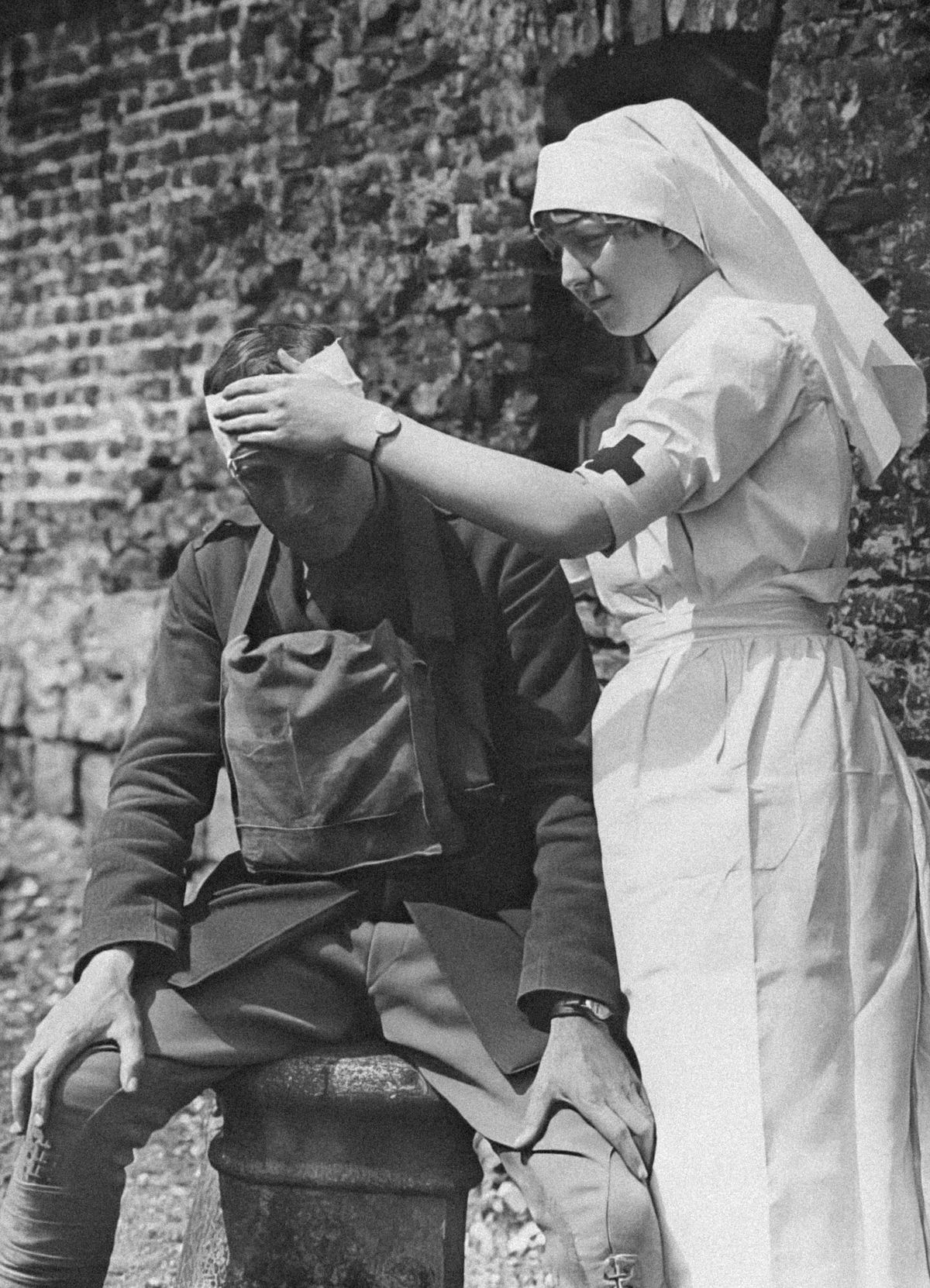
Furthermore, while the focus of healthcare and production was on the front, civilian areas were neglected in the first two years of the war. Later, medical staff and institutions increased in number for the obvious reason that needs demanded more personnel in healthcare. State authorities, burdened by wartime events, pushed civilians into the background; for example, from 1915 Germany had a problem supplying its urban and rural population with foodstuffs, and rising inflation made it even harder for civilians to obtain food products. Accordingly, healthcare associations, such as the Red Cross, provided assistance. Closely tied to the army, medical staff on their way to the front lines often encountered rural populations whom they frequently helped in the fight against disease.
Read next: Why wasn't the Russian Flu remembered?
Mental Illness and Psychological Trauma Among WWI Soldiers
Alongside infectious diseases, the psychological effect of the war on people must also be mentioned. As early as 1915, doctors noticed symptoms, psychological disturbances in soldiers, which they linked to hysteria. However, they did not immediately connect these to psychological problems, but rather to possible brain injuries or as a consequence of gas poisoning.
Many suffered from nervous system disorders or movement disorders (ataxia, tremor, paraplegia and so on), which were treated with hypnosis. War devastation and prolonged stress over the uncertainty of survival, combined with a poor and monotonous diet, weakened immunity made people susceptible to disease, while unhygienic living conditions could affect mental health and bring on psychological depression in people.
Another aspect connected to the psychological dimension of the war was the preservation of morale. In 1917, morale on both sides of the war was declining, which is why censorship was employed to encourage the warring parties.
When Spanish flu arrived in Spain in May 1918, the authorities had no knowledge of the disease because of the censorship enforced in the countries participating in the war, censorship that was propping up declining morale. Awareness of the disease could have further unsettled the already shaken mental health of soldiers and civilians alike. Towards the end of June, the Spanish Ministry of Health had not received the answers it sought about the existence of a similar illness anywhere else in Europe.
As Spain was not at war and did not employ censorship, the press wrote freely about the emergence of an unknown disease. As word of this spread beyond Spain's borders, the French, British and Americans, unaware that the flu had long been present at their own front lines, named the illness Spanish flu.
Had people learned of an unknown disease ravaging the front lines and the towns, the natural reaction would have been fear, often followed by panic, a reaction that was undesirable, particularly within the military ranks; as the historian Biddiss notes, “fear can be contagious and hysterical,” fear being a natural reaction to something unknown or not understood, and Spanish flu was one such thing, though not necessarily the only one, as any disease could provoke fear, which might result in people seeking counsel from a priest or another shaman rather than a doctor, or, in the words of science journalist Spinney, “fear keeps people alert. It makes them notice things they would otherwise overlook, pay attention to certain associations while disregarding others, and remember prophecies they would otherwise dismiss as nonsense.”
Read next: The Spanish Flu in Literature and Oral History
Migration and the Spread of Disease During World War I
As migrations were a side effect of the war, they allowed diseases to spread unhindered and relatively quickly. In constant movement, the ability to transport belongings was limited, and in their haste, people usually carried only the essentials, which might amount to a handful of items of clothing; they were condemned to wearing the same clothes for months or longer, without water, malnourished and ill, and, being unable to maintain hygiene, they brought disease with them to the places they reached.
Among the diseases already mentioned was typhus, whose larvae, lice, burrow into the seams of a jacket. Measles spread with ease in such conditions. Migrations take place in groups, usually forming columns in which people are packed closely together, and on arrival at their destination they are stationed together in one place, such close contact being conducive to the spread of measles.
In the case of the First World War, migrations took place across the length and breadth of the European continent, involving soldiers and prisoners of war as well as emigrants. Such was the case with the United States army, which from 1917 embarked on mass mobilisation. Indeed, military camps along the eastern coast of the United States were a source of measles and pneumonia.
Camps of this kind, where masses of people were concentrated, were a favourable environment for diseases spreading by touch and by droplet. As soldiers were in constant movement, crossing the Atlantic and arriving at French military camps, they may have brought measles and pneumonia with them, although it is possible that these diseases were already present in the French camps.
Conclusion: The Hidden Toll of Disease in the First World War
The First World War was not only a conflict of armies and fronts, but also a conflict fought against disease, hunger and psychological exhaustion. The nature of trench warfare, the constant movement of soldiers, prisoners and refugees, and the general neglect of civilian populations created conditions in which infectious diseases such as typhus, dysentery, cholera, malaria and measles could spread with little hindrance, and, as has been shown, these diseases often claimed more lives than combat itself.
Malnutrition and unhygienic living conditions, both at the front and in civilian areas, further weakened the body and left it exposed to illness, while the psychological toll of the war, from what was then termed hysteria to what would today be recognised as trauma, demonstrated that the war's consequences extended far beyond physical wounds.
Censorship, introduced to preserve morale among the warring nations, additionally shaped how disease was perceived and named, as the case of Spanish flu illustrates; a disease that was in fact present on multiple fronts long before it reached Spain came to bear that name simply because Spain, remaining neutral, was the only country whose press was free to report on it. This example shows how closely questions of public health were bound up with questions of state control and wartime politics, and how fear of the unknown, whether of disease or of the future, shaped behaviour on both the front lines and the home front.
Finally, migration, whether of soldiers, prisoners of war or refugees, proved to be one of the principal mechanisms behind the spread of disease across the European continent, and later beyond it, as the mobilisation of the American army demonstrates. Taken together, the health conditions and diseases of the First World War reveal a war whose true scale cannot be measured by military losses alone but must also account for the civilian and soldier lives lost to hunger, illness and the many silent consequences of a conflict that reshaped the whole of Europe.
This is only the first part of the story. In the next instalment, we take a closer look at the individual fronts, starting with the Western Front, where disease and warfare were more closely intertwined than most people realise. If you don't want to miss it, subscribe and get the next part straight to your inbox.
This article explores themes related to World War I, diseases, health crisis and migrations.
Sources:
„svjetski ratovi“. Hrvatska enciklopedija, mrežno izdanje. Leksikografski zavod Miroslav Krleža, 2013. – 2024. <https://www.enciklopedija.hr/clanak/svjetski-ratovi>.
Stevenson, D., 1914 – 1918: povijest Prvog svjetskog rata, Zaprešić: Faktura, 2014
Spinney, L., Blijedi jahač. Kako je španjolska gripa 1918. promijenila svijet, Zagreb: v|b|z, 2019
Proctor, T. M., Civilians in a world at war, 1914–1918, New York University Press, New York and London, 2010
Cretu, D. A., „Health, Disease, Mortality; Demographic Effects , in: 1914-1918“-online. International Encyclopedia of the First World War, ed. by Ute Daniel, et al., issued by Freie Universität Berlin, Berlin 2020-11-17. DOI: 10.15463/ie1418.11496.
Pedroso, J. L.; S. C. Linden; O. G. Barsottini; P. M. Filho; A. J. Lees, „The relationship between the First World War and neurology: 100 years of “Shell Shock”“, Arq Neuropsiquiatr 2017; 75(5):317-319, doi.org/10.1590/0004-282X20170046
Radošević, M., „Higijenske i zdravstvene prilike u zapadnoj Hrvatskoj između dva svjetska rata s posebnim osvrtom na Istru“, Časopis za povijest Zapadne Hrvatske, VI. i VII./6. i 7., 2011-2012
Cartwright, F. F.; M., Biddiss, Bolest i povijest, Zagreb: Ljevak, 2006
Honigsbaum, M., The Pandemic Century. One Hundred Years of Panic, Hysteria, and Hubris, New York-London: W. W. Norton & Company, 2019