The Gunpowder Plot of 1605: The Conspiracy to Blow Up Parliament
The Gunpowder Plot of 1605 was an attempt by a group of English Catholics to blow up Parliament and kill James I. Discover the conspirators’ motives, the failed plot and how its legacy shaped British history and the memory of Guy Fawkes.

England Before the Gunpowder Plot
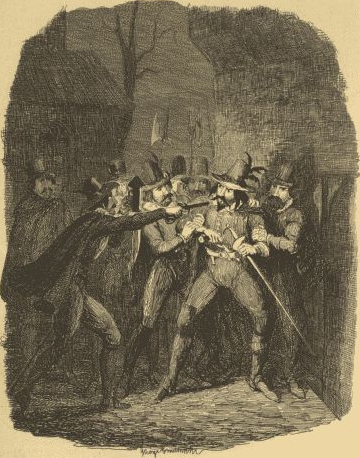
James I was the son of Mary, Queen of Scots, and her second husband, Henry Stuart, Lord Darnley. Following his mother's forced abdication, he became King of Scotland in 1567, ruling as James VI. After the death of Elizabeth I in 1603, he succeeded to the English throne as James I, becoming the first Stuart monarch of England and bringing the crowns of England, Scotland and Ireland under one ruler.
James relied on the established Church of England, which created tensions with both Puritans and Catholics, although for different reasons. Puritans wanted further reforms to the Church, while Catholics hoped that the new monarch might allow them greater religious freedom. Since James's mother had been Catholic, some English Catholics initially expected his reign to bring a more tolerant approach to their faith. However, these expectations were gradually disappointed.
At the Hampton Court Conference in 1604, James approved the preparation of a new English translation of the Bible. Published in 1611, it became known as the King James Bible. The translation was not introduced as a ban on Puritan Bibles, as is sometimes suggested; rather, it formed part of the King's wider efforts to establish religious uniformity and reinforce the authority of the Church of England.
At the beginning of his reign, James temporarily allowed some leniency towards Catholics who refused to attend Anglican services, particularly through the suspension or remission of recusancy fines. This did not amount to religious freedom, however, and the government soon returned to enforcing restrictions. Catholic priests were ordered to leave the country, and those who continued to minister secretly risked arrest and execution. Following the Gunpowder Plot, the authorities intensified their scrutiny of Catholic communities, although the government's response was not always uniform and did not mean that every Catholic was treated as a conspirator.
James's foreign policy also caused concern among some English Protestants. His efforts to establish peace with Spain, a Catholic power, were viewed with suspicion by those who feared that the monarchy might become too accommodating towards Catholic interests. Although the peace treaty with Spain was signed in 1604, it did not secure the religious concessions that English Catholics had hoped for. The combination of religious restrictions, political uncertainty and disappointment with the new monarch contributed to the tensions that preceded the Gunpowder Plot.
Keep Reading: Where's the Light in the Enlightenment Era? Part I
Where's the Light in the Enlightenment Era? Part II
Planning the Conspiracy
One of the men who became involved in the conspiracy was Robert Catesby, a member of a prominent Catholic family from the English Midlands. Although Guy Fawkes is now the best-known figure associated with the Gunpowder Plot, it was Catesby who organised the conspiracy and brought together the men who would take part in it.
Catesby was in his early thirties when he began developing the plan. The idea of using gunpowder to destroy the Houses of Parliament and kill the King appears to have taken shape around 1603. By 1604, he had begun recruiting other Catholic gentlemen who shared his opposition to the religious policies of the Stuart government. Their objective was to kill James I and members of the political establishment during the State Opening of Parliament, creating an opportunity for a Catholic-led uprising and a change of monarch.
The original group included Thomas Wintour, John Wright and Thomas Percy, alongside Catesby and Guy Fawkes. Wintour travelled to Flanders, then under Spanish rule, in an attempt to obtain Spanish support for the planned uprising. However, the Spanish authorities showed little interest in supporting such an enterprise. During his time abroad, Wintour recruited Guy Fawkes, who had served as a soldier in the Spanish army in the Low Countries.
Fawkes had been born into a Protestant family in Yorkshire but converted to Catholicism as an adult. He was also known by the name Guido Fawkes, which he had adopted while serving abroad. His military experience and knowledge of explosives made him a useful addition to the group. Wintour introduced him to the conspiracy, and Fawkes agreed to take part in the plan. In May 1604, five men met in London and swore an oath of secrecy and loyalty to one another. As the preparations continued, Percy rented a house close to the Houses of Parliament, while Fawkes adopted the name John Johnson and worked under the identity of Percy's servant. The conspirators began looking for a suitable place to store the gunpowder and gradually brought more men into the plan.
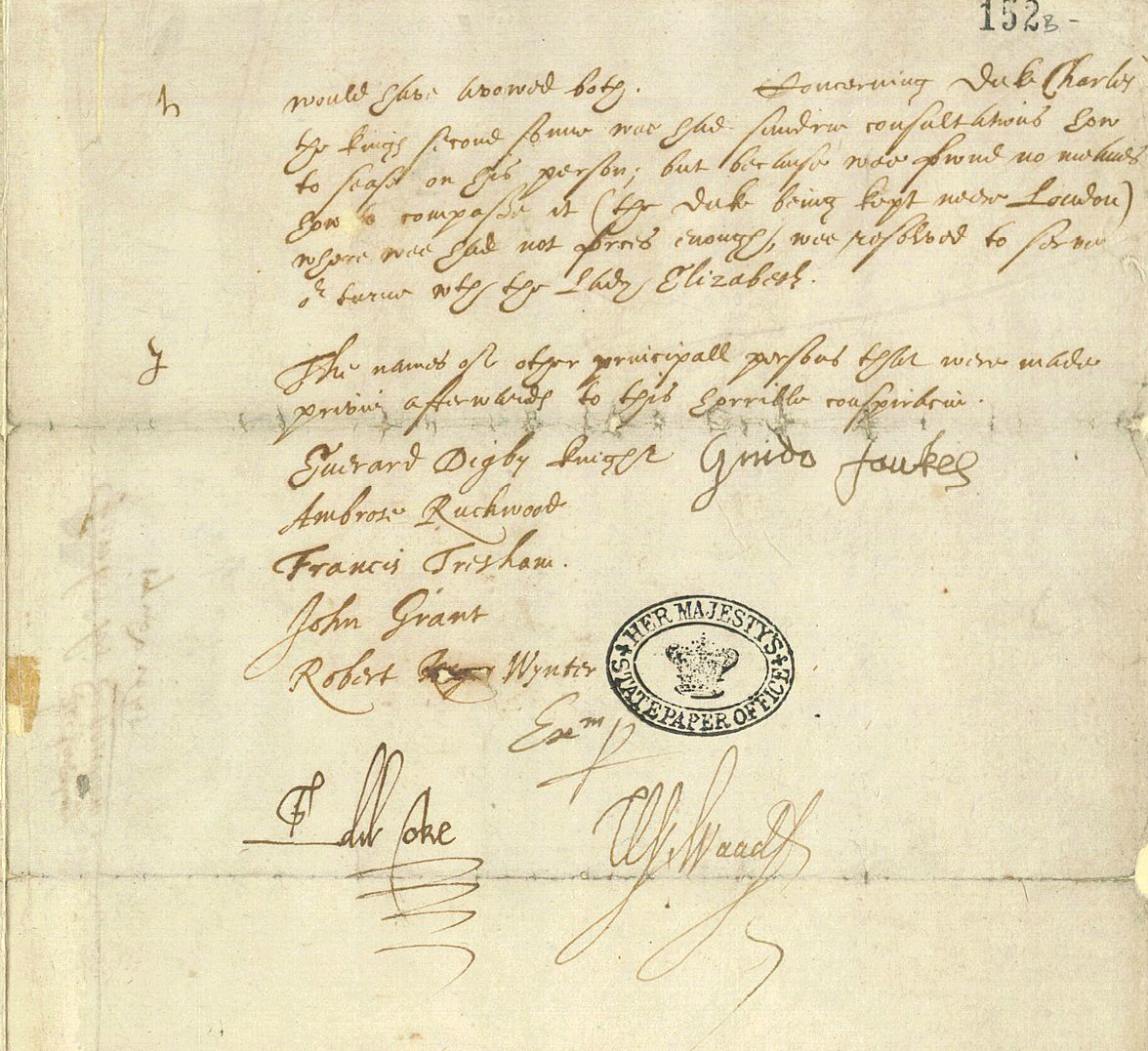
The group eventually included Robert Keyes, Robert Wintour, John Grant, Christopher Wright and Thomas Bates, who served as Catesby's servant. In March 1605, Percy secured a lease on a cellar beneath the House of Lords at the Palace of Westminster. The conspirators intended to store the gunpowder there and detonate it when Parliament assembled. As the preparations developed, three more men joined the conspiracy: Ambrose Rookwood, Francis Tresham and Sir Everard Digby. The group therefore came to consist of thirteen principal conspirators. Their plan depended not only on destroying Parliament but also on organising a wider uprising after the King's death, although the extent of the support they expected to receive remains a subject of historical discussion.
The Discovery of the Plot
By November 1605, the conspirators had moved their preparations towards the final stage. They had managed to keep the plan secret for many months, but the situation changed when William Parker, Lord Monteagle, received an anonymous letter warning him not to attend the opening of Parliament. The letter advised Monteagle to avoid the forthcoming parliamentary session because a terrible event was being planned. It included the following warning:
My lord, out of the love I beare to some of youere frends, I have a care of youre preservacion, therefore I would aduyse you as you tender your life to devise some excuse to shift youer attendance at this parliament, for God and man hath concurred to punishe the wickedness of this tyme, and thinke not slightly of this advertisement, but retire yourself into your country, where you may expect the event in safety, for though there be no apparance of anni stir, yet I saye they shall receive a terrible blow this parliament and yet they shall not seie who hurts them this cowncel is not to be contemned because it may do yowe good and can do yowe no harme for the dangere is passed as soon as yowe have burnt the letter and i hope God will give yowe the grace to mak good use of it to whose holy proteccion i comend yowe.
The author also advised Monteagle to destroy the letter after reading it. Instead, Monteagle passed it to Robert Cecil, the Earl of Salisbury and one of the King's leading ministers. The letter eventually reached James I, who ordered further searches of the Palace of Westminster and its surroundings. The identity of the person who wrote the letter has never been established with certainty. Francis Tresham, one of the conspirators and Monteagle's brother-in-law, has often been suggested as a possible author, but no conclusive evidence has confirmed this theory.
On 4 November, the Earl of Suffolk inspected parts of the Palace of Westminster and noticed an unusually large quantity of firewood stored in a cellar. Later that night, Thomas Knyvett, a royal official responsible for security, returned to the area and carried out a further search. The wood was moved, revealing thirty-six barrels of gunpowder hidden beneath it. The search also uncovered a man who identified himself as John Johnson and had a slow match in his possession. He was, in fact, Guy Fawkes. His arrest prevented the planned explosion, which would have killed the King, members of Parliament and other important figures attending the State Opening.
The conspirators intended to remove the Protestant monarchy and establish a Catholic government. However, their plans did not end with the destruction of Parliament. They also hoped to take control of the political situation afterwards and place a Catholic monarch on the throne. Their wider plans depended on support that they ultimately failed to secure. During his interrogation, Fawkes revealed his real identity and explained his involvement in the conspiracy. He was taken into custody and questioned about the other participants. The authorities also attempted to establish the extent of the plot and whether other Catholic figures had been involved.
The Arrest and Execution of the Conspirators
Guy Fawkes was arrested during the night of 4–5 November 1605 and taken to the Tower of London. Initially, he refused to reveal the identities of the other conspirators. On 6 November, James I authorised the use of torture during his interrogation. Fawkes eventually confessed and signed a written statement, although his signature was hardly legible, probably because of the physical suffering he had endured. By that time, several conspirators had already left London. The authorities began pursuing them, and some of the men eventually gathered at Holbeche House in West Midlands. On 8 November, Catesby, Thomas Percy and the Wright brothers were killed during a confrontation with royal forces. Other conspirators were captured and taken to London. Francis Tresham, meanwhile, died while imprisoned in the Tower before he could stand trial.
The surviving conspirators were tried for treason in January 1606. They were found guilty and sentenced to be hanged, drawn and quartered, a punishment commonly imposed on men convicted of high treason. Guy Fawkes and several of the other surviving conspirators were executed on 31 January 1606, while the first group was executed the previous day. According to the traditional account, Fawkes fell from the scaffold and broke his neck, avoiding the full course of the sentence. His body was nevertheless quartered, and the remains were sent to different parts of the kingdom as a warning to anyone who might consider rebelling against the Crown. The executions were intended not only to punish the conspirators but also to demonstrate the consequences of treason.
The Legacy of the Gunpowder Plot
Guy Fawkes is now the most recognisable member of the Gunpowder Plot, largely because he was discovered guarding the gunpowder beneath Parliament. However, this popular image has often overshadowed Robert Catesby's central role in organising the conspiracy. Over time, Fawkes became the face of the entire event, appearing in illustrations, historical accounts, novels, films and school textbooks. Following the discovery of the plot, Parliament established 5 November as an annual day of thanksgiving. The observance became known as Gunpowder Treason Day and later as Guy Fawkes Night or Bonfire Night. It was intended to commemorate the King's survival and the failure of the conspiracy, while also reinforcing Protestant loyalty to the monarchy.
In the seventeenth century, printed illustrations and pamphlets frequently portrayed Fawkes as a symbol of Catholic treachery. Some images associated him with other figures condemned for treason, while public celebrations helped establish a lasting Protestant narrative about the events of 1605. The Gunpowder Plot therefore became more than a failed conspiracy: it also shaped how English society remembered religious conflict and Catholic opposition to the monarchy. Over time, the meaning of Guy Fawkes Night changed. What began as an official religious and political commemoration gradually developed into a popular celebration involving bonfires, fireworks and the burning of an effigy known as a Guy. Children also made their own figures and asked passers-by for money, traditionally using the phrase “a penny for the Guy”.
The rhyme “Remember, remember the fifth of November, the Gunpowder Treason and Plot” became closely associated with the celebration. Versions of the rhyme appeared in printed form in the nineteenth century and helped keep the story of the conspiracy alive in popular culture. Today, Bonfire Night remains an established annual event in the United Kingdom, with fireworks and bonfires organised in towns and cities across the country.
The image of Guy Fawkes has also continued to change. Once presented primarily as a traitor and an enemy of the Protestant state, he has since become a more ambiguous figure in popular culture. His face, particularly as represented by the mask popularised by V for Vendetta, has been adopted in modern political protests and movements. This later interpretation is quite different from the original purpose of Bonfire Night, but it demonstrates how historical figures can acquire new meanings as political and cultural circumstances change.
Keep Reading: Where's the Light in the Enlightenment Era? Part I
Where's the Light in the Enlightenment Era? Part II
This article explores themes related to gunpowder plot, Guy Fawkes, Robert Catesby, James I, England, United Kingdom, seventeenth century, Catholicism, Protestantism and bonfire night
Sources:
Barraco, Caroline K. “Straw-Saint, Martyr, Most-Barbarous Archtraitor: Anti-Hagiographies of Henry Garnet in Seventeenth Century London.” Religions, vol. 15, no. 8, 2024
DeLoach, William M. “God, Man, and Thirty-Six Barrels of Gunpowder: A Historiographical Analysis of the Gunpowder Plot.” Tenor of Our Times, vol. 13, no. 1, 2024
Hamourtziadou, Lily, and Jonathan Jackson. “5/11: Revisiting the Gunpowder Plot.” Journal of Global Faultlines, vol. 5, nos. 1–2, 2019
The National Archives. “The Gunpowder Plot.” The National Archives, www.nationalarchives.gov.uk/education/teaching-resources/the-gunpowder-plot/
UK Parliament. “The Gunpowder Plot of 1605.” Parliament.uk, Living Heritage: Evolution of Parliament, https://www.parliament.uk/about/living-heritage/evolutionofparliament/parliamentaryauthority/the-gunpowder-plot-of-1605/