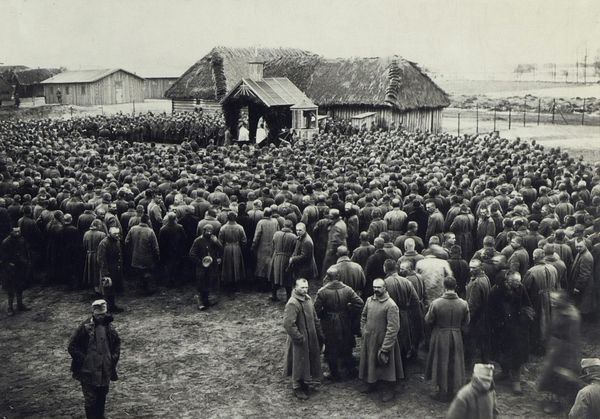
Disease, Epidemics and Public Health on the Italian and Balkan Fronts in World War I
On the Italian Front, soldiers fought the Alps as much as each other. In the Balkans, disease moved alongside atrocity. A look at malaria, typhus, trench foot and the systematic rape of civilians in Serbia, and how Austria-Hungary’s health system buckled under the strain.


A whole region, with all its old men, women and children, set out on a journey into the unknown, leaving behind empty houses, unharvested crops and desolation. The war was not fought on the front alone; it entered every one of our kitchens, every stable, every child's bed.
Istrian writer and academic Mijo Mirković (penname Mate Balota) described the Great War in those words. After the assassination of the Austro-Hungarian Archduke Franz Ferdinand in June 1914, Europe (un)willingly went to war. The summer in which the war broke out was, in Stefan Zweig's words, paraphrased, "exceptionally beautiful, serene, and unforgettable." It certainly turned out to be unforgettable, bringing destruction, disease and death.
This article examines the south-eastern European fronts. First, a brief outline of what set all four European warfronts apart from one another. Unlike the Western Front's trench warfare and the Eastern Front's war of manoeuvre, both fought mainly across flatlands and wetlands, the two southern European fronts were marked by distinctive geography and difficult terrain. The Italian Front was situated in the Eastern Alps and along the rivers Soča and Piave, where soldiers on both sides fought not only each other but the climate and weather on mountain peaks 3,000 metres high. The Balkan Front, by contrast, was fought across both hilly and mountainous regions (the Serbian mountain of Cer, the mountains of Albania and North Macedonia, the region north of Thessaloniki) and the river flatlands (the Sava, the Danube and the Drina). Read on to find out what diseases soldiers and civilians fought in this part of Europe.
Malaria, Cholera and Trench Disease on the Italian Front
The Kingdom of Italy joined the war on the side of the Entente (the Allied Powers) in the spring of 1915. This opened up a front in the Eastern Alps and along the freezing Soča river, known as La Guerra Bianca, or Krieg im Fels und Eis, the White War. The fighting caused heavy casualties, but even more lives were claimed by avalanches, hypothermia and disease.
People were affected by a cholera epidemic in 1915. This gastrointestinal infection was spread by contaminated water and by Austro-Hungarian prisoners of war. Malaria was spread by mosquitoes in the Soča and Piave river valleys. Typhoid fever was spread by the bacterium Salmonella typhi, carried through contaminated water and food. Typhus, on the other hand, was spread by the bacterium Rickettsia, carried by lice. At least 50,000 people were infected with tuberculosis on the Italian Front. There were also trench foot, trench fever and trench mouth. The first was linked to wet and cold conditions. The second was linked to lice. And the third was linked to dental infection caused by poor oral hygiene, smoking, stress and poor-quality food. Spanish influenza took its toll at the very end of the war. None of the diseases mentioned here were the result of battle alone.
The diseases that afflicted the northern part of the Apennine Peninsula afflicted the southern part just as much. Southern Italy had problems with malaria, which the climate favoured. More than 120,000 malaria cases were recorded across the Italian army, with significant numbers in the south. Cholera appeared in 1915, just as it had in the north. Severe outbreaks were recorded in Apulia in 1918; people fell ill with typhoid, tuberculosis, cholera and measles. Italian refugee centres were inadequate for refugees, and conducive to the spread of disease. Refugee centres were filled with civilians. Here we see that civilians suffered the same epidemics, the same diseases, as soldiers did at the front.
The Balkan Front: Disease and Atrocity in World War I
The Ottoman Empire: Epidemics and “the Sick Man of Europe”
Like Italy, the Ottoman Empire entered the war later, joining the Central Powers in October 1914. The Ottoman Empire, known as "the sick man of Europe," also struggled with infectious disease.
In this respect, the Ottoman Empire was ravaged by malaria and cholera. Many soldiers and civilians fell ill with infectious disease. Epidemics, such as dysentery, within the Ottoman army's ranks were partly caused by inadequate nutrition. The opposing German army was not exempt from infectious disease either. This region suffered a shortage of resources of every kind. The army recorded 330,796 deaths from disease; approximately 40,000 soldiers died of dysentery, 26,000 of typhus, 23,351 of malaria, 4,000 of recurrent fever and 150 of syphilis. Unsanitary conditions prevailed in captivity, which caused prisoners of war to fall ill and die. Owing to the large number of soldiers falling ill, the Ottoman authorities expanded hospital facilities, even introducing mobile hospitals close to the front line. Preventive measures included educational programmes concerning the maintenance of hygiene, vaccination and disinfection measures.
Serbia in World War I: Sexual Violence and Typhus Epidemics
We received the order, and this was read out to us loudly, to kill everyone and to burn down everything that crossed our path in the course of this campaign, and to destroy all that was Serbian, said an Austrian soldier. He and the army he belonged to took part in the Massacre of Šabac in August 1914.
This was the most repellent feature of the Serbian front: the massive, brutal and cruel use of sexual violence, with documented cases of the mass rape and mutilation of Serbian civilian women and girls. Austro-Hungarian pre-war propaganda dehumanised and portrayed the Serbian population as barbarians. As a result of such objectification, the vicious crimes of rape and mutilation were committed by the Austro-Hungarian army on a massive scale. Dehumanisation in general blunts empathy, making it easier to inflict pain on others, and it is such a common tactic in conflicts of every kind (wars, cults, today's football ultras or the manosphere, and so on).
Moreover, Serbia was ravaged by a typhus epidemic as early as 1914, peaking in 1915. Hospitals were, for the most part, inadequately equipped, lacking drinking water and medical equipment, and doctors themselves not infrequently fell ill and died. Many Serbian and Bosnian doctors died of typhus. Civilians arrived at hospitals to be treated for malaria, epidemic typhus, typhoid fever, influenza, dog bites and other mishaps. Dog bites were also a frequent occurrence in Brod na Savi, where 14 cases were recorded in 1917. Soldiers, on the other hand, returned from the Serbian front to Podravina in today's Croatia, where they died of typhus, which they had not infrequently contracted at the front. Typhus remained a threat in parts of Serbia and Bosnia into the later war years, claiming the lives of civilians and soldiers alike.
The government pushed back against epidemics and disease. The authorities carried out disinfection measures through wardens, that is, a commission. Houses, public transport, clothing and footwear, and other public spaces had to be kept clean, and were disinfected to a considerable degree. However, this did not stop or slow the spread of infectious disease. The situation was, in some sense, similar in Austria-Hungary.
Austria-Hungary’s Wartime Health Crisis and Refugee Camps
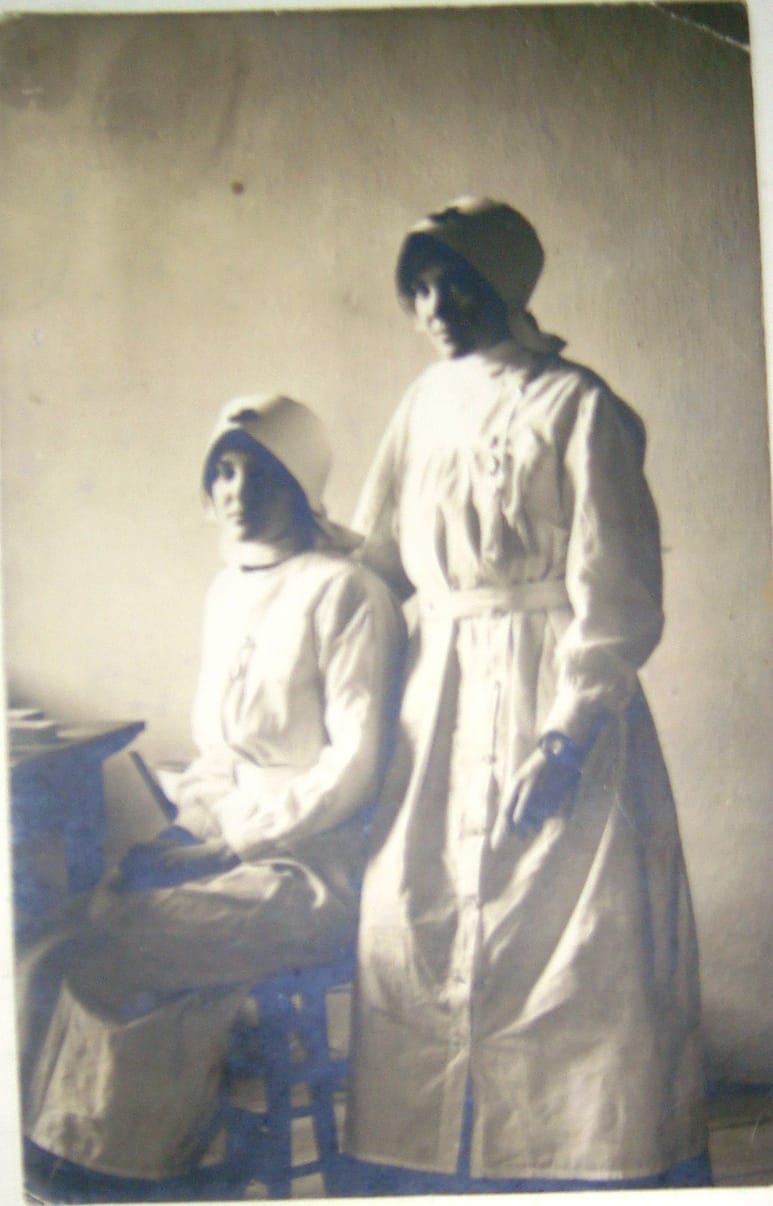
The war quickly took its toll on the health system. Austria-Hungary lacked medical staff for both military and civilian purposes, which is why hospital capacity was expanded. Such was the case in Brod na Savi (today Slavonski Brod in Croatia), where premises such as schools were used to take in sick civilians and soldiers from the Balkan front, particularly during outbreaks of epidemics. By 1918, the Austro-Hungarian army, or rather the Red Cross, had been tasked with securing further hospitals for the army's needs. The army lacked adequate nutrition and was susceptible to typhus, typhoid fever, measles, cholera and dysentery. Soldiers fell ill with respiratory diseases and influenza. Respiratory diseases killed approximately 697,994 people in the Austrian part of the Empire, while in the Hungarian part they killed 2,164,708 over the course of the war. On the Balkan front, those who fell ill with typhus were sent to hospitals in Brod na Savi, while the town and surrounding villages were ravaged by cholera epidemics in 1915, and throughout the war years people fell ill with malaria, tuberculosis, and, in places, typhoid fever, diphtheria, trachoma and venereal diseases. From the fronts in Galicia, Bukovina and the Soča, men from Podravina returned already infected, or were infected once back in their home region, and died, first, of typhoid fever, tuberculosis, meningitis and pneumonia, and then of Spanish flu in 1918.
Once the war broke out, the Austro-Hungarian authorities passed laws for the immediate evacuation of civilians into camps located in safer parts of the Monarchy. These camps for evacuees were intended for the population of the Monarchy's outlying regions, such as Istria. The camps were claustrophobic, overcrowded, unhygienic, and without adequate infrastructure (open sewers and polluted water). Conducive to the spread of disease, intestinal and infectious diseases accordingly spread through the camps; typhus, dysentery, cholera, measles, scarlet fever and tuberculosis were recorded, and high mortality rates were noted among newborns, with high rates of morbidity and mortality compounded by physical exhaustion and starvation.
As for the parts of the Monarchy far from the front lines, taking Vienna as an example, they did not feel the direct devastation of war so much as they felt the consequences of requisitioning. Inflation was already noticeable by the spring of 1915, foodstuffs such as bread were in short supply, and in 1917 the problem of nutrition deepened further with a failed harvest caused by drought, with what little food remained as a reserve earmarked for the army. Vienna, for instance, had 11,000 deaths from tuberculosis, or rather from malnutrition, which exhausted the immune system and made it more susceptible to infection. The Croatian lands were not spared from inflation either. Indeed, requisitioning for the army's needs impoverished an already underdeveloped countryside, something felt particularly in Podravina, a region rich in grain.
Furthermore, materials for military purposes were in short supply, which is why building materials were extracted from wherever they could be found, metal, for example, was stripped from buildings to be melted down and repurposed. There was a shortage of textiles and foodstuffs (a shortage of beans and potatoes, as well as sugar, paraffin and gas), and from 1915, owing to this shortage and in order to secure the essentials for its citizens' subsistence, the authorities introduced a system of ration coupons with which foodstuffs could be bought; with these coupons, for example, 200 grams of bread could be obtained per person.
Preventive measures relating to Austria-Hungary, or rather to Istria, included sanitary inspections. The first such health inspection was carried out in August 1915, public buildings that failed to meet the prescribed conditions were closed down, and public spaces were only disinfected from 1916 onwards. Health inspections were also carried out in the brothels; both the premises and the staff of the brothel were subject to inspection, with medical examinations accordingly intended for prostitutes, chiefly in order to prevent the spread of venereal disease. Preventive measures also included organised vaccinations of the population. Such a vaccination campaign was organised in Brod na Savi in 1916, resulting in only a single case with mild symptoms of smallpox infection.
To prevent the escalating spread of disease, from 1916 the authorities kept a register at the level of the Croatian lands under the Imperial crown recording those arriving from infected areas, from Istria, Kvarner, that is Rijeka, and Dalmatia. Access was forbidden to areas found to be infectious. The diseases recorded included smallpox, cholera and spotted fever. All these measures, all this prevention, did not stop infectious diseases from spreading. People, civilians and soldiers alike, kept falling ill even after the war's end. The next two decades were marked by massive, continent-wide campaigns against infectious disease across Europe. So-called social medicine emerged and took hold within health systems.

Conclusion: The Long Shadow of War and Disease in Europe
The Italian and Balkan Fronts show how closely terrain, disease and cruelty were bound together in this part of Europe. The Alps and the Soča turned cold and altitude into weapons in their own right, while the Balkans added a darker dimension still, where disease moved alongside, and was compounded by, deliberate violence against civilians.
What both fronts share with the rest of the war is the same pattern: armies weakened by malnutrition and poor supply, hospitals overwhelmed and understaffed, and civilians exposed to the same epidemics as the soldiers fighting over their land. Austria-Hungary's experience in particular shows how far the consequences reached, from refugee camps to bread rationed by the gram, long after the guns themselves had fallen silent on these fronts.
Disease did not end with the armistice. Its reach extended well into the postwar years, shaping public health policy and the rise of social medicine across Europe. Only in the decades that followed did European states begin, in earnest, to confront the epidemics inherited from the Belle Époque and the war.
Subscribe for more!
Read next:
World War I Diseases and Health Conditions: How Illness Shaped the Great War
World War I on the Western Front: Disease, Occupation and Neutral Countries
Disease, Occupation and Neutrality on the Eastern Front: Selected Countries in the First World War
The Spanish Flu in Literature and Oral History
Sources:
Pierluigi Scolè: War Losses (Italy), in: 1914-1918-online. International Encyclopedia of the First World War, ed. by Ute Daniel, Oliver Janz, Heather Jones, Jennifer D. Keene, and Alan Kramer, issued by Freie Universität Berlin, Berlin 2025-12-19. DOI: 10.15463/ie1418.11650/1.1. Translated by: Noor Giovanni Mazhar
Martini M, Simonetti O, Orsini D, Armocida E, Parodi Zimmermann A. The avid eaters of lives. New and old infectious diseases in Italy at the time of World War I: a historical overview of military medicine and public health. J Prev Med Hyg 2021;62:E972- E980. https://doi.org/10.15167/2421-4248/jpmh2021.62.4.2240
Antoine Rivière: Rape, in: 1914-1918-online. International Encyclopedia of the First World War, ed. by Ute Daniel, Peter Gatrell, Oliver Janz, Heather Jones, Jennifer D. Keene, Alan Kramer, and Bill Nasson, issued by Freie Universität Berlin, Berlin 2015-11-02. DOI: 10.15463/ie1418.10757
Alan Kramer: Atrocities, in: 1914-1918-online. International Encyclopedia of the First World War, ed. by Ute Daniel, Peter Gatrell, Oliver Janz, Heather Jones, Jennifer D. Keene, Alan Kramer, and Bill Nasson, issued by Freie Universität Berlin, Berlin 2017-01-24. DOI: 10.15463/ie1418.10770/1.1
Proctor, T. M., Civilians in a world at war, 1914–1918, New York University Press, New York and London, 2010
Doina Anca Cretu: Health, Disease, Mortality; Demographic Effects, in: 1914-1918-online. International Encyclopedia of the First World War, ed. by Ute Daniel, Peter Gatrell, Oliver Janz, Heather Jones, Jennifer D. Keene, Alan Kramer, and Bill Nasson, issued by Freie Universität Berlin, Berlin 2020-11-17. DOI: 10.15463/ie1418.11496
Đukić, F.; Pavelić, M.; Šaur, S., „Hrvatska u Prvom svjetskom ratu - Bojišta, stradanja, društvo,“ ESSEHIST, 7, 2015
Pedroso, J. L.; S. C. Linden; O. G. Barsottini; P. M. Filho; A. J. Lees, „The relationship between the First World War and neurology: 100 years of “Shell Shock”“, Arq Neuropsiquiatr 2017; 75(5):317-319, doi.org/10.1590/0004-282X20170046
Radošević, M., „Higijenske i zdravstvene prilike u zapadnoj Hrvatskoj između dva svjetska rata s posebnim osvrtom na Istru“, Časopis za povijest Zapadne Hrvatske, VI and VII/6 and 7, 2011-2012
Alebić-Juretić , A., „Sanitary conditions in the Austro-Hungarian war harbour Pola (Pula, Croatia) in 1916-17: foundation of the hygienic institute,“ Acta Med Hist Adriat 2017; 15(Suppl. 1), pg. 67-82
Balen, I.; Jandrić Balen, M., „Izvanbolničko zdravstvo i zdravstvene prilike u Slavonskom Brodu od 1918. do 1957. godine,“ Studia lexicographica, GOD. 10 (2016) BR. 1(18), pg. 11–23
Miholek, V., „Poginuli i umrli vojnici u Velikome ratu s područja rkt. župe u Kloštru Podravskome,“ PODRAVINA Vol. 17, br. 33, Koprivnica 2018., pg. 141. – 169
Šetić, N., Istra za talijanske uprave. O istarskoj emigraciji i njenom tisku u Zagrebu 1918. – 1941., Zagreb: Dom i svijet, 2008
Vretenar, J.; Orlović, D., I giorni a Wagna nella cronaca del Lagerzeitung (1915 - 1918). Piani e strutture dell’accampamento / Dani u Wagni prema pisanju lista Lagerzeitung (1915 – 1918.). Planovi i struktura logora, Collana degli Atti, n. 42, 2016, Centro Ricerche Storiche Rovigno, Rijeka: Unione Italiana – Fiume; Trst: Università Popolare – Trieste, 2016
Weindling, P., „Between Bacteriology and Virology: The Development of Typhus Vaccines Between the First and Second World Wars“, History and Philosophy of the Life Sciences , 1995, Vol. 17, No. 1, La construction historique des vaccins (1995)
Engle, J. C., "“This monstrous front will devour us all”: The Austro-Hungarian Soldier Experience, 1914-15," in: Bischof, G. (ed.); Karlhofer, F. (ed.); Williamson, S. R. (ed.); 1914: Austria-Hungary, the Origins, and the First Year of World War I, University of New Orleans Press, 2014
Kolar-Dimitrijević, M., „Doprinos Podravine prehrani Hrvatske u Prvom svjetskom ratu,“ Podravina, vol. X., br. 19., Koprivnica 2011., pg. 97 – 118
Jandrić-Balen, M.; I., Balen, „Zdravstvene i socijalne prilike u Brodu na Savi za vrijeme Prvog svjetskog rata“, Acta Med Hist Adriat 2015; 13(Suppl. 1), pg. 9 – 20
Mandić, D., „Život u žici – pulska svakodnevica u doba Velikog rata“, in: Dabo (ed.), M. Radošević (ed.), U sjeni Velikoga rata: odraz ratnih zbivanja na život istarskoga civilnoga stanovništva, Pula: Istarsko povijesno društvo: Povijesni i pomorski muzej Istre, 2019
Radošević, M., „O dizenteriji, ospicama, sifilisu, šarlahu i tifusu u Istarskoj provinciji za talijanske međuratne uprave (1918.-1940.)“, Problemi sjevernog Jadrana 14 (2015.), 2015., pg. 55-81
Radošević, M., „Problem tuberkuloze u istarskim novinama u razdoblju 1919. – 1940. godine,“ Problemi sjevernog Jadrana 11 (2011)
Scharf, M., translated by Nick Somers, “Sexual assault in the First World War,” The World of the Habsburgs, https://ww1.habsburger.net/en/chapters/sexual-assault-first-world-war
Zenzmaier, J., “The war crimes of the Habsburg army. Between soldateska and court martial,” The World of the Habsburgs, https://ww1.habsburger.net/en/chapters/war-crimes-habsburg-army-between-soldateska-and-court-martial