Crusade Wars: When the Holy Wars Changed
The Crusades began as wars for the Holy Land but gradually became something far broader. By the 13th century, crusading campaigns targeted heretics, pagans, political enemies, and even fellow Christians, transforming the very idea of holy war.

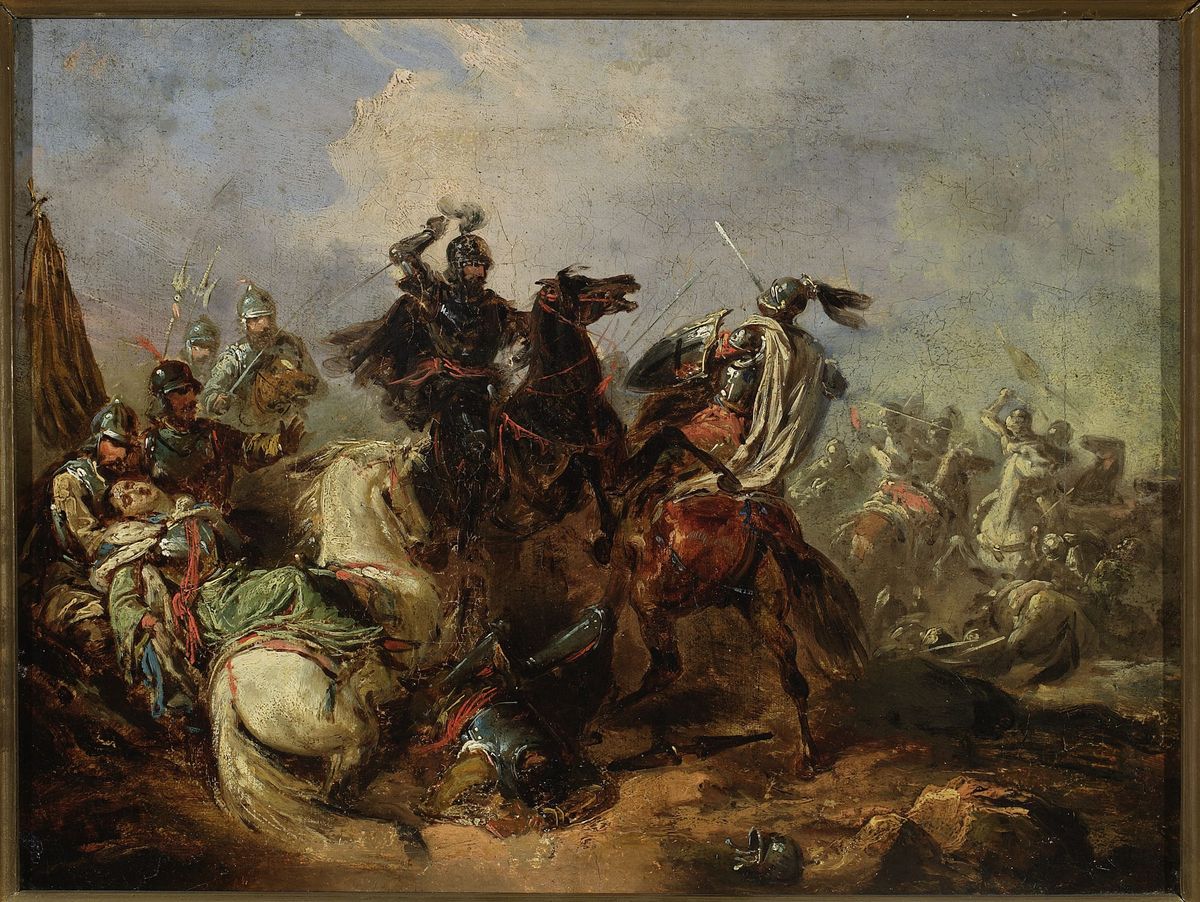
How the Crusading Movement Turned Against Heretics, Pagans, and Christians
The Crusades meant war against the “infidels” – at least, that’s how the popes framed them. As we examined in the last two articles in this series, the motives were more than just religious; they were also (geo)political and economic. As the journeys to the Holy Land began, they quickly proved to be unrelated to religion, as great violence began to roll in.
The idea of the Crusades began to change after the first four campaigns, becoming increasingly fanatic. The best example of this was the so-called “Children’s Crusade.” On that note, the idea itself wasn’t the only thing that changed. The kings and noblemen figured that campaigns to the Levant weren’t worthwhile due to the fact that their core personnel would be absent in the Holy Land, and they didn’t want to risk the chance of not being able to defend their own lands from potential attacks by their neighbours.
Read more: The Crusades: Why Did They Start?
The “Children’s Crusade” – A Crusade in Name Only
Although this Crusade is called the “Children’s Crusade,” it is not included in the rest of the Crusader Wars because of its unique nature. It was, one could argue, a fanatical and ruthless endeavour, if it actually happened. Some historiographic interpretations view this Crusade partly as a legend. Either way, it is an unavoidable topic when speaking of the Crusades.
In the year 1212, two boys, Stephen from France and Nicholas from Cologne, led an “army” of children. The belief was that children – because they were from God and, therefore, uncorrupted and innocent – would be spared from violence. That, however, didn’t come true. Furthermore, the idea that this army consisted only of children might also be a myth.
Already at the beginning of the journey, this “army” fell apart into smaller groups. Of those, two groups managed to arrive at the harbours of Marseilles and Brindisi. From there, they were shipped not to the Holy Land, but to Alexandria, where they were sold into slavery. There, their cruel journey ended. Even before the major military failures of the 13th century, the crusading ideal had begun to take increasingly radical forms.
Read more: Crusade Wars: Holy Wars or Wars of Opportunity?
The Fifth Crusade
There are ongoing debates regarding this Crusade, specifically whether it began with the Hungarian-Croatian king Andrew II or with the emperor Frederick II. Some authors suggest they both led the Fifth Crusade, but each led a different stage of it. Nevertheless, this Crusade was led by multiple parties. King Andrew II joined King John of Brienne, King of Jerusalem, Duke Leopold I of Austria, and other German and Scandinavian rulers. Together, they arrived in Acre in 1217. After a costly attempt to conquer Mount Tabor, which resulted in a heavy loss of life, Andrew II returned to Europe, while the King of Jerusalem headed towards Egypt.
Two years later, in 1219, King John of Brienne captured Damietta. The king’s army headed toward Cairo, where they met with the Egyptian sultan. Following the Crusaders' refusal of all negotiation attempts, the Battle of al-Mansurah took place. This was the final stronghold separating the Crusaders from Cairo, and it resulted in a severe Crusader defeat, forcing them to cede Damietta and abandon Egypt.
Almost a decade passed before the excommunicated emperor Frederick II went on a crusade. The reason this crusade is not considered a true crusade is due to the Pope’s excommunication of the emperor. In other words, it didn’t originate from the Church, but from a secular person. That being the case, the emperor managed what others before him could not – he negotiated with the Egyptian sultan Al-Kamil for the return of Jerusalem under Christian rule. It lasted till 1244, when the Muslims took the Holy City once more.
Read more: Medieval Sieges Were a Real Test of Endurance
Louis IX’s Crusades: The Sixth and the Seventh Crusade
In 1248, the Pope called for another Crusade. However, he didn’t meet the enthusiasm seen during the earlier wars. This time, only one king answered the call and gathered an army for the long journey to the East Mediterranean. The French king, Louis IX, journeyed to the island of Cyprus, from where he would embark to the north African coast. The first objective was to reclaim Damietta, which the Crusaders took back in 1249. Already the next year, Louis’s army was defeated in Cairo by the Egyptian sultan’s army. The knights and the king were captured, but soon after, they were released after the ransom was paid. Louis IX returned to Acre, but since reinforcements didn’t arrive from Europe, the king returned to France.
In a new offensive, the Muslims captured Caesarea, Jaffa, and Antioch, leaving only Tripoli, Acre, and Sidon in Christian hands. In 1270, Louis IX landed near today’s Tunis in yet another attempt to strengthen the Crusader position in the region, but this campaign also collapsed when the king died of the plague. Consequently, the power of the Crusaders waned, and the final remnants of the Crusader state fell one by one. Ultimately, in 1291, the Crusaders lost Acre and were completely expelled from the region.
With the complete failure to reclaim the Holy Land, the failed Crusader campaigns ended just a decade before the turn of the new century.
Crusades Against Europe's “Enemies”
Crusading campaigns also extended into the 14th century, targeting not only Muslims but also the pagan Wends, Balts, and Lithuanians, as well as the Mongols, the Orthodox Russians and Greeks, the Cathar and Hussite heretics, and even Catholics who were political opponents of the papacy. These Crusades were led by crusading orders such as the Teutonic Knights, who fought a war against the Prussians and Lithuanians.
The theological category of “infidel” had always been elastic; by the 13th century, it had stretched to cover almost anyone.
Beyond the campaigns against the pagans, the Pope deployed crusader armies against growing European heretical movements. The most brutal was the Albigensian Crusade (1209–1229) against the Cathars in southern France and northern Italy. Aimed at eliminating the Cathar movement, this bloody twenty-year conflict exemplified the extremes of Christian violence and laid the groundwork for the future Inquisition. In this twenty-year massacre, Christians suffered at Christian hands.
With these Crusades, the goal was no longer the tedious task of preaching Christ's faith with cross and sword, as had been so earnestly attempted since the First Crusade. Instead, things moved toward the wholesale eradication of any heresy or religious nuance. Further, the wars waged against the pagans reached an entirely new level of efficiency. The hallmark of these wars was that no one even bothered to try converting ordinary people to the “true” faith. The wars increasingly prioritised conquest and territorial expansion over conversion.
Read more: The History Behind the Medieval Warfare
Epilogue
The Crusades began with a sermon and ended with silence. Between Urban II's call at Clermont in 1095 and the fall of Acre in 1291, nearly two centuries of campaigns promised the liberation of the Holy Land but delivered something far more complicated.
What began as a convergence of religious fervour, political ambition, and economic interest gradually consumed itself. The First Crusade produced a massacre its chroniclers celebrated as divine justice. The Second achieved nothing. The Third restored a kingdom without restoring its capital. The Fourth sacked Constantinople. The Fifth and Sixth failed in Egypt. The Seventh ended with a king dead of the plague. The Children's Crusade never reached the Holy Land – its participants were sold into slavery before they crossed the sea.
As the campaigns to the Levant faltered, the crusading idea turned inward – against heretics, pagans, and political enemies at home. The theological category of “infidel” had always been elastic; by the 13th century, it had stretched to cover almost anyone.
Faith might have been present in those who walked barefoot to Jerusalem, but it travelled alongside territorial ambition, private interest, and the willingness to destroy whoever stood in the way, including fellow Christians and Jewish communities encountered along the route. The Crusades ended when the gap between their ideals and their realities became impossible to ignore. The wars had never been quite what they claimed to be.
Sources:
Goldstein, I.; Grgin, B., Europa i sredozemlje u srednjem vijeku, Novi liber, Zagreb, 2006
Marschhauser, M., "Križarski ratovi," Essehist, Vol. 7 No. 7, 2015
Susandi; Alfisyah, N.; Yuhani, “The Crusades: Causes and Impact,” Judikis (Jurnal Pendidikan Islam) Volume 1, Issue 2 (2024), Pages 41-52
Meseguer, E., "The Children's Crusade set out for the Holy Land in 1212. It never arrived", National Geographic History, May 28, 2020, https://www.nationalgeographic.com/history/history-magazine/article/children-crusades-set-out-holy-land-1212-never-arrived
Madden, T.F., Baldwin, M.W. "Albigensian Crusade." Encyclopedia Britannica, May 5, 2010. https://www.britannica.com/event/Albigensian-Crusade.
Madden, T.F., Baldwin, M.W., Dickson, G. "Crusades." Encyclopedia Britannica, June 3, 2026. https://www.britannica.com/event/Crusades.
Further reading:
Christopher Tyerman, God's War: A New History of the Crusades, Cambridge, Mass.: Belknap Press of Harvard University Press, 2006
Peter Raedts, “The children's crusade of 1212,” Journal of Medieval History, Volume 3, Issue 4, December 1977, Pages 279-323 https://doi.org/10.1016/0304-4181(77)90026-4