Crusade Wars: Holy Wars or Wars of Opportunity?
The Crusades are often remembered as holy wars fought in the name of faith. Still, behind the language of religion stood political ambition, violence, economic interests, and struggles for power that transformed medieval Europe.

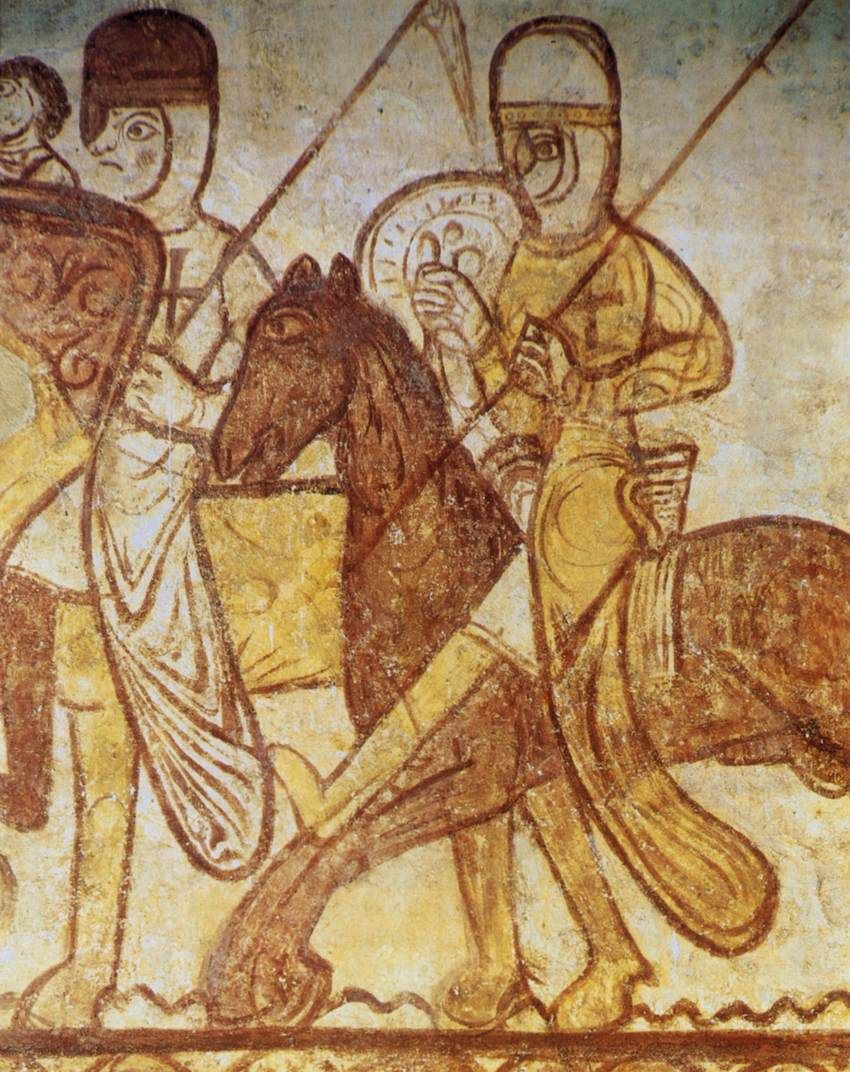
As we have seen in the previous article on Crusades, those wars were not merely religiously motivated. They were driven by politics and economy, rather than solely by faith. To encourage masses to follow the campaign, Pope Urban II had to give something in return, which was the forgiveness of sins, spiritual merit, and protection of the knight's family. That alone might have been a believable reason to leave one's homeland for an unpredictable journey.
The people who had embarked on the voyage were, alongside noblemen and knights, clergy and even ordinary people with no experience whatsoever in fighting. These groups organised into orders of chivalry. The first order to be established was the Knights Templar, founded in Jerusalem in 1119. The second order was the Knights Hospitaller (or the Knights of Malta); their role was to take care of the sick and wounded. The third order was the Teutonic Order, established near Acre in 1190. Further in the text we will see what role these groups had in these "Holy Wars." This role was certainly not only religious, but rather violent and aggressive. We will examine the behaviour of these pilgrims.
Read more: The Crusades: Why did they start?
First Crusade
The Church sought to assume leadership over Western Europe, and this manifested itself in the Crusades themselves. The Church launched campaigns to the Near East to achieve its own goals: hegemony over Europe and the alteration of the social order.
The Pope held significant influence over the formation of the Crusader army. The first opportunity presented itself to Pope Urban II after the Council of Piacenza in 1095, where representatives of the Byzantine Emperor Alexios I Komnenos requested aid from Western nobles and rulers in the form of additional troops. What they received, which they had not expected, were the Crusaders. The reason why Byzantium requested aid from the West in the first place was to help them reclaim territory in the Levant and Asia Minor that had been seized by the Seljuk Turks.
The Council of Piacenza prompted Pope Urban II to convene a second council, this time in agreement with southern French nobles, in Clermont on November 25, 1095. The gathering itself and Urban's address that God wanted this war ("Deus vult") sparked euphoria. Many volunteered, including nobles and members of other social classes who were neither skilled with weapons nor equipped for such an undertaking. The Pope attempted to prevent the departure of these unqualified warriors; however, he did not succeed. The first to offer to lead the Crusaders were the southern French Count Raymond of Toulouse, Duke Robert of Normandy, Godfrey of Bouillon, Count Robert of Flanders, the southern Italian Norman princes Bohemond and Tancred, and others.
First Crusade: People's Crusade
The unskilled and unorganised group was led by the religious leader Peter the Hermit (Peter of Amiens). These people, led by a Christian religious leader, plundered across Hungary and Bulgaria, suffering big losses in these lands already. The Byzantine Emperor Alexios I Komnenos would not tolerate those looters, so he commanded that these undisciplined people be transferred to Asia Minor where they were attacked by the Seljuk Turks. Many died there in dust and sand under the high sun; only a few returned to Europe.
The violence along the route was indiscriminate. Contemporary accounts record that as Peter's column moved through Hungary and Bulgaria; it was not only soldiers who suffered. Women, children, and the elderly were among those killed or enslaved in the raids on local settlements – communities that were, by any definition, Christian. The army of God had not yet reached the infidel, and it had already left a trail of bodies behind it.
Furthermore, the violence of the People's Crusade was not reserved for Muslims alone. As the ragged columns moved through the Rhineland and along the Danube, they turned on Jewish communities along the way. In the spring of 1096, before the Crusade had even reached Byzantine territory, massacres of Jewish populations occurred in Speyer, Worms, and Mainz. The logic offered was simple and brutal: why travel to fight the enemies of Christ abroad when they lived among us at home? These attacks were not sanctioned by the Church or the Pope, but they were not effectively stopped either. Local clergy and some citizens attempted to protect Jewish communities but were often unable to stop the violence. These massacres marked one of the first large-scale organized attacks on Jewish communities in medieval Europe establishing a pattern of violence that would resurface during subsequent Crusades.
First Crusade: The Princes' Crusade
The Byzantine Emperor allowed the Crusaders to enter Constantinople, but with great distrust, as the Crusaders' intentions were suspicious and often difficult for Byzantines to fully accept. The Byzantine Emperor did not understand why and with what purpose the Crusaders were coming to wage war in the Near East, because for Byzantium, fighting against the so-called infidels was customary, as they had been doing so for centuries.
Four armies marched into Constantinople one after the other: the Provençal led by the southern French Count Raymond of Toulouse, the Lotharingian led by Godfrey of Bouillon, the Northern French led by Duke Robert of Normandy and Count Robert of Flanders, and the Normans from southern Italy led by the southern Italian Norman princes Bohemond and Tancred.
The Princes' Crusaders agreed with the Byzantine Emperor on how they would organize the attack on the Seljuk Turks' territories. The Byzantines were to supply the Crusaders, while the Crusaders would return Asia Minor and the Levant to the Byzantine Empire. This venture lasted three years, from 1096 to 1099.
First Crusade: Battles
In summer of 1097, the Crusaders besieged Nicaea. To avoid plundering, the city surrendered to the Crusaders by hanging Byzantine flags. The Crusaders then split into two groups and marched east toward Antioch. Along the way, they defeated the Seljuk army and formed an alliance with local Christian Armenians. Part of the army broke away to found the County of Edessa. The main force continued to the Holy Land, arriving before the city of Antioch in late 1097.
Antioch fell through betrayal. A local collaborator opened the gates for the Crusaders. What followed was predictable: looting, burning, and then, remarkably, rest. The Crusaders settled in. This complacency nearly cost them everything. The Seljuks regrouped and laid siege to the city they had just lost. The Byzantine emperor did not return in force, partly because of mistrust and partly because he received inaccurate reports about the situation. The Crusaders never forgave him for it.
Outnumbered and demoralized, the Crusaders found what they needed beneath the ground. Inside the city, they unearthed a lance believed to be the Holy Lance, the spear that had pierced Christ's side. Whether the relic was genuine mattered less than what it did to the army's morale. The Crusade army charged and the Seljuk siege collapsed. Muslim resistance across the Holy Land did not disappear, but it was seriously weakened in several areas, and the Crusaders moved from city to city with varying degrees of opposition.
They reached Jerusalem on June 7, 1099, under the command of Raymond of Toulouse. The city fell on July 15, taken by storm after a brief siege. What the Crusaders could not have known was that the two centres of Islamic power, Baghdad and Cairo, were both in internal disarray. There was no coordinated defense waiting for them. They charged through broken gates and concluded that God himself had cleared the way.
What followed was one of the bloodiest massacres in the history of warfare. The chronicler Raymond d'Aguilers recorded what he saw:
"It was a just and wonderful judgment of God, that this place should be filled with the blood of the unbelievers. Piles of heads, hands and feet were to be seen. Men rode in blood up to their knees and bridle reins. Indeed, it was a just and splendid judgment of God."
The men who wrote about this did not write in horror; rather, they wrote in triumph. The massacre made no distinction of age or sex. Women and children were killed alongside the men. The elderly who could not flee were killed where they stood. What Raymond d'Aguilers recorded as divine justice was, by any other measure, the systematic killing of a civilian population.
Jerusalem's Jewish community shared the fate of its Muslim population. The Jews of Jerusalem, who had fought alongside the city's Muslim defenders, were gathered into a synagogue after the city fell and the building was set on fire according to several contemporary accounts. This was not an exception, but the wording should remain careful here: the Crusaders often made little distinction between the religious communities they encountered. The theological category of "infidel" proved elastic enough to cover anyone who was not them.
After the conquest, the Kingdom of Jerusalem was established (1099–1187), governed primarily by French nobility and organized along feudal lines. The first ruler, Godfrey of Bouillon, rejected the title of king; he would not wear a crown of gold, he said, where Christ had worn a crown of thorns. His brother Baldwin I, who had no such hesitations, took the crown after Godfrey's death in 1100. Rulers of Jerusalem held the title Defender of the Holy Sepulchre during Godfrey's rule. Alongside the Kingdom, the principalities of Edessa and Antioch operated as parallel powers. The task of supplying these territories fell to the western maritime cities: Venice, Pisa, and Genoa accepted eagerly, and profitably.
The conquest changed the nature of the wars that followed. The justification shifted. The land Christ had walked, and therefore sanctified, was finally in Christian hands. Now it simply had to be defended. With this, the Crusades had found their permanent rationale.
Second Crusade
Muslims recaptured Edessa in 1144, which was the trigger for the Second Crusade. Bernard of Clairvaux, commissioned by Pope Eugene III, issued the call to arms at the request of French King Louis VII. King Louis VII answered, so did Conrad III of Germany, along with a considerable number of princes. For the first time, reigning European monarchs were going to war themselves. The goal was straightforward: the retake of Edessa, but the execution was not.
The two armies travelled separately and were defeated separately in Anatolia. By 1148 they were retreating, having achieved nothing and lost a great deal. The Second Crusade was over almost before it had properly begun.
What made the failure particularly striking was that this army was better equipped than the one that had taken Jerusalem half a century earlier. The problem was not resources, but leadership. The relationship with Byzantine Emperor Manuel I Komnenos, initially cooperative, deteriorated into open hostility. Without Byzantine support, the two kings found themselves unable to defeat the Muslim forces alone.
The defeat did something beyond losing a city. It shook confidence in the idea that God was guiding these wars and, with it, confidence in the papal authority that had sanctioned them. And still, the Kingdom of Jerusalem survived for another forty years.
The Second Crusade renewed violence against Jewish communities in the Rhineland. A Cistercian monk named Radulf travelled through German territories preaching that Jews should be killed before the Crusaders departed for the Holy Land. Bernard of Clairvaux himself, who had called the Crusade, was forced to travel to the Rhineland to counter Radulf's preaching and explicitly condemned the violence. That the most prominent voice of the Crusade had to personally intervene to stop massacres of Jewish communities tells us something about how easily religious mobilization could be redirected.
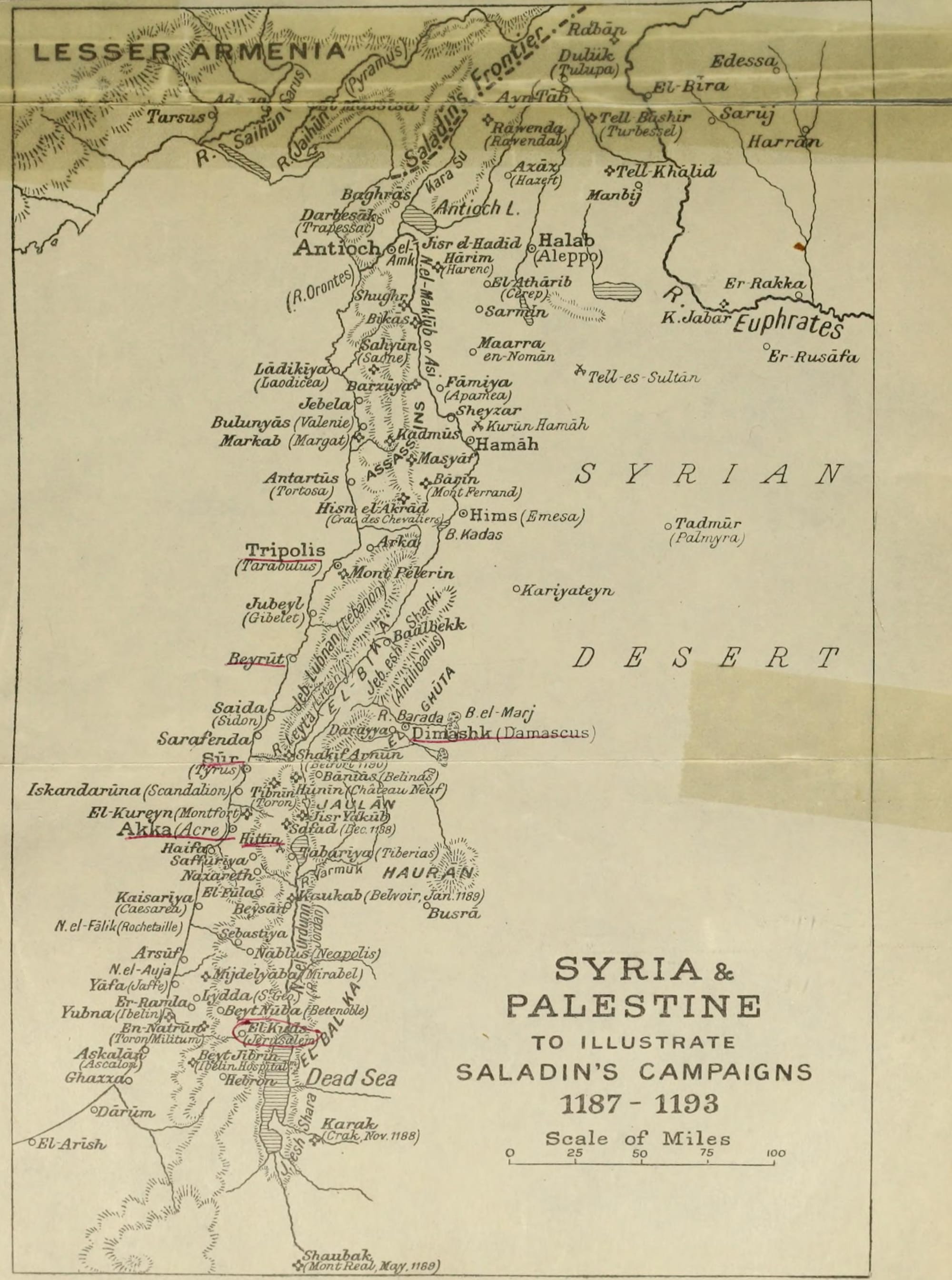
What ended the Kingdom of Jerusalem was a man named Saladin, the Sultan who built an Egyptian-Syrian power. He waited for the right moment, which came in 1187, when a broader conflict involving Jerusalem’s political leadership and Saladin’s strategic position gave him the opening he needed. At the Battle of Hattin, Saladin destroyed the Christian army, with whose defeat Jerusalem itself fell. Most of the remaining Christian fortresses fell as well, and Kingdom that had lasted nearly a century was reduced to a handful of isolated strongholds.
Third Crusade
The Third Crusade was the medieval world's most impressive military mobilization. Three of the most powerful monarchs in Europe (Frederick I Barbarossa of Germany, Philip II Augustus of France, and Richard I of England) organized, planned, and financed a campaign to undo what Saladin had done.
Barbarossa died crossing a river in Anatolia before he reached the Holy Land. History has a habit of doing this to carefully made plans. The remaining two kings continued, supported by the Italian navies of Genoa and Pisa. In July 1191 they took Acre, the strategic port that had been under siege since August 1189 and that became the defining conquest of this Crusade. But as military success accumulated, the relationship between Richard and Philip collapsed under the weight of their mutual contempt. Philip left, while Richard stayed and fought, and on September 2, 1192, signed a three-year truce with Saladin.
The terms were a compromise that satisfied nobody completely. The Kingdom of Jerusalem was partially restored as a crusader state, but Jerusalem itself remained in Muslim hands. The new capital became Acre.
One episode on the margins of the Third Crusade is worth noting for what it foreshadowed. Richard, acting entirely on his own initiative, seized Cyprus from its Byzantine ruler Isaac Komnenos. The island became a Kingdom, a trading hub, and a base for future Crusading operations. Protected by naval power, Cyprus outlasted the Kingdom of Jerusalem by centuries. Richard's seizure of Byzantine territory (Christian attacking Christian) was a quiet rehearsal for what the Fourth Crusade would make impossible to ignore.
Fourth Crusade
The Fourth Crusade was supposed to go to Egypt. Egypt had been Christian under the Roman Empire, and the logic was familiar: Muslim rulers had taken what was rightfully Christian, and it needed to be returned. Egypt would become the target of later Crusades. In this one, the army never got close.
The detour began in Venice. The Crusaders needed Venetian ships to reach Egypt. When they arrived, it became clear they could not pay. Venice, as Venice tended to do, saw an opportunity. The terms were simple: the fleet would sail, but first the Crusaders would take Zadar, a city on the Adriatic that had recently passed under Hungarian control.
The Crusaders marched against a Christian city, under a Christian king, on behalf of a Christian republic. The inhabitants of Zadar hung crucifixes on the walls in a last attempt to stop them, but it didn’t work. The city fell in the winter of 1202, and the Crusaders spent the rest of the season there, waiting for spring. While they waited, a young Byzantine prince arrived with a proposition. Alexios Angelos had escaped from prison where he had been held alongside his blind father, the deposed Emperor Isaac II. Unable to reclaim the Byzantine throne alone, Alexios had gone west, appealing to Pope Innocent III, to Philip of Swabia, and now to the Crusaders themselves. The leader of the expedition, Boniface of Montferrat, received him with enthusiasm. The offer was straightforward: help me take Constantinople, and I will pay you handsomely. The Crusaders, who had been financially desperate since before they left home, were not in a position to refuse.
Venice understood the opportunity immediately. Byzantine trade had long complicated Venetian commerce in the eastern Mediterranean, so they thought that Crusader’s conquest of Egypt would reduce trade. A Crusader conquest of Constantinople would eliminate the competition entirely, so the agreement was signed in Zadar in May 1203. The Crusade was going to Constantinople.
On July 17, the Crusaders took the city for the first time. The reigning emperor, Alexios III, fled with the imperial treasury. Alexios IV was installed as co-emperor alongside his restored father, Isaac II. The Crusaders camped outside the walls, watching a Byzantine government that now existed at their sufferance. However, it did not last. In January 1204, a city uprising overthrew Alexios IV. A new emperor, Alexios V Doukas, took power and had no intention of honouring a debt he had not incurred.
The Crusaders decided to take what they were owed. The difference from the first conquest was that this time, no one planned to leave a Byzantine government in place. On the ruins of the old empire, they would build a new one. Constantinople fell on April 13, 1204. Three days of looting followed, the systematic destruction of one of the richest cities in the world, accumulated over a thousand years.
Two contemporary sources record what happened. One states that since the creation of the world, no city had yielded such plunder. The other observes that the most brutal Muslims had shown more humanity and restraint than these men, who carried the cross of Christ on their backs. The spoils were divided between the Crusaders and Venice. The empire itself was carved into four parts, the largest of which (the Latin Empire) went to the Crusaders under their first emperor, Baldwin IX, Count of Flanders. Egypt, the original target, was never reached. The army that had set out to reclaim the Holy Land for Christendom had instead sacked one of the largest Christian cities.
The religious rationale that had sustained the Crusading movement for a century did not survive this cleanly. What drove the Fourth Crusade was not faith but profit. Venice emerged wealthier than before, with a monopoly over eastern Mediterranean trade. The Crusading movement itself began its long decline, fatally compromised by the spectacle of Christians destroying Christians in the name of the cross. The Fourth Crusade reached its destination; it was simply not the one anyone had announced.
Conclusion
The Crusades are often remembered as a chapter in the long history of religious conflict between Christianity and Islam. However, we may think that that framing is not wrong, but it is incomplete.
What the Crusades reveal, when examined closely, is something more familiar and less flattering. The men who answered Urban's call at Clermont were not a unified army of the faithful. They were noblemen calculating territorial gain, merchants protecting trade routes, popes consolidating political authority, and ordinary people who had been told that God wanted this and that their sins would be forgiven if they went. The religious language was real, so was everything underneath it.
The pattern repeats across every Crusade examined here. The First Crusade reached Jerusalem and produced a massacre its chroniclers described as divine justice. The Second set out to retake Edessa and achieved nothing, shaking confidence in the very God whose will it claimed to execute. The Third restored a Kingdom without restoring its capital and ended with a truce nobody celebrated. The Fourth never reached its announced destination at all, turning instead on Constantinople, the largest Christian city in the world, and leaving it in ruins.
Along the way, the violence was rarely limited to the declared enemy. Jewish communities in the Rhineland were massacred before the First Crusade had even crossed into Byzantine territory. The inhabitants of Zadar hung crucifixes on their walls and were conquered anyway. Constantinople was sacked by men wearing the cross.
This is not to say that faith was absent. It was present, genuinely and powerfully, in the people who walked barefoot to Jerusalem and in the chroniclers who wept at the sight of the Holy City. But faith, in these wars as in many others, proved remarkably compatible with political ambition, commercial interest, and the willingness to destroy whoever stood in the way, including fellow Christians.
The Crusades revealed, slowly and at great cost, that the wars had never been quite what they claimed to be.
The four remaining Crusades are coming soon!
This article explores themes related to Crusades, Jerusalem, Saladin, Pope Urban ii, Komnenos, Constantinopole, Edessa and Acre.
Sources:
Goldstein, I.; Grgin, B., Europa i sredozemlje u srednjem vijeku, Novi liber, Zagreb, 2006.
Elukin, J., Living Together, Living Apart: Rethinking Jewish-Christian Relations in the Middle Ages, Princeton University Press, 2007.
Chazan, R., "The Hebrew First-Crusade Chronicles," Revue des études juives, 133 (1974) https://www.persee.fr/doc/rjuiv_0484-8616_1974_num_133_1_1778
Chazan, R., European Jewry and the First Crusade, University of California Press, 1987.
Marschhauser, M., "Križarski ratovi," Essehist, Vol. 7 No. 7, 2015.
Further read: Nirenberg, D., Communities of Violence: Persecution of Minorities in the Middle Ages, Princeton University Press, 1996.