The Crusades: Why Did They Start?
The Crusades were not driven by faith alone. From Church reform and papal ambition to knightly warfare and political instability, medieval Europe created the conditions that made the Crusades possible.

Until the 11th century, the European continent was periodically plundered by various nations (Normans, Saracens, and Hungarians), which contributed to a sense of disorder in some regions. The latter eventually settled, establishing kingdoms on the Apennine Peninsula, the Iberian Peninsula, and the Pannonian Plain. Thereafter, the period from the 11th to the 14th century was marked by a rebirth in education (the first universities), literature, art, and architecture (Gothic). The fear of raids and threats from various tribes diminished as they grew less frequent; the exception was the short invasion of the Mongols (the empire of Genghis Khan) in the 13th century. In all, the political, religious, and economic recovery was part of a simultaneous process.
Moreover, the biggest contemporary myth of medieval times is that the Crusades were purely religious wars. However, were they really encouraged by religion, or for that matter, by faith? Looking at the situation from the bird’s perspective, the answer poses itself: it might be both religion and faith. For the matter of faith, we can only guess individuals went on pilgrimage voyage for personal reasons and beliefs, beyond material. For religion, it certainly gathered masses to act, at least, the pope spoke in the name of religion. Still, were these the only reasons for going on the unpredictable and unsure journey hundreds of kilometers long?
The Holy Land under the Seljuk Turks
The Seljuk Turks spread their empire across the Levant and Asia Minor in the 11th century, while coming into conflict with the Fatimids and the Byzantine Empire. Firstly, the Seljuk Turks were a nomadic Turkic-Persianate dynasty that established an empire stretching from Central Asia to the Levant during the 11th through the 14th centuries.
Primarily, they originated from the Oghuz Turks in the steppes of Central Asia. From there, they migrated to the west. At the end of 10th century, they converted to Islam. During that time, the Turks relocated into Persia. The dynasty that took over the Levant and Asia Minor in the 11th century was founded by Tughril Beg. He named the dynasty after his ancestor Seljuk. As the empire grew too large, it fragmented into smaller branches. The branch that fought against the European Christian knights during the First and Second Crusades was the Sultanate of Rum, which was situated in Anatolia. The Seljuk Turks later paved the way for the Ottomans.
The Seljuk Turks' presence represented a real threat to the Byzantine Empire, but also to the Roman Church because the Seljuk Turks controlled Jerusalem, the symbol and destination of pilgrimage for Christians. This was the end of the peaceful pilgrimage voyage to Jerusalem. Pilgrims were often robbed, assaulted, and even murdered. For the visit alone, Christian pilgrims paid high taxes during certain periods of Seljuk rule. For the Roman Church, the whole concept of the Holy Land under the control of the “infidels” – as Christians called Muslims – was unacceptable. Therefore, Pope Urban II came up with a few options for handling the situation. But firstly, the Church needed reform long before the time of Pope Urban II in order to gain the trust of people in general.
Read next: Medieval and Early Modern Famine and the Dream of Endless Food
Why did the medieval Church need reform?
The Church was reformed from the 10th to the middle of the 11th century. The reasons for this lay in the unprincipled behavior of the clergy.
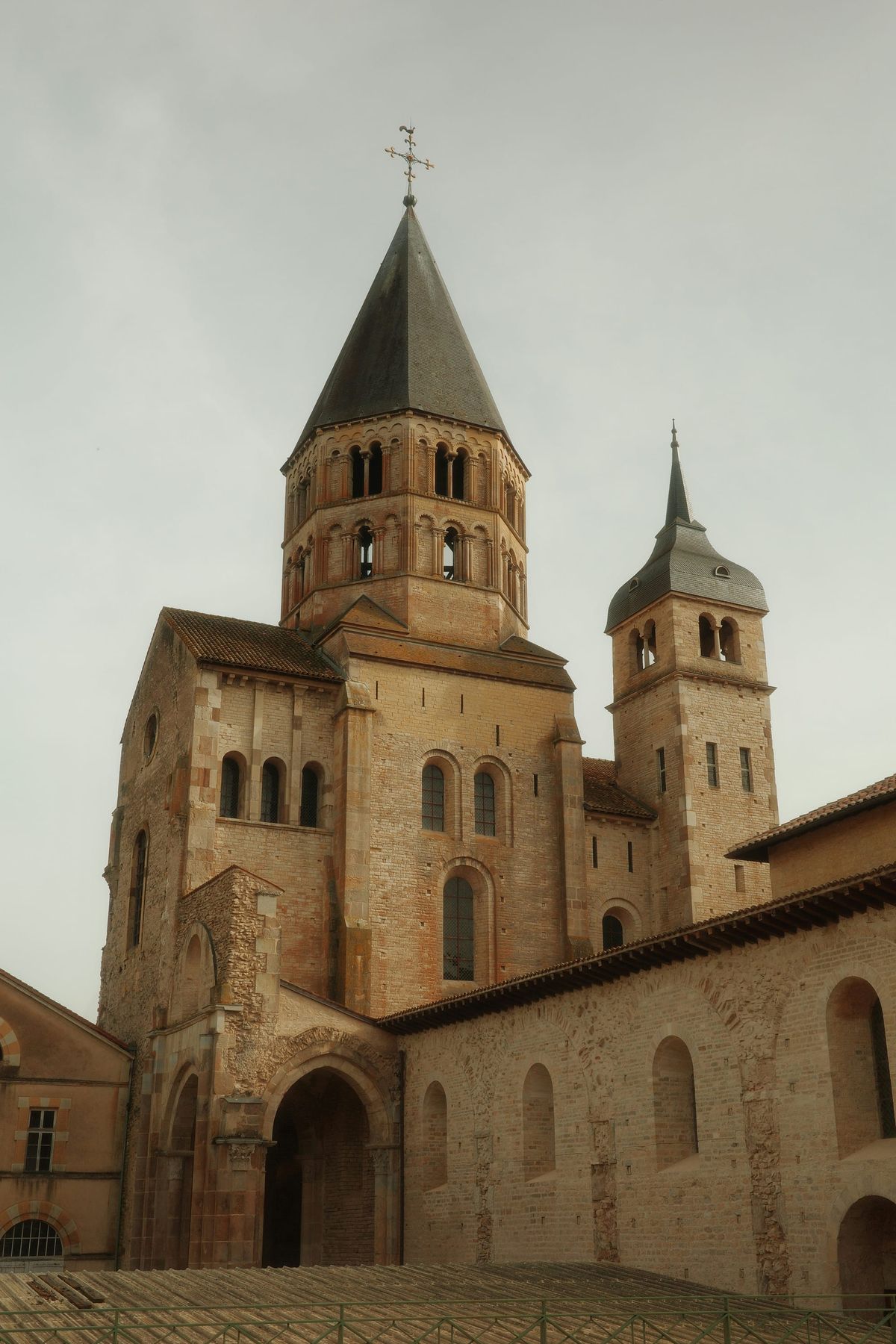
In the 10th century, the Church was disintegrated due to the specific unethical practices of its members. Namely, the members of the Church bought and sold ecclesiastical positions, and the Church grew wealthy and fell into immorality (simony and nicolaitism). Monks in monasteries protested this, and the reform movement originated with them. One of the main strongholds of the reform movement (due to its position in a geographically desirable location) was the monastery of Cluny in Burgundy. They adopted the Rule of Saint Benedict, which placed more emphasis on prayer and liturgical life than on manual labor. The Abbey of Cluny spread its reform ideas and influence across Europe; thus, Cluny-affiliated monks traveled throughout Europe, both at the request of other monasteries and by invitation from secular rulers, to spread the ideas conceived in Cluny.
In the 11th century, following their example, high church officials began to question the conduct of priestly life. By 1100, the reformers had achieved success in the fight against priestly immorality; the appointment of bishops by feudal lords was increasingly challenged, secular interference in church affairs was being resisted, simony and nicolaitism were nearly eradicated, and celibate life was firmly established within church ranks. However, they did not fully succeed in eliminating the practice of secular rulers appointing priests to episcopal positions. The reform also influenced the development of popular piety. The transformation of the Church regained partly the trust of the people and the nobility; hence, the religion spoke to the masses who listened faithfully, but it was not all about religion or faith – the reform was, above all, a political and social tool. In addition to spreading reform ideas among other monasteries, the monks also disseminated them among the laity.
The Religious Reorganization of Medieval Europe
In the 11th century, the first significant traces of success in strengthening popular piety emerged – the First Crusade in 1095, the Truce of God, and the Peace of God. However, popular piety reached its peak in the 12th century. The Truce of God (treuga Dei) was a Church-sanctioned periodic suspension of hostilities in the Middle Ages. While the Peace of God (pax Dei) prohibited violence against the Church and the poor, the Truce of God was focused more on preventing violence among Christians, particularly among nobility. The Truce of God was tied to major church feasts and lasted from Wednesday until Monday (from Friday in Germany, and Saturday in England). It was initially imposed on feudal lords in France in Roussillon in 1027 and in Catalonia. From there, it spread to Germany, Italy, England, and Spain.
Further, violators of the truce were severely punished, typically by excommunication. In reality, the Truce of God did not always achieve widespread success, but it was significant due to its impact on the gradual change in the consciousness and mentality of medieval people, as part of the Church's broader efforts to pacify the new medieval society that emerged from the turbulent period of the Migration Period. For instance, likely under the influence of the Peace of God, the Duke of Normandy and the Count of Flanders succeeded in preventing riots and violence, meaning they banned attacks on unarmed people and the plundering of property. The results of this religious renewal were the Crusades.
Read next: What Did People Eat in the Past?
Pope Urban II and the Call for Crusade
During that time, Pope Urban II showed great interest in the Levant, which culminated in the Crusades. Namely, toward the end of the 11th century, the Seljuk Turks had swept down to the Aegean Sea, which alarmed and threatened Constantinople itself. Pope Urban II recognized an opportunity in this. He aided Byzantium, hoping that doing so would help ease tensions and resolve the East-West Schism and make the pilgrimage route to the Holy Land (parts of the Levant) safe and free, as the journey to the Holy Land had become perilous, particularly within Seljuk territory in Asia Minor.
Furthermore, a previously mentioned reason for the Pope's interest in the Near East lay in the fact that Europe was being ravaged by internal conflicts among magnates (conflicts resolved through the Peace of God and the Truce of God), which the Pope exploited to strengthen his own influence and power. With European nobles, knights, and rulers preoccupied with traveling to the Near East and waging war, the path was cleared for the Pope to consolidate and reinforce his authority within Europe. Faith alone cannot explain the Crusades; political and material considerations often proved equally decisive.
Medieval Knights and the Road to the Crusades
At the Pope’s call, European nobles, knights, and rulers began their journey to the Holy Land. The army, which had previously been predominantly infantry, was now transforming into a cavalry force – a shift driven by the greater demands of warfare. A cavalryman was a knight, and since the equipment was expensive, a knight had to possess a larger tract of land to finance himself.
By 1100, these knights were becoming landed aristocrats. Most knights received a fief, thus becoming landowners first and warriors second. Those for whom warfare was a profession sought employment (war) outside of France. Among them, we could include those who shared a fief with their brothers, those who held no fief, or those who desired a larger estate; therefore, the motives for some to journey to war were economic because, through participation in the Crusades, knights received a fief and the forgiveness of sins, which may seem paradoxical from a modern point of view. These knights founded and seized lands in foreign territories and organized them after the model of the French system of fief governance (French feudalism), thereby spreading this variant of feudalism throughout Europe. The knights, along with French feudal lords, migrated across Europe. Seen in this light, religion and faith were not the only horses pulling the wagon.
One of those journeys across 11th-century Europe included one to the Iberian Peninsula. In today’s Spain and Portugal, they assisted in expelling the Saracens or Moors (Muslims) because Europe needed to be, according to the Pope, more firmly freed for Christian Europe. Even then, the Pope offered forgiveness of sins to knights and feudal lords, which was a direct forerunner of the Crusader concept. The same logic of the liberation of Christian Europe was imposed on the other Crusades before and after the Crusades in the Near East. For instance, when the Normans embarked for Sicily in the 11th century, the Pope gave them his blessing for repelling the Saracens. Later, between the 12th and 15th centuries, during the Northern (Baltic) Crusades, the Teutonic Knights attacked the lands of the pagan tribes of Prussians, Lithuanians and other Baltic tribes to spread Christianity and expand their territory. In the First Crusade in 1096, French knights and feudal lords constituted the core strength of the Crusader army that captured Jerusalem in 1099, though this will be discussed in greater detail later.
Conclusion
As we posed the question of the motives behind the Crusades in the introduction, we can now answer it more carefully. The Crusades were driven by a combination of religious, political, and social factors, rather than by one single cause. The Church played a central role in shaping the movement, but it also responded to broader circumstances, including violence within Europe, the appeal of pilgrimage, and the appeal of aiding Byzantium and securing the Holy Land.
At the same time, the Holy Land had great symbolic importance for Christians, since Jerusalem was, according to the Bible, the place of Christ’s death and resurrection. Because it was also a place of pilgrimage and lay near important trade routes, it naturally attracted both spiritual and material interest. For that reason, the Crusades should be understood as a complex medieval phenomenon in which faith, power, and opportunity were closely connected.
This article explores themes related to Crusades, Holy Land, Pope Urban, Seljuk Turks and Byzant.
Sources:
Goldstein, Ivo; Grgin, Borislav, Europa i sredozemlje u srednjem vijeku, Zagreb: Novi liber, 2006 (Europe and Mediterranean in the Middle Ages)
Marschhauser, M., “Križarski ratovi,” Essehist, No. 7, 2015, pg. 38-48 (“Crusade Wars”)
Salah .A .A Mohammed Sulayman, “The Expansion Of The Seljuk In Asia Minor And The Levant At The Expense Of The Byzantine Empire,” Global Journal Libyan, 2016 DOI:10.37376/1570-000-008-001