The Beginnings of Greek Colonisation
Greek colonisation was a long process shaped by trade, migration, and contact across the Mediterranean. From the 8th to the 6th century BC, Greeks founded new settlements that transformed the ancient world and connected different peoples and cultures.

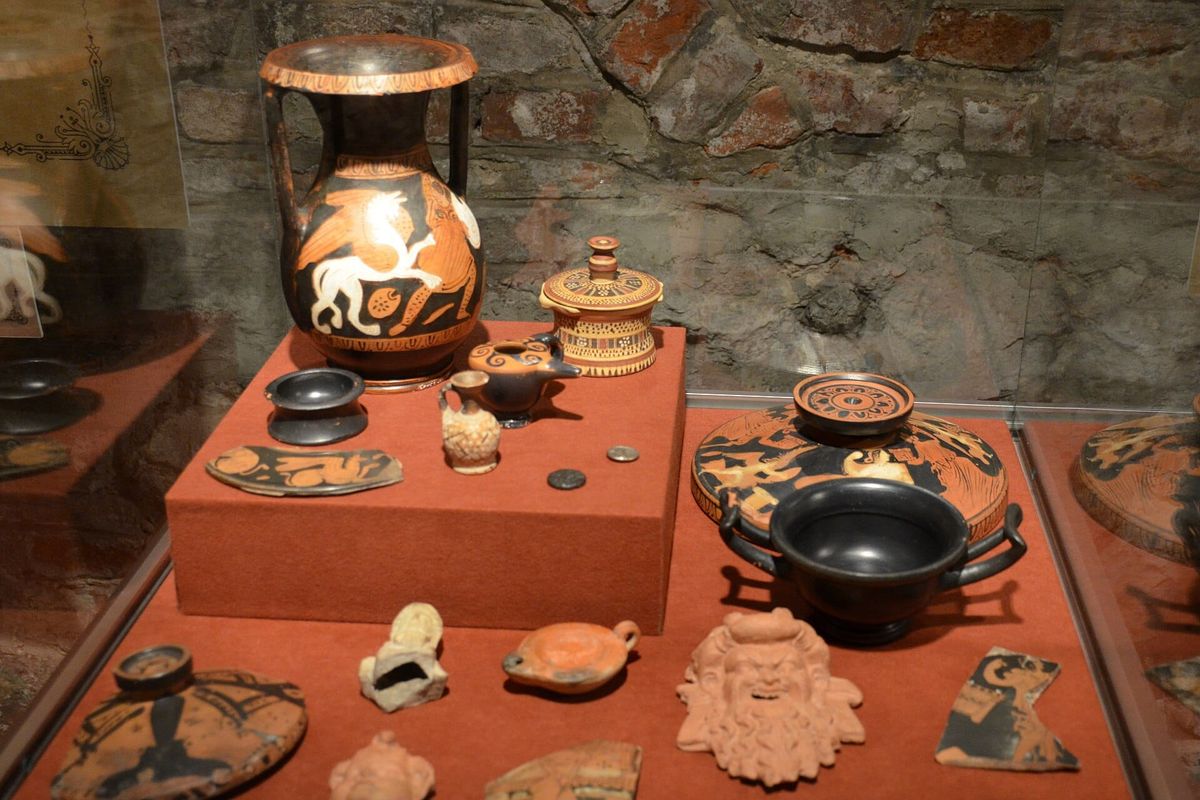
A few months ago, we wrote an article about Phoenician colonisation, explaining what colonisation is and its process. Today, we will introduce you to Greek colonisation, and next time, you will be able to read about the Greek colonisation of the Mediterranean.
Much of what we know about Greek colonisation comes from archaeological research, while written sources help fill in some of the broader historical and cultural context. Together, these kinds of evidence give us a more complete picture of how Greek communities expanded across the Mediterranean. Colonisation was a long process that lasted for several centuries and left a strong mark on the ancient world. Its significance can be seen in the growth of trade, the movement of people and goods, and the emergence of new settlements in foreign lands, where different populations and cultures came into contact.
Read next: Greek Colonies in the Mediterranean / Greek Colonisation of the Adriatic
When and Why Did Colonisation Begin?
The period from the 8th to the 6th century BC is often described in historiography as the age of Greek colonisation. Much of what we know about it comes from later retellings, ancient authors, and archaeological evidence that helps us reconstruct the process more clearly.
Before the Greeks founded colonies, they were already in contact with other peoples of the Mediterranean. These contacts were often commercial in nature, and over time they created the conditions for wider expansion. Written evidence for these early interactions is limited, but archaeology suggests that exchange and communication had already begun long before colonisation itself.
Read next: Phoenicians: Trade Across the Mediterranean
Herodotus is one of the ancient authors who provides valuable information about the wider Mediterranean world. His Histories include observations, stories, and descriptions that help us understand the customs, beliefs, and everyday life of different peoples, as well as the landscapes and places he encountered.
The Causes of Colonisation
There were several reasons why the Greeks began to colonise the Mediterranean. One important factor was population pressure within the poleis. In many communities, land was limited, and inheritance practices could leave some family members without enough property to support themselves. This created tensions that may have encouraged some people to leave and seek new opportunities elsewhere.
Alongside demographic pressure, economic change also played a role. Trade expanded, craftsmanship developed, and production became more varied, especially in areas such as metalworking and pottery. At the same time, these changes did not benefit everyone equally. In some cases, smaller producers may have found it harder to compete, which could have contributed to social and economic strain.
Read next: Does Anyone Still Remember Who the Phoenicians Were?
Taken together, these demographic, economic, and social factors helped set Greek colonisation in motion. It was one of the most important processes in the history of the ancient Mediterranean, and its effects were felt for generations after the first colonies were founded.
Read next: Greek Colonies in the Mediterranean / Greek Colonisation of the Adriatic
Next time I’ll write about Greek colonisation of Mediterranean, so stay tuned and subscribe to our newsletter.
This article explores themes related to ancient history, Greek history, Greek colonisation, colonisation, and Mediterranean
Sources:
Braudel, Fernand. Memory and the Mediterranean. Alfred A. Knopf, 2001
Graham, A. J. Collected Papers on Greek Colonization. Brill, 2001
“Herodot.” Hrvatska enciklopedija, mrežno izdanje, Leksikografski zavod Miroslav Krleža, 2026, www.enciklopedija.hr/Natuknica.aspx?ID=25192
op den Camp-Kalevski, A. “Grčka kolonizacija VIII–VI. st. pr. n. e.” Latina et Graeca, vol. 1, no. 31, 1988