Why Do We Keep Imagining the Roman Period as Warm, and What Did That Mean for the Romans?
Was the Roman Empire built not only by armies and politics, but also by climate? Climate research reveals how a warmer Mediterranean supported Rome's rise and how changing temperatures, famine and plague transformed the ancient world.

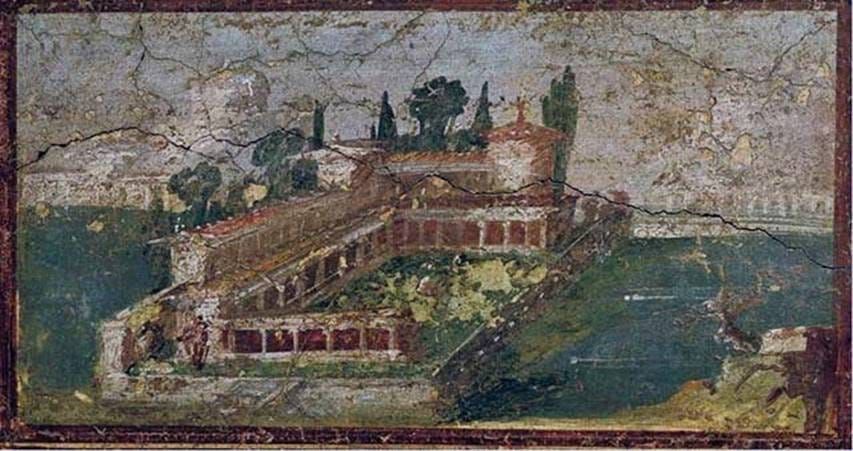
When we picture the Roman Empire, we tend to picture it warm: loosely draped tunics, sun-drenched forums, olive groves stretching to the horizon. That image is not entirely wrong, but it is more complicated than we usually allow. Climate is rarely the first thing that comes to mind when we think about the rise and fall of civilisations, yet it may be one of their quieter and more consequential protagonists. Before we turn to the Romans, it is worth stepping back all the way to the Pleistocene.
Read next: Urban and Rural Industries in the Roman Empire
From Ice Ages to Warm Periods: A Brief Climatic Overview
The Pleistocene epoch had four glacial periods (Günz, Mindel, Riss and Würm) and four interglacial periods. During the last of these, the Würm glaciation, which lasted from approximately 70,000 to 10,000 years ago, modern humans appear; with its end and the transition into the Mesolithic, humanity entered the Holocene epoch. The Holocene, too, was far from climatically stable. We know that from approximately 100 to 300 AD there was a so-called Roman Warm Period, followed by the Early Medieval Cold Period, also known as the Dark Ages Cold Period, lasting from around 400 to 800 AD, with the sixth century being its coldest point. This was followed by the Medieval Warm Period, or Medieval Climatic Optimum, spanning roughly the 10th to the 13th or 14th century, after which came the Little Ice Age, covering approximately the 14th to the 19th century.
Warm periods were generally hospitable for human populations, while colder ones brought poor harvests, famine and disease. Climate change is considered a contributing factor in the collapse of several civilisations, the Akkadian Empire among them. Around 2200 BC, an arid period set in across a region far larger than the Akkadian Empire itself, evidenced by geological data showing significant evaporation from both the Red Sea and the Dead Sea. A considerable number of Mesopotamian settlements were abandoned, though not permanently, as other peoples eventually moved in. This example illustrates one of the key responses to climatic disruption: migration.
Read next: Agriculture in the Roman Empire
The Roman Climatic Optimum and Its Consequences
So what do we actually know about the climate of the Roman period, and what did it mean for those living under it? Recent palaeoclimatic research has begun to give us a clearer and more nuanced picture. A 2020 study published in Scientific Reports, based on Mediterranean sea surface temperature reconstructions, found that the Roman period was consistently the warmest of the last two thousand years, approximately 2°C warmer than the average for later centuries in the Sicily and Western Mediterranean regions, and that after the Roman Period a general cooling trend developed in the region. The same study suggests a potential link between this climatic optimum and both the expansion and the subsequent decline of the Roman Empire.
A 2024 study published in Science Advances, drawing on a high-resolution marine sedimentary record from southern Italy, provided the first detailed climate reconstruction for the region spanning from approximately 200 BCE to 600 CE. It confirmed a generally warmer and stable period in the core of the Roman Empire, particularly pronounced in the first century CE, while also revealing short-term climate deviations within that broader stability. Crucially, the same study traces what followed: as the climate shifted and harvests failed, malnourished and immunologically weakened populations became far more vulnerable to disease, including the Plague of Justinian in 541 AD. That this was indeed plague (caused by Yersinia pestis) was confirmed by Johannes Krause and colleagues at the Max Planck Institute, who reconstructed the pathogen's genome from sixth-century skeletal remains, providing the first high-coverage genomic evidence of the Justinianic pandemic.
Alongside climatic cooling, the plague contributed to some of the largest migrations in Mediterranean history. A 2016 study by Büntgen et al., published in Nature Geoscience, coined the term Late Antique Little Ice Age to describe the volcanic-induced cooling that followed eruptions in 536, 540 and 547 AD, and linked this period directly to the migrations of the Lombards into Italy and the early Slavs into the Balkans – movements that permanently altered the shape of the medieval world.
Climate change itself is driven by natural phenomena such as ocean currents and volcanic eruptions, and in more recent times by human activity, particularly CO₂ emissions. The Little Ice Age offers a telling example: triggered in part by a series of major volcanic eruptions, it caused a temperature drop that eroded agricultural stability across the continent and set off chains of consequence that historians are still tracing.
As seen, climate change is driven by natural phenomena such as ocean currents and volcanic eruptions, and in more recent times by human activity, particularly CO₂ emissions – a reminder that the forces shaping history are rarely only political or military.
Conclusion
What all of this suggests is that the warm, sun-drenched image of Rome we carry in our minds is not simply a product of cinema or imagination – it reflects, however imprecisely, a real climatic reality. The Roman Warm Period created conditions of relative stability that allowed a civilisation to expand, consolidate and flourish. Its passing was not the sole cause of Rome's decline, but it was part of a much longer and quieter story of adaptation, disruption and survival, one that did not end with the fall of the Empire but continued, in different forms, through every cold century that followed. Climate, it turns out, has always been writing history alongside us, we simply have not always been paying attention.
This article explores themes related to Roman Empire, Roman warm period, climate, the little ice age, Medieval warm period and Medieval Climatic Optimum.
Sources:
Marjanac, Lj.; Marjanac, T., "Glacial History of the Croatian Adriatic and Coastal Dinarides," in Quaternary Glaciations Extent and Chronology: Part I: Europe, ed. J. Ehlers and P.L. Gibbard, Elsevier, 2004.
Vučetić, M., "Vrijeme i klima Jadrana u antičkih pisaca / The Weather and Climate of the Adriatic According to Ancient Writers," Hrvatski meteorološki časopis / Croatian Meteorological Journal, 46, 2011, 55–67.
Kužić, K., "Klimatski ekstremi na području hrvatskih krajeva od početka 7. stoljeća do 1104. godine i njihove posljedice," Starohrvatska prosvjeta, III. serija, sv. 41, 2014, 99–125.
Margaritelli, G. et al., "Persistent Warm Mediterranean Surface Waters during the Roman Period," Scientific Reports 10, 2020. https://doi.org/10.1038/s41598-020-67281-2
Karin A. F. Zonneveld, et al., "Climate Change, Society, and Pandemic Disease in Roman Italy between 200 BCE and 600 CE," Science Advances 10, 2024. https://doi.org/10.1126/sciadv.adk1033
Feldman, M.; Harbeck, M.; Keller, M.; Spyrou, M. A. et al.; Krause, J., "A High-Coverage Yersinia pestis Genome from a 6th-Century Justinianic Plague Victim," Molecular Biology and Evolution 33 (11), 2016, 2911–2923. doi:10.1093/molbev/msw170
Büntgen, U. et al., "Cooling and Societal Change during the Late Antique Little Ice Age from 536 to around 660 AD," Nature Geoscience 9, 2016, 231–236. https://doi.org/10.1038/ngeo2652