Agriculture in the Roman Empire
How did Roman agriculture sustain an empire stretching across the Mediterranean? From dry farming and polyculture to irrigation and tenant estates, Roman farmers adapted to harsh climates while feeding cities, supporting trade, and shaping the economic power of ancient Rome across vast provinces.

Last time I wrote about how goods were produced and traded in the Roman Empire. Today, I will focus on agriculture, market-oriented production, landed estates, and tenancy in the Roman world. The Roman Empire stretched across the Mediterranean basin, a region blessed with a beautiful sea but also burdened by a harsh and unpredictable climate.
Adapting to the Mediterranean Climate
Both large landowners and small farmers often depended on producing agricultural surpluses because of the risks brought by the Mediterranean climate. Irregular rainfall posed a constant danger to agricultural production. Although many parts of the Mediterranean world received at least 300–400 mm of annual rainfall, enough for growing wheat and other grains, precipitation patterns remained highly unstable. In one region, rainfall could bring fertile harvests, while in another it could result in drought and crop failure.
In regions shaped by such a climate, one common agricultural strategy was a fallow-based dry farming system, referred to as “dry farming”. This system represented an adaptation to hot summers and rainy winters. For it to succeed, crops were planted in autumn and harvested in spring. The soil was repeatedly worked with a light plough, creating a layer capable of absorbing water in drier regions while also helping maintain soil fertility in areas with heavier rainfall. After the spring harvest, the land was usually left fallow for more than a year before grains were planted again.
Polyculture and New Technologies
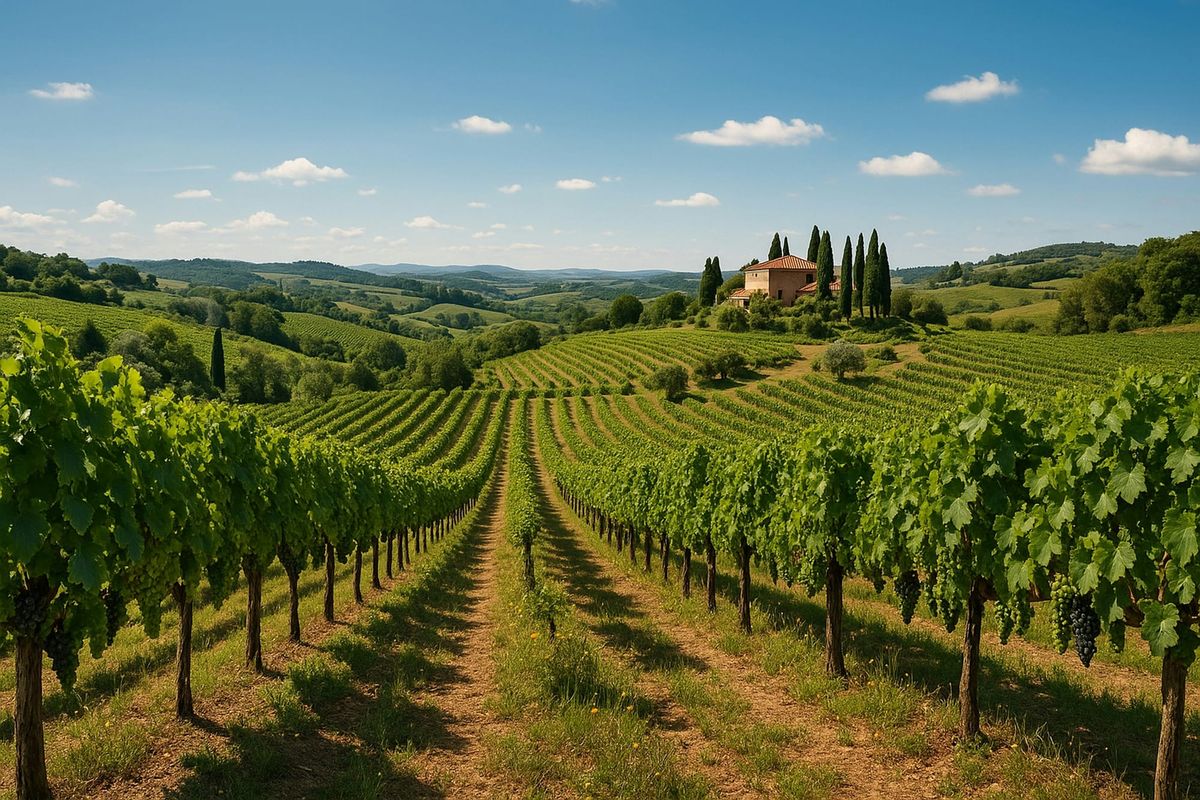
To reduce risk and increase stability, Roman farmers relied on crop diversity. A widely used strategy was the practice of polyculture; combining olives, vineyards, or other fruit crops with cereals. Since grain, grape, and olive harvests occurred at different times of the year, polyculture allowed farmers to use available labor more efficiently throughout the agricultural cycle while also increasing the productivity of each unit of land.
The cultivation of vines and olives was an expensive activity because both required significant investments in presses and storage facilities, as well as patience before meaningful harvests could be achieved. One of the most important technological developments affecting agriculture was the spread of olive and wine presses across the Mediterranean. Olive presses were particularly costly, and because they were unnecessary for small-scale production, their presence throughout many regions of the Empire suggests substantial investments aimed at producing olive oil for broader markets.
Although new technologies were adopted, they did not spread rapidly, nor did they immediately replace older methods. For example, the lever press continued to be used for decades, even centuries, after more advanced presses had appeared. Another invention that demonstrates the limited role of technological innovation in agriculture was the Gallic harvesting machine, or vallus. The vallus allowed wheat to be harvested much faster than manual labor permitted. Unfortunately, it was not widely adopted outside Gaul, where it proved especially useful because it was particularly suited to agricultural conditions in Gaul.
If you liked this article, subscribe to our newsletter.
Irrigation in the Roman World
Investment in irrigation could significantly increase agricultural production. However, irrigation was expensive because water had to be lifted from its source to cultivated land. In Egypt, where agriculture depended on the annual flooding of the Nile, artificial irrigation was mostly limited to intensively cultivated vineyards, orchards, and gardens, which generated greater profit per unit of land than grain fields.
The main irrigation tools were the shaduf, a simple water-lifting device using a suspended bucket, and the saqiya, a water wheel. In other parts of the Empire, underground channels known as cuniculi were used to direct water from springs toward irrigated fields.
In drier regions, such as the semi-desert areas of North Africa, farmers irrigated crops by cultivating terraces or using seasonally dry riverbeds equipped with elaborate water-capturing systems designed to collect the sudden and often violent rainfall typical of the region. Techniques for this kind of irrigation had spread throughout North Africa even before Roman rule, but Roman-era farmers continued using them to establish agricultural communities in otherwise arid landscapes.
Tenancy in the Roman Empire
The system of estate management associated with early imperial villas depended on several important conditions: the ownership of large amounts of land within one area, the ability to share resources, and the availability of labor that could be organized and employed daily. When these conditions could not be met, many landowners turned to tenancy as a way to organize labor and manage their estates. These considerations applied equally to Rome itself, which was the largest landowner in the Empire.
State or imperial ownership included estates that had originally belonged to emperors privately but later became integrated into public property under the administration of the imperial treasury. Imperial estates also included lands that had always been classified as public. In Egypt, state-owned land was especially important for the agrarian economy. Two categories existed there: public land (ge demosie) and royal land (ge basilike). These could be found in almost every settlement and, in some regions, made up as much as half of all available land. The amount of land controlled by the state likely expanded during the early Empire, as some estates were confiscated due to criminal offenses, unpaid taxes, or the absence of heirs.
Tenants played a crucial role for landowners because they invested their own resources into cultivating the land. This kind of investment was especially important for crops such as vines and olives, which were profitable cash crops but also required significant long-term commitments of labor and capital. The Roman government itself depended on small tenants to make such investments on imperial estates.
This can be seen in the case of imperial estates in the Bagradas Valley in North Africa. There, the imperial administration encouraged tenants to practice polyculture, especially the cultivation of olives alongside grain. It therefore appears that many private landowners depended on tenant production just as much as the imperial government did.
Conclusion
Roman agriculture was the foundation of the Empire’s economic and social stability. Farmers had to adapt constantly to an unpredictable Mediterranean climate through techniques such as dry farming, irrigation, and polyculture, while landowners and the state relied heavily on tenants and organized labor to maintain production across vast territories.
At the same time, Roman agriculture reveals both the strengths and limitations of the Empire. Although technological innovations existed, economic growth still depended largely on human labor, long-term investment, and the careful management of land and resources. From the olive groves of Hispania and North Africa to the grain fields of Egypt, agriculture connected provinces, sustained cities, and helped sustain the economic and political structure of the Empire. Next time I will write about rural and urban industries in the Roman world, so subscribe and stay updated.
This article explores themes related to Roman Empire, agriculture, ancient Egypt, North Africa, polyculture, dry farming, olive production and vine production.
Sources:
Dermody, B. J., et al. “A Virtual Water Network of the Roman World.” Hydrology and Earth System Sciences, vol. 18, no. 12, 2014, https://doi.org/10.5194/hess-18-5025-2014
Deij, E. W. Marthe, et al. “Simulating Agricultural Fragility in Past Societies: Climate Change, Wheat, and Grapes in Ancient Rome.” Climatic Change, vol. 179, 2026, https://doi.org/10.1007/s10584-026-04195-4
Stika, Hans-Peter, et al. “Crop Cultivation in the Talayotic Settlement of Son Fornés (Mallorca, Spain): Agricultural Practices on the Western Mediterranean Islands in the First Millennium BCE.” Vegetation History and Archaeobotany, vol. 33, 2024, https://doi.org/10.1007/s00334-023-00957-7
Kehoe, D. P. “The Early Roman Empire: Production.” The Cambridge Economic History of the Greco-Roman World, edited by Walter Scheidel, Ian Morris, and Richard P. Saller, Cambridge University Press, 2007