The Legend of Robin Hood: Creating the Myth That Lasts
Robin Hood is more than a medieval outlaw. His legend shows how stories transform across centuries, reflecting the values, fears, and hopes of the societies that preserve them. From early ballads to modern films, Robin Hood remains a symbol of justice, resistance, and changing ideas about heroism.

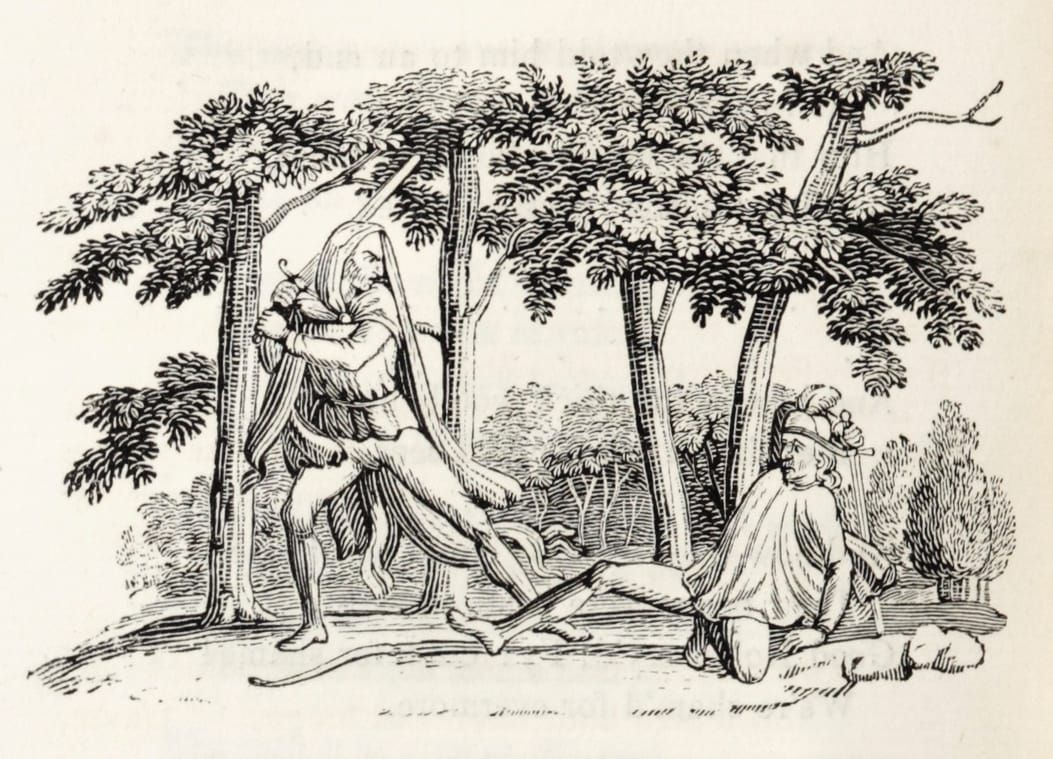
Robin Hood is a name that many of us have probably encountered through film adaptations, children’s stories, or video games. In my life, Robin Hood was both a bedtime story and Kevin Costner. But I am not going to write about Mr. Costner, or any other movie adaptation. Instead, I will explore the concept of legend through the example of Robin Hood.
What Is a Legend?
We are going to start by explaining the term legend and how legends are created. Without further ado, a legend can be understood as something that exists between myth and historical event. Myths are usually connected with stories about gods, supernatural beings, or abstract and cosmic forces, and they often explore the creation of the world or questions about human nature. Historical events, on the other hand, are connected with specific dates, places, and available evidence, such as written sources.
Meanwhile, the legend lies somewhere in between: it is a story about people. Whether those people existed exactly as they are remembered is something that we often cannot fully determine. Instead, figures from old tales frequently become symbols of the societies that preserve them. Therefore, the main difference is not only whether the story was historically accurate, but also what the story reveals about the period in which it was created and later reshaped.
The Creation of Legends
Legends are often created gradually, through oral traditions passed from one generation to another. Because of this process, they can change over time. Some details may disappear, while new ones can be added, and in many cases legends become adapted to the values and concerns of the communities that preserve them. However, this process is not entirely accidental; each generation approaches the legend from its own historical perspective.
While the story changes with time, every generation asks itself: What does this story tell us about ourselves? Of course, this question is rhetorical, but the answer influences how the legend continues to develop. Thus, a legend is not only a tale about the past; it can also become a reflection of the present.
Read more: Who Were the Female Troubadours?
Robin Hood: From Early Ballads to Later Reinterpretations
Robin Hood first appears in written references from the late 14th century, including allusions in Langland’s work Piers Plowman, where he is mentioned as a figure whose stories were already familiar at the time. The earliest surviving ballads, such as A Gest of Robyn Hode from the 15th century, portray him as an outlaw associated with Sherwood Forest, resisting the authority of the sheriff and helping those who suffer from unjust treatment. In these early texts, Robin Hood is generally presented as a yeoman, meaning a free man of modest social status in medieval England.
During the 17th and 18th centuries, the character of Robin Hood gradually changes. He becomes increasingly associated with the idea of an unjustly disinherited nobleman, often linked with the title of the Earl of Huntingdon. This transformation gives his rebellion a stronger sense of aristocratic legitimacy, making the image of a noble figure challenging corruption more acceptable to audiences than the idea of an ordinary outlaw openly opposing authority.
The 19th century adds another layer to Robin Hood’s identity. He is increasingly presented as a moralized hero, associated with honor, loyalty, and the protection of the vulnerable. These qualities corresponded with Victorian interests in morality, national identity, and ideas about social responsibility during a period shaped by empire and changing views of British character.
Read more: The Dream of Endless Food
Why Did the Legend Change?
Each historical period had its own challenges, and Robin Hood adapted accordingly. This adaptability helped the character remain recognizable for centuries while allowing different generations to reinterpret his meaning. In periods marked by strong social tensions, the redistribution of wealth and the idea of taking from the rich to help the poor became more emphasized. During times of political uncertainty, Robin Hood could become a symbol of resistance against authority. In more moralizing periods, his virtues were highlighted, while later interpretations sometimes focused on his ambiguity and moral complexity.
Therefore, the political and social context often influenced how Robin Hood’s character and story were understood. The legend remained familiar, but its meaning changed according to the concerns of each era.
Today’s Perspective
The contemporary Robin Hood appears in various forms, including films, comic books, television series, and video games. Many modern interpretations place greater emphasis on systemic injustice rather than presenting the sheriff only as an individual villain. Instead, he often represents a wider system of corruption that protects the powerful at the expense of ordinary people.
What the legend of Robin Hood ultimately shows is that legends are not merely stories preserved from the past. They are narratives that survive because they continue to adapt to new historical contexts. They often tell us more than we expect; they raise questions about who has the right to resources, who is allowed to challenge authority, and where the boundary between law and justice lies.
#robinhood #legend #medievalhistory #medievallegend #sherwoodforest #englishballad #britishhistory #middleages #movieadaptations
Sources:
“Robin Hood: from ‘History’ to Folklore and Back Again.” Fisher Digital Publications, 26 Oct. 2012
“Robin Hood: Development of a Popular Hero.” The Camelot Project, University of Rochester
Basdeo, Stephen. The Changing Faces of Robin Hood, c. 1700–c. 1900. University of Huddersfield, 2017