Medieval and Early Modern Famine and the Dream of Endless Food
Discover how medieval famine, climate change, and the fear of hunger influenced European society and literature. From the Great Famine of 1315 to the Land of Cockaigne, see how utopian imagination responded to real crises. Read on.

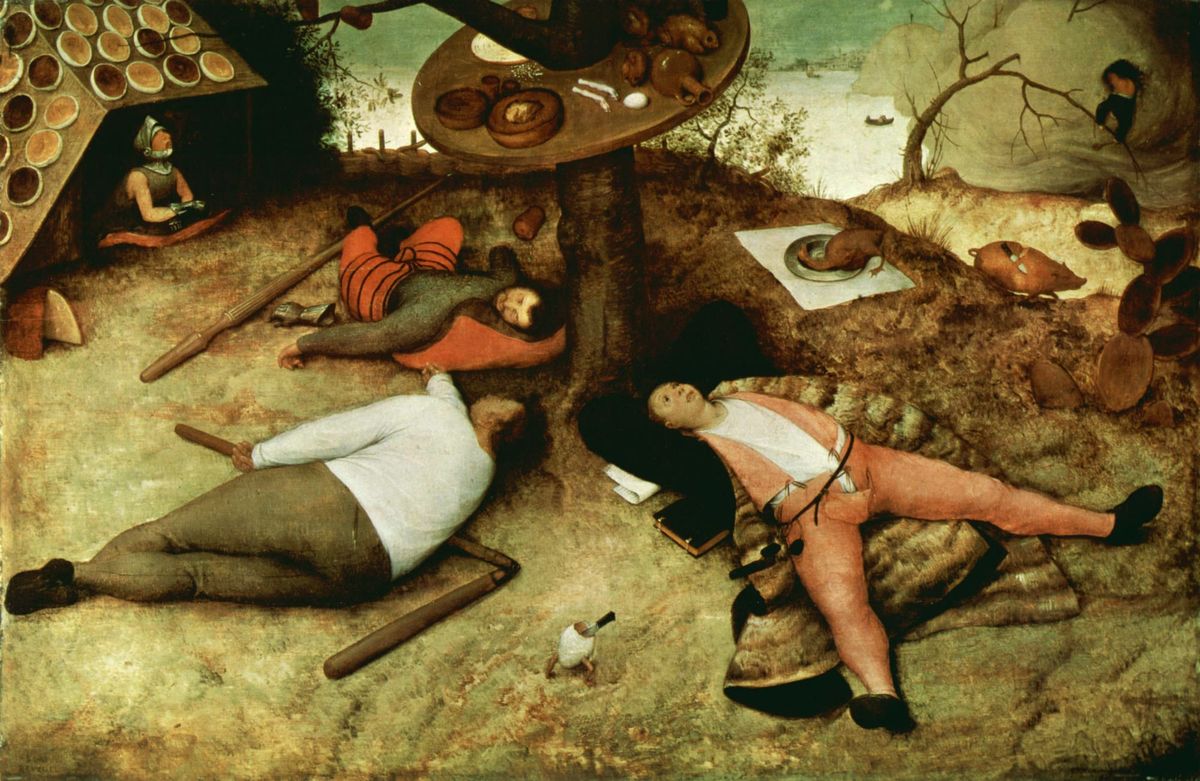
“Walls made of sausages. Roofs of pies. Rivers carrying wine.”
This was the Land of Cockaygne, a paradise imagined by medieval poets. In medieval and early modern Europe, where hunger was not an exception but a recurring feature of everyday life, some of the most vivid literary visions ever written were not of war or love or God, but of food, because the more people starved, the more they dreamed of feasting.
This was not coincidence. Famine helped form medieval society in ways that went far beyond economics and mortality. It shaped what people feared, what they hoped for, and ultimately, what they wrote. From the Great Famine of 1315 to the Little Ice Age of the 17th century, scarcity left its mark on both the body and the imagination and the dream of a world without hunger became one of the most powerful fantasies the medieval mind could conjure.
Medieval Famine
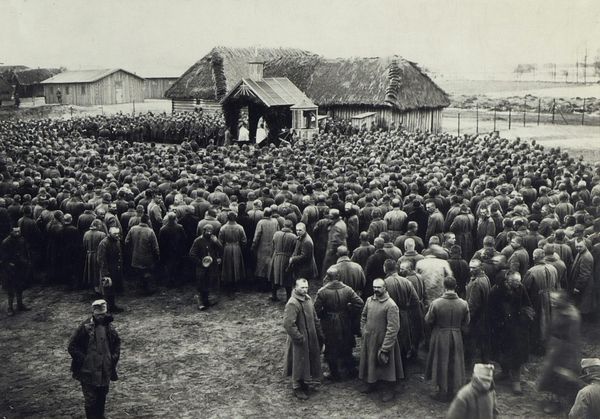
In the European Middle Ages famine particularly affected the rural population. The reasons for this, alongside weather calamities, were frequent pillages by bandits and military mercenaries.
...the more people starved, the more they dreamed of feasting
From the High Middle Ages, more precisely from the year 1270, the number of the European population increased significantly, and it continued to increase until the beginning of the early modern period. In the 13th century, progress occurred, that is, economic growth and development; however, “the gap between demand and production constantly widened. Under these conditions, famine prevailed.” In order to preserve their own existence, cities stored the harvest products each year in case of infertile years. Similar measures were undertaken by individual groups of certain social strata, such as bakers. During times of bad harvest, prices were high. However, the price of grain was an exception, as it was a foodstuff whose price was not fixed in the same way as other staples.
Poor harvests led to conflicts between peasants and citizens. There were clashes over bread prices. City councils would often banish bakers from the cities because they refused to sell bread at the price determined by the council. Sometimes, bakers baked smaller loaves of bread to retain as much as possible for themselves during times of poor harvest. Some cities, such as Frankfurt, Zurich, Nuremberg, and Erfurt, employed bakers from neighboring cities because they lacked them. However, this did not slow down the general mortality from starvation.
During those great famines, due to higher prices, people mixed flour with beans, lentils, and even sawdust to make bread. When they had no bread, they were forced to feed on grass, bread with sawdust, dead animals, or filth. Accounts of cannibalism appear in chroniclers’ reports, but such cases should be understood as exceptional, desperate reactions to extreme crisis rather than common practice. Periods of famine often weakened already vulnerable populations and sometimes coincided with wider crises, including epidemic outbreaks.
Read more: How did people eat in the past?
Climate Changes and Food Shortages
Famine was not caused solely by war or demographic pressure. Climate instability also played an important role in shaping food insecurity in medieval and early modern Europe.
Climate changes played a major role in the sustainability of nutrition in the medieval and early modern period. In the summer of 1315, heavy amounts of precipitation were recorded in the area north of the Alps, which brought lower temperatures and frequent overcast skies. The severe weather accompanied by heavy rains affected wine production. Chroniclers complained that the wine was of poor quality and negligible in quantity.
Cold weather and heavy rains during June, July, and August prevented growing grains from reaching full maturity and hardening. Frequent rains caused unsuccessful autumn sowing of wheat and rye, while floods destroyed crops. Such weather resulted in years of famine, especially during the Great Famine of 1315-1317.
Late Medieval Literary Response (Land of Cockaygne)
Scarcity did not merely dictate daily survival; it also fueled the human imagination. In societies where hunger was a recurring reality, abundance itself became a powerful fantasy. Medieval literature occasionally offered visions of worlds untouched by scarcity, where food was limitless and labor unnecessary.
Since time immemorial, literature has served humanity as a means to depict reality, and at times, to escape from it. It is, in every sense, a reflection of everyday life. As such, in this case, it portrayed medieval and early modern society, as well as the ubiquitous famine, primarily among the lower strata of society.
The previously mentioned fear of famine in the Middle Ages was mirrored in literature. Medieval authors wrote about and described places that were abundant with food, an example being the Irish satirical poem The Land of Cockaygne, written in the 14th century. The latter poem describes a paradise-like place located in the West, even better than Eden, because “In Paradise what's to be seen / But grass and flowers and branches green? / Though paradisal joys are sweet, / There's nothing there but fruit to eat; / No bench, no chamber, and no hall, / No alcoholic drink at all.” The poem depicts a land of plenty, where life is easy and free of hard labor, where architecture is made of food, where there are no death and no night; no worries of everyday life.
Born out of medieval deprivation and relentless labor, this Irish poem represents the ultimate fantasy of an impoverished society craving abundance and ease. It critiques Church life, its hypocrisy, gluttony, sloth, lust and even promiscuity. Through its radical satire, the poem served as a psychological coping mechanism, using humor and imagination to escape the harsh realities of feudalism and strict religious rules.
In other parts of Europe, various versions of the poems illustrate a utopian place where all social laws are turned upside down appeared. The end of the Middle Ages did not silence these literary cravings, but it only changed their tone and message.
Read more: Who were the female troubadours?
Early Modern Famine
The fear of hunger did not disappear with the end of the Middle Ages. Although economic systems changed, food insecurity continued to shape everyday life across much of Europe.
In the mid-16th century, food production could not keep pace with demographic population growth. Urban centers solved the problem of hunger in the following way. In cities, unlike in villages, food supplies (grains and other products) were stored. Villages were often dependent on landowners (nobles) who found supplies in cities by purchasing them from merchants. Sometimes, the rural poor were too exhausted to go to the cities to beg, where they often died on the streets or squares; for instance, such cases were recorded in Venice and Amiens in the 16th century.
Hungry poor from the surroundings flocked into the cities; for example, in 1573, the city of Troyes drove a mass of poor people away by distributing bread and some money to them and expelling them from the city. Other cities reacted in a similar manner at the end of the 16th century, a problem that would escalate in the 17th century. They drove them out of the cities due to fear that the “local” poor from the cities themselves might revolt. The poor were placed in special institutions together with the undesirable, i.e., houses for the undesirable and the poor, who were subjected to forced labor; an example of one such institution was the Grand Hôpital in Paris, founded in 1635.
Furthermore, in the 17th century, Europe was hit by the “Little Ice Age”. Chroniclers recorded that people fed on grass in desperate situations; extreme accounts of cannibalism should again be read as signs of crisis rather than regular practice. As in the Middle Ages, grain prices rose due to its scarcity. The malnutrition of the population of early modern Europe led to the outbreak of various epidemics, for instance, frequent typhus epidemics which decreased after approximately 1648, followed by smallpox, from which people fell ill more frequently in the 18th century than in previous centuries.
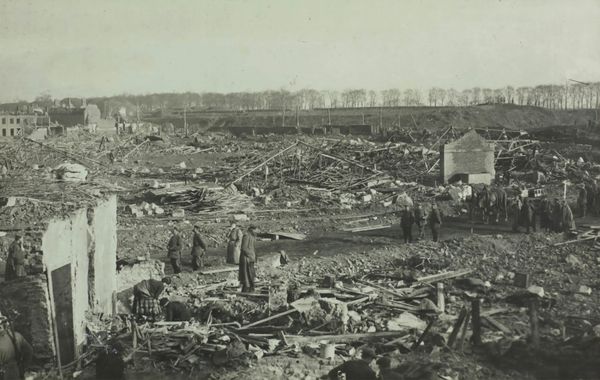
The frequency of major epidemics decreased at the end of the 17th century, which coincided with years of successful harvests. The period from around 1550 to 1700 was an era of great mortality crises. Certain diseases that did not reach epidemic proportions were more widespread after 1550, and famine was more frequent after 1550. All these diseases and famine were linked to the so-called “Little Ice Age”. It appeared in Europe between 1550 and 1700, with unusually low temperatures and great climate instability. The climate stabilized only during the 1700s when warming occurred. Scarcity molded physical and economic realities, but it also conditioned creative consciousness.
The dream of endless food was therefore more than fantasy, it was, in many ways, a mirror of a society shaped by the constant fear of hunger
Early Modern Literary Response (Luilekkerland / Schlaraffenland)
While deprivation left its mark on both human lives and financial markets, it also left an indelible imprint on human imagination. By the Early Modern Period, however, stories of endless wealth and plenty took on an ethical weight, capturing new cultural perspectives on the value of hard work, discipline, and social structure.
In 1546, the prose text Luilekkerland was published in the Netherlands. The text was based on the 16th-century German prose work Schlaraffenland by Hans Sachs, itself modeled after older German works from around 1500. Food motifs remained central to these imagined worlds of abundance. However, later in the 16th century, this idealized place increasingly became a symbol of laziness and gluttony, teaching younger generations to appreciate the values of work and moderation associated with the emerging middle strata.
As regional variations of the Cockaygne myth, Luilekkerland and Schlaraffenland fundamentally shifted the focus of the narrative from early anti-clerical satire toward an explicit critique of individual vices. Within these early modern adaptations, the imaginary land of plenty was no longer viewed as a utopian refuge from starvation, but rather as a cautionary dystopia that warned against the loss of reason and self-control.
Ultimately, these texts reflected the rising values of a burgeoning bourgeois society, effectively transforming the fantasy of effortless abundance into a strict moral lesson on the necessity of labor, discipline, and social order.
Conclusion
In conclusion, famine was one of the major causes of mortality during the Middle Ages and the early modern period. Climate instability, warfare, and demographic growth placed immense pressure on food production, while poor harvests repeatedly pushed already vulnerable populations into crisis. Production often could not meet the needs of growing populations, and hunger remained a recurring feature of everyday life across much of Europe.
Although famine affected more than bodies, economies, and mortality rates, it also influenced imagination. In societies marked by uncertainty and food scarcity, dreams of abundance became cultural expressions. Medieval and early modern literary visions such as The Land of Cockaygne, Schlaraffenland, and Luilekkerland reflected hardships of everyday existence and human desires for security and freedom from deprivation.
The dream of endless food was therefore more than fantasy, it was, in many ways, a mirror of a society shaped by the constant fear of hunger. These utopias fascinate us still because they remind us that the dream of endless food was never truly universal. For much of the world today, the Land of Cockaygne remains exactly what it was in the Middle Ages.
If abundance was the great fantasy of medieval Europe, what does it say about our world that, centuries later, hundreds of millions of people are still dreaming the same dream?
Fascinated by the history of daily life, social crises, and cultural heritage? Subscribe to our newsletter to receive deep dives and historical insights directly in your inbox.
This article explores themes related to medieval famine, great famine 1315, little ice age, land of cockaigne, famine in literature.
Sources:
Melitta Weiss Adamson, Food in medieval times, Westport: Greenwood Press, 2004.
Andrew B. Appleby, „Epidemics and Famine in the Little Ice Age“, The Journal of Interdisciplinary History, Vol. 10, No. 4, The MIT Press, 1980., str. 643-663.
Fernand Braudel, Materijalna civilizacija, ekonomija i kapitalizam od XV. do XVIII. stoljeća, Knjiga prva: Strukture svakidašnjice, Zagreb: August Cesarec, 1992.
William Chester Jordan, The Great Famine: Northern Europe in the early fourteenth century, Princeton: Princeton University Press, 1996.
Henry S. Lucas, „The Great European Famine of 1315, 1316, and 1317“, Speculum, Vol. 5, No. 4, The University of Chicago Press, 1930., str. 343-377.
Raffaella Sarti, Živjeti u kući. Stanovanje, prehrana i odjevanje u novovjekovnoj Europi (1500.-1800.), Zagreb: Ibris grafika, 2006.
Mair S, Druckman A and Jackson T (2020) A tale of two utopias: Work in a post-growth world. Ecological Economics. 173: 106653. http://dx.doi.org/https://doi.org/10.1016/j.ecolecon.2020.106653
Egbert Haverkamp-Begemann, “An Interpretation of Land of Cockaigne (1567) by Pieter Bruegel the Elder,” The Sixteenth Century Journal, Summer, 1991, Vol. 22, No. 2 (Summer, 1991), pp. 299-329 https://escholarship.org/uc/item/2st1062s